Species Complexes: Navigating the Blurred Lines of Biological Diversity
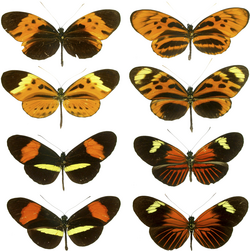
In the vast tapestry of life, the boundaries between different species are not always as clear as they appear. While we often think of species as distinct, isolated groups, nature frequently presents us with species complexes—groups of closely related organisms that are so similar in appearance and behavior that distinguishing one from another is a significant scientific challenge.
These biological groupings often feature taxa that can hybridize readily, further blurring the lines of distinction. Because they look so much alike, these groups can lead to an underestimation of both local and global biodiversity if not studied with extreme precision.
Key Facts
- Species complexes consist of closely related organisms with unclear boundaries.
- Cryptic species are distinct species hidden under a single name due to physical similarity.
- Morphological stasis occurs when species remain physically similar despite long periods of separation.
- Modern identification relies heavily on DNA barcoding and molecular phylogenetics.
- Recognizing these complexes is vital for effective pest control and conservation biology.
Defining the Nuances of Relatedness
Taxonomy uses several specific terms to describe different types of biological groupings. While some are used interchangeably in informal settings, they carry distinct scientific meanings:
- Cryptic species: Two or more distinct species that are hidden under a single species name because they look nearly identical.
- Sibling species: Two or more species that are each other's closest evolutionary relatives.
- Species flock: A group of closely related species that inhabit the same geographic area.
- Sensu lato (s.l.): A Latin phrase meaning "in the broad sense," used to indicate that a species name is being used to represent a larger species complex.
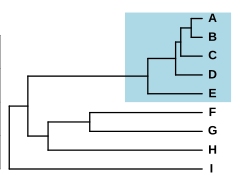
It is important to distinguish a species complex from infraspecific taxa. While a complex involves multiple species, infraspecific taxa (such as plant varieties) are classifications within a single species. A species complex is typically a monophyletic group, meaning the members share a common ancestor.
Evolutionary Drivers and Ecological Patterns
How does a species complex form? There are several evolutionary pathways that lead to these groupings.
Speciation and Morphological Stasis
Many species complexes represent an early stage of speciation, where groups have diverged recently. However, some species undergo morphological stasis—a phenomenon where species remain physically unchanged for millions of years despite being genetically distinct. For example, the Amazonian frog Pristimantis ockendeni actually comprises at least three different species that divergaed over 5 million years ago.
Adaptive Radiation and Niche Partitioning
A species flock often arises through adaptive radiation, a process where a species enters a new area and diversifies rapidly to fill various ecological niches. A classic example is Darwin's finches on the Galápagos Islands. To coexist in the same habitat (sympatry) without outcompeting one another, species within a complex often engage in niche partitioning, where they evolve to prefer different microhabitats.
Identification and Practical Importance
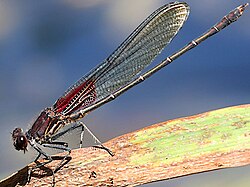
Because physical traits can be misleading, scientists use rigorous methods to identify members of a complex. These include examining minute morphological details, testing for reproductive isolation (the ability of populations to interbreed), and using DNA-based methods like molecular phylogenetics and DNA barcoding.
| Term | Primary Characteristic | Example Context |
|---|---|---|
| Cryptic Species | Physically indistinguishable but genetically distinct | Marine environments, fungi |
| Sibling Species | Closest evolutionary relatives | Closely related taxa |
| Species Flock | Closely related species in one habitat | Darwin's finches |
| Species Group | Related species with partially overlapping ranges | Taxonomic aggregates |
Impact on Biodiversity and Health
The discovery of cryptic species complexes has profound implications. In marine biology, DNA sequencing has revealed that organisms like the bryozoan Celleporella hyalina actually consist of over 10 ecologically distinct species.
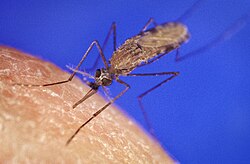
In the realm of human health, distinguishing between species in a complex is critical. For instance, the Anopheles gambiae mosquito complex includes some species that act as vectors for malaria and others that do not. Accurate identification is essential for effective disease and pest control strategies.
Frequently Asked Questions
What is the difference between a species complex and a species group?
While terms vary, a species group is often described as a complex of related species that may exist allopatrically (in different areas) or have partially overlapping ranges, often supported by experimental crosses.
Why is morphological stasis important in biology?
Morphological stasis explains why species can look identical even if they have been evolutionarily separated for millions of years, which can lead to errors in biodiversity estimates if only physical appearance is used.
How does DNA barcoding help identify species complexes?
DNA barcoding uses specific genetic sequences to identify organisms, allowing scientists to detect genetic differences that are not visible through physical examination alone.
What is niche partitioning?
Niche partitioning is a mechanism that allows closely related species to coexist in the same area by evolving to use different resources or microhabitats, reducing direct competition.
Why do species complexes matter for conservation?
If multiple distinct species are mistakenly classified as a single species, we may fail to protect unique genetic lineages, leading to an inaccurate understanding of extinction risks and biodiversity loss.