Understanding Biological Taxonomy: The Science of Classifying Life
Imagine trying to navigate a library with millions of books but no catalog, no genres, and no alphabetical order. For biologists, the natural world is that library. With millions of species of plants, animals, and microorganisms, scientists need a standardized way to name and organize life to make sense of biodiversity. This is the role of taxonomy—the scientific study of naming, defining, and classifying biological organisms based on shared characteristics.
While early taxonomy focused on how organisms looked, modern approaches prioritize common ancestry and evolutionary relationships. By grouping organisms into a structured hierarchy, scientists can trace the history of life on Earth and understand how different species are related.

Key Facts
- Taxonomy is the science of naming, defining, and classifying organisms.
- Carl Linnaeus is the founder of the modern ranked system of classification.
- The binomial naming system provides every species with a unique, two-part scientific name.
- Modern classification relies heavily on molecular characters, such as DNA and RNA sequences.
- Cladistics is the method of arranging taxa in a hierarchical tree to ensure groups are monophyletic (including all descendants of a common ancestor).
The Hierarchy of Life: Taxonomic Ranks
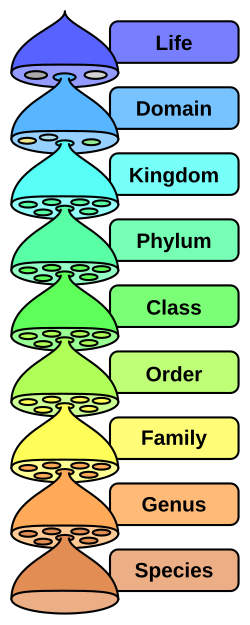
Organisms are grouped into categories called taxa (singular: taxon). These taxa are arranged in a taxonomic hierarchy, where groups of a certain rank are aggregated into more inclusive groups of a higher rank. This structure allows scientists to move from the most general categories to the most specific.
The principal ranks used in modern biology are:
- Domain: The highest and most inclusive level.
- Kingdom: Large groups such as animals, plants, and fungi.
- Phylum: (Known as Division in botany) Groups based on general body plan.
- Class: A further breakdown of phyla.
- Order: Groups of related families.
- Family: A group of related genera.
- Genus: A group of closely related species.
- Species: The most specific level, consisting of individuals that can interbreed.
Taxonomy vs. Systematics
While often used interchangeably, "taxonomy" and "systematics" have distinct meanings. Taxonomy, specifically alpha taxonomy, focuses on the identification, description, and naming (nomenclature) of organisms. Classification is the act of placing those organisms into hierarchical groups.
Systematic biology (or systematics) is a broader field. It encompasses taxonomy but also includes the study of evolutionary histories, the preservation of biological collections, and the analysis of species distribution. In short, while taxonomy names the organism, systematics explains its place in the history of life.
How Scientists Classify Organisms
To determine where an organism fits in the hierarchy, taxonomists analyze various taxonomic characters. These are divided into several categories:
Morphological and Physiological Characters
Historically, scientists relied on morphology (the physical form and structure). This includes external features, internal anatomy, embryology, and cytological factors (cell structure). Physiological characters, such as metabolic factors and body secretions, also provide clues to an organism's identity.
Molecular Characters
With the advent of modern technology, molecular data has become the gold standard for classification. This includes analyzing amino acid sequences of proteins, DNA hybridization, and the sequencing of DNA and RNA. These tools allow scientists to see genetic differences that are invisible to the naked eye.
Behavioral and Ecological Characters
The way an organism behaves—such as courtship rituals—and its ecological niche (habitat, food sources, and relationships with parasites or hosts) provide additional evidence for classification.
Geographic Characters
Biogeographic distribution patterns and the relationship between populations (whether they are sympatric, living in the same area, or allopatric, living in different areas) help refine taxonomic groups.

The Evolution of Taxonomic Thought
The way we classify life has shifted dramatically over centuries, moving from philosophical groupings to evidence-based evolutionary trees.
Ancient and Early Modern Roots
Early efforts began in Ancient Greece with Theophrastus, who described roughly 500 plants. During the Renaissance, Andrea Cesalpino—often called the first taxonomist—described over 1,500 plant species in 1583. By the 17th century, John Ray and Joseph Pitton de Tournefort developed complex systems based on combined characters, which laid the groundwork for future scientists.
The Linnaean Revolution
In 1735, Swedish botanist Carl Linnaeus revolutionized the field with the publication of Systema Naturae. He introduced a standardized binomial naming system and a ranked hierarchy (class, order, genus, and species), replacing the chaotic naming conventions of the time.

The Darwinian Shift and Cladistics
The publication of Charles Darwin's On the Origin of Species (1859) shifted taxonomy toward phyletic systems, which reflect common descent. This led to the development of evolutionary taxonomy, where fossil records (such as the link between dinosaurs and birds) are used to map ancestry.
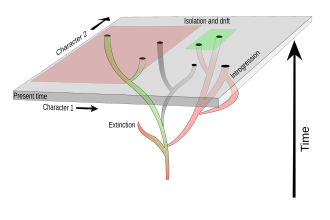
Since the 1960s, the cladistic method has become prominent. Cladistics aims to create monophyletic groups—taxa that include an ancestral form and all of its descendants. This differs from paraphyletic groups (where some descendants are excluded) and polyphyletic groups (which combine organisms from different evolutionary branches).
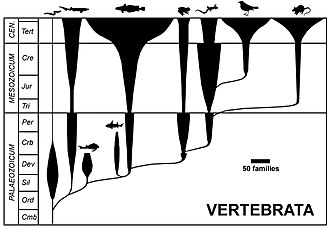
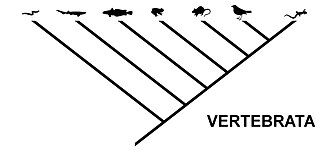
In contrast to cladistics, phenetics attempts to classify organisms based on overall similarity (character-based) rather than evolutionary lineage.
The Changing Map of Kingdoms and Domains
As our understanding of genetics has grown, the "big picture" of life has been redrawn. We have moved from Linnaeus's two-kingdom system to more complex models involving domains.
| Scientist/Year | Number of Groups | Key Groups/Categories |
|---|---|---|
| Linnaeus (1735) | 2 Kingdoms | Vegetabilia, Animalia |
| Haeckel (1866) | 3 Kingdoms | Protista, Vegetabilia, Animalia |
| Whittaker (1969) | 5 Kingdoms | Monera, Protista, Fungi, Plantae, Animalia |
| Woese et al. (1990) | 3 Domains | Bacteria, Archaea, Eucarya |
| Cavalier-Smith (1998/2015) | 2 Empires / 6-7 Kingdoms | Bacteria, Archaea, Protoctista, Fungi, Plantae, Animalia |
Modern Resources and Databases
Today, taxonomy is supported by massive digital databases that allow for real-time updates as new species are discovered or genetic data is revised. Key resources include the Encyclopedia of Life, the Global Biodiversity Information Facility (GBIF), the NCBI taxonomy database, and the Catalogue of Life. For those studying extinct life, the Paleobiology Database serves as the primary resource for fossil taxa.
Frequently Asked Questions
What is the difference between a genus and a species?
A genus is a broader category that groups together closely related species. A species is the most specific level of classification, referring to a group of organisms that can interbreed to produce fertile offspring.
Why do scientists use Latin for naming species?
Latin is used as a universal language for binomial nomenclature to avoid the confusion caused by regional common names. This ensures that a scientist in Japan and a scientist in Brazil are referring to the exact same organism.
What is a monophyletic group?
A monophyletic group, or clade, is a taxonomic group that consists of a single common ancestor and all of its descendants. This is the primary goal of cladistic classification.
How has DNA changed taxonomy?
DNA sequencing allows scientists to identify evolutionary relationships that are not apparent from physical appearance. This has led to the reclassification of many species and the creation of the three-domain system (Bacteria, Archaea, and Eucarya).
What is alpha taxonomy?
Alpha taxonomy is the foundational stage of taxonomy, focusing specifically on the discovery, description, and naming of new species.