Understanding the Biological Family: A Key Rank in Taxonomy
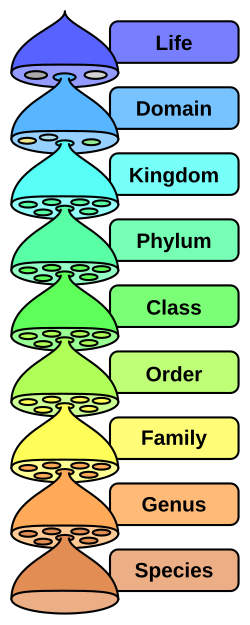
In the vast effort to organize the millions of species on Earth, scientists use a system called Linnaean taxonomy—a hierarchical method of classifying organisms based on shared characteristics. One of the most critical levels in this hierarchy is the family. Positioned between the broader rank of order and the more specific rank of genus, the family provides a vital bridge that helps biologists understand the evolutionary relationships and shared traits of living things.
Key Facts
- Position: A family is a taxonomic rank situated between an order (above) and a genus (below).
- Botanical Suffix: Plant, fungal, and algal families typically end in -aceae.
- Zoological Suffix: Animal families typically end in -idae.
- Purpose: Families group organisms that share general similarities, making them useful for identification and ecological research.
- Flexibility: Families can be further divided into subfamilies to provide more granular classification.
The Hierarchy of Classification
To understand where a family fits, one must look at the broader structure of biological classification. In this system, organisms are grouped into increasingly specific categories. A family is more inclusive than a genus but more exclusive than an order. For example, while an order might contain a wide variety of related organisms, a family narrows this down to those with more distinct shared characteristics.
In some cases, taxonomists—scientists who specialize in the naming and classification of organisms—introduce subfamilies. These serve as intermediate ranks between the family and genus levels to better organize complex groups.
Nomenclature: How Families Are Named
The naming of biological families is governed by strict international codes to ensure consistency across the global scientific community. Most family names are derived from the stem of a type genus (the representative genus of that family) and are identified by specific suffixes.
Botanical and Fungal Naming
In the nomenclature (the formal system of naming) for plants, fungi, and algae, family names almost always end with the suffix -aceae. While most follow this rule, a few historic names remain in use, such as Compositae (now often called Asteraceae) and Gramineae (now Poaceae).
Zoological Naming
In zoology, animal families are identified by the suffix -idae. The zoological system also includes a "family-group" of ranks, which includes the superfamily (ending in -oidea), the family (-idae), the subfamily (-inae), and the tribe (-ini).
Under the principle of coordination, a name established at any of these ranks can be moved to another (e.g., from a subfamily to a family) by simply changing the suffix, while keeping the original author and date of the description.
The History of the Family Rank
The concept of the "family" has evolved significantly since the 17th century. The term familia was first introduced in 1689 by French botanist Pierre Magnol. At the time, the concept of taxonomic rank was not yet standardized; Magnol used the term to describe 76 groups of plants, though his usage differed greatly from modern definitions.
In 1751, Carl Linnaeus used familia in his work Philosophia Botanica to categorize groups like herbs, trees, and ferns based on their morphology (the study of the form and structure of organisms). However, the term did not become a standardized botanical rank until the mid-19th century. In zoology, the family rank was introduced by Pierre André Latreille in 1796, specifically for insects and other arthropods.
The standardization of animal family names progressed in 1813 when William Kirby introduced the -idae suffix, derived from the Greek word eidos, meaning "resemblance."
Practical Uses in Science and Research
Families are more than just labels; they are essential tools for various scientific disciplines. Because families are generally more stable than species or genera, they are frequently used in evolutionary, genetic, and paleontological studies.
- Education and Identification: Families provide an efficient framework for teaching taxonomy. By learning the characteristics of a major family, students can identify related species across different geographic regions.
- Field Guides: Many taxonomic identification keys use the family level as the primary starting point because family traits are often readily recognizable in the field.
- Ecological Research: In biodiversity surveys, families often serve as the foundational level of identification. This is because members of the same family often occupy similar ecological niches (the specific role and position a species has in its environment) or share similar life history traits.
While family classifications are relatively stable, they are not static. Modern phylogenetic analyses—the study of evolutionary relationships among biological entities—and molecular studies continue to refine these groupings, leading to occasional reclassifications as new evidence emerges.
Summary of Taxonomic Naming Conventions
| Kingdom/Group | Standard Suffix | Example/Notes |
|---|---|---|
| Plants, Fungi, Algae | -aceae | Juglandaceae (Walnut family) |
| Animals | -idae | Based on the type genus |
| Zoological Superfamily | -oidea | Higher rank than family |
| Zoological Subfamily | -inae | Lower rank than family |
| Zoological Tribe | -ini | Lower rank than subfamily |
Frequently Asked Questions
What is the difference between a family and a genus?
A family is a broader taxonomic rank that contains one or more genera. While a genus groups very closely related species, a family groups several related genera that share a more general set of characteristics.
Who decides if a new biological family is created?
The delineation of a family is decided by active taxonomists. In botany, this often involves analyzing both reproductive and vegetative characteristics. Because different scientists may have different perspectives, consensus on these classifications can sometimes take a long time to achieve.
Why do some plant families have two different names?
Some traditional names (like Palmae) are "conserved" alongside their standardized forms (like Arecaceae) because they have been used so widely in historical scientific literature that keeping them prevents confusion.
How often are new families described?
New family descriptions are relatively rare, occurring in fewer than one percent of taxonomic publications. They usually result from the discovery of an organism with a unique combination of traits or from new phylogenetic data that requires a reclassification.
Why is the family rank useful for ecologists?
Ecologists use families because members of the same family often share similar ecological functions and life history traits, making them a practical unit for environmental surveys and biodiversity studies.