Procopius of Caesarea: The Historian of Justinian's Empire
Procopius of Caesarea was a pivotal figure in the 6th century, serving as both a legal advisor and a political commentator during one of the most transformative eras of the Byzantine Empire. Born around 500 AD in Caesarea Maritima, Palaestina Prima, Procopius provided the world with an intricate, and often contradictory, account of the reign of Emperor Justinian I.
His life was defined by his proximity to power, specifically his role as a staff member to the renowned general Belisarius. Through his writings, we gain a detailed look at the military ambitions and internal turmoil of a state attempting to reclaim the lost territories of the Western Roman Empire.
Key Facts
- Primary Role: Legal advisor and historian to General Belisarius.
- Major Works: History of the Wars, The Secret History, and On Buildings.
- Key Figures: Documented the lives of Emperor Justinian, Empress Theodora, and General Belisarius.
- Geographic Scope: Witnessed campaigns in North Africa, Italy, and the eastern front against Persia.
- Legacy: His Secret History provides a stark, critical contrast to his official public records.
Life and Military Career
Procopius's career was inextricably linked to the fortunes of Belisarius. He served on the eastern front until 531, witnessing the defeat at the Battle of Callinicum. Upon returning to Constantinople, he was a witness to the Nika riots of January 532, a violent uprising that was brutally suppressed in the city's Hippodrome.
In 533, Procopius accompanied Belisarius on the expedition to dismantle the Vandal kingdom in North Africa. He participated in the capture of Carthage and remained in the region under the leadership of Solomon the Eunuch. During this time, he noted extreme weather events between 535 and 536, framing them as a backdrop to military unrest and mutinies.
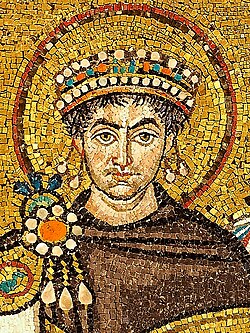
His journey continued as he rejoined Belisarius for the campaign against the Ostrogothic kingdom in Italy. Procopius endured the grueling siege of Rome, which lasted one year and nine days, ending in March 538. He eventually witnessed the Byzantine entry into the Gothic capital of Ravenna in 540.
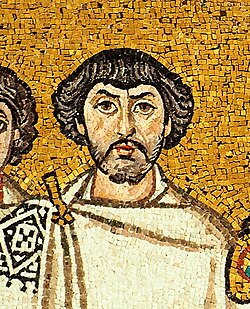
However, the relationship between the historian and the general eventually soured. While he may have accompanied Belisarius to the Persian front in 542, he was notably absent from the general's staff when Belisarius returned to Italy in 544 to face the Ostrogothic king Totila.
The Literary Works of Procopius
Procopius is best known for three distinct works that offer vastly different perspectives on the same era.
History of the Wars
This is Procopius's most significant scholarly contribution. The work is divided into eight books, with the first seven largely completed by 545 and updated through 551. The final book concludes the history in 553.
- The Persian War: The first two books detail the conflict with Sassanid Persia, covering the campaigns of Shah Kavadh I and his successor Khosrau I, the destruction of Antioch, and the devastating plague of 542.
- Western Campaigns: The remaining books document the reconquest of North Africa and Italy.
The Secret History (Anecdota)
Discovered in the Vatican Library in 1623 by Niccolò Alamanni, the Secret History (or Anecdota) is a scathing critique of the imperial court. Unlike his official histories, this work was written in private, likely after the death of Empress Theodora, to avoid execution.
The text presents a dark mirror to the History of the Wars, offering harsh criticism of Justinian, Theodora, Belisarius, and Antonina. It was known to the 10th-century Suda encyclopedia as a collection of "comedy" and "criticism." Most scholars date its composition to approximately 550 or 558 AD.
On Buildings
While less critical than the Secret History, this work focuses on the architectural achievements and construction projects commissioned by Emperor Justinian, serving as a record of the empire's physical transformation.
Summary of Procopius's Contributions
| Work | Primary Focus | Tone | Key Subjects |
|---|---|---|---|
| History of the Wars | Military campaigns | Formal/Analytical | Persia, Vandals, Ostrogoths |
| Secret History | Imperial court scandals | Critical/Hostile | Justinian, Theodora |
| On Buildings | Architecture | Panegyrical | Justinian's construction projects |
Frequently Asked Questions
Who was Procopius of Caesarea?
Procopius was a 6th-century Byzantine historian and legal advisor who served under General Belisarius. He is the primary source for many of the military and political events of Emperor Justinian's reign.
Why is the Secret History so different from the History of the Wars?
The History of the Wars was a public record intended for a general audience, while the Secret History was a private, unpublished diary. The latter allowed Procopius to express his true, often negative, opinions of the Emperor and Empress without fear of immediate persecution.
What was Procopius's relationship with General Belisarius?
Initially, Procopius was a loyal member of Belisarius's staff, accompanying him on major campaigns in Africa and Italy. However, evidence from his writings suggests that their relationship cooled significantly in the later years of his career.
When was the Secret History discovered?
The work was rediscovered in 1623 in the Vatican Library by Niccolò Alamanni, though its existence had been mentioned as early as the 10th century in the Suda encyclopedia.
What major events did Procopius witness?
He witnessed the Nika riots in Constantinople, the Byzantine conquest of Carthage in North Africa, the year-long siege of Rome, and the entry into Ravenna.