Understanding Proboscidea: The Fascinating World of Devil's Claw
The genus Proboscidea contains a group of striking flowering plants known by many evocative names, including devil's claw, devil's horn, ram's horn, and the unicorn plant. Belonging to the family Martyniaceae, these plants are most famous for their unique, long, and hooked seed pods that have evolved a clever method for survival and reproduction.
To understand their place in the natural world, it is helpful to look at their scientific classification. Within the kingdom Plantae, Proboscidea belongs to the clade of Angiosperms (flowering plants) and Eudicots, specifically falling under the order Lamiales. While the name "devil's claw" is also used for a plant in South Africa called Harpagophytum procumbens, the Proboscidea genus is a distinct group of plants with its own unique characteristics and uses.
The Mechanics of Seed Dispersal
One of the most remarkable features of the Proboscidea plant is its method of spreading seeds. The plants produce long, hooked seed pods that act as natural hitchhikers. As animals pass by the plants, these hooks catch onto their feet. As the animals continue to walk, the pods are eventually ground or crushed open, effectively dispersing the seeds across new areas.
Traditional and Culinary Uses
Beyond their biological interest, various species of Proboscidea have played significant roles in the lives of Indigenous peoples. The fruits of all species in this genus are edible, provided they are consumed before they ripen and become woody. When prepared correctly, they can be steamed and eaten in a manner similar to okra.
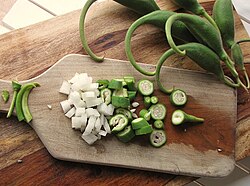
The plant also holds deep cultural importance in craftsmanship and nutrition. The Tohono O'odham people, for example, have selected specific varieties of Proboscidea parviflora with longer "claws" for use in basket weaving. The Chemehuevi people also utilize devil's claw pods for basketry. Furthermore, the Hia C-eḍ Oʼodham and the Tohono O'odham have traditionally eaten the seeds, which serve as an important source of dietary oils. In addition to these uses, P. parviflora was historically used as a remedy for rheumatism.
Diversity of Species
The genus includes several distinct species, each with its own common names and characteristics. While most are recognized by their unique pod shapes, they vary across different desert and dune environments.
Common Proboscidea Species
- Proboscidea althaeifolia: Known as devil's horn, devil's claw, or the desert unicorn plant.
- Proboscidea louisianica: Commonly referred to as ram's horn.
- Proboscidea parviflora: Also known as doubleclaw or (red) devil's claw.
- Proboscidea sabulosa: Known as the dune unicorn plant.
- Proboscidea spicata: Known as the New Mexico unicorn plant.
- Proboscidea lutea: A name used as a synonym for Ibicella lutea.
Species Summary Table
| Scientific Name | Common Name(s) |
|---|---|
| P. althaeifolia | Devil's horn, devil's claw, desert unicorn plant |
| P. louisianica | Ram's horn |
| P. parviflora | Doubleclaw, (red) devil's claw |
| P. sabulosa | Dune unicorn plant |
| P. spicata | New Mexico unicorn plant |
Key Facts
- Edibility: The unripe fruits are edible and can be steamed like okra.
- Dispersal: Seed pods use hooks to catch on animal feet to spread seeds.
- Craftsmanship: Pods are used by the Tohono O'odham and Chemehuevi for basket weaving.
- Nutrition: Seeds are a source of dietary oils for the Hia C-eḍ Oʼodham and Tohono O'odham.
- Medicinal Use: Proboscidea parviflora has been used to treat rheumatism.
Frequently Asked Questions
What are the common names for the Proboscidea plant?
Common names include devil's claw, devil's horn, ram's horn, and the unicorn plant.
How do these plants spread their seeds?
The plants produce long, hooked seed pods that catch onto the feet of passing animals. The movement of the animals eventually crushes the pods, releasing the seeds.
Can you eat the fruits of the devil's claw?
Yes, the fruits of all species are edible as long as they are eaten before they ripen and become woody. They can be steamed similarly to okra.
How is the plant used in traditional basketry?
The Tohono O'odham and Chemehuevi use the pods in basket weaving. The Tohono O'odham have specifically selected varieties, such as P. parviflora, that produce longer "claws" for this purpose.
Is there a medicinal use for Proboscidea?
Yes, Proboscidea parviflora has been used as a remedy for rheumatism.