Dehiscence: The Biological Mechanisms of Plant Structure Splitting
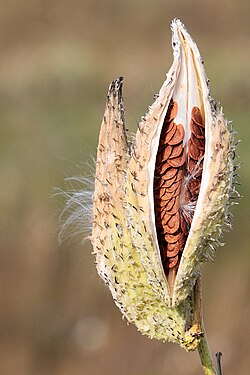
In the natural world, the successful dispersal of seeds, pollen, and spores is vital for the survival of many species. One of the most effective ways plants achieve this is through dehiscence—the process where a mature plant structure splits along a built-in line of weakness to release its contents. This biological mechanism is commonly observed in fruits, anthers (the pollen-bearing part of a flower), and sporangia (structures that produce spores).
While dehiscent structures open actively to distribute their biological cargo, other plants possess indehiscent structures. These do not split open on their own and instead rely on external factors like decay, predation, or digestion by herbivores to release their contents.
Key Facts
- Dehiscence is the splitting of mature plant structures to release contents.
- Explosive dehiscence can fling seeds up to 100 meters away.
- Anther dehiscence is a precisely timed process essential for pollen release.
- Crop breeding often aims to reduce "shattering" (unwanted seed dispersal) to improve yields.
- Poricidal dehiscence involves release through small pores, often linked to buzz pollination.
Mechanisms of Dispersal
Explosive Dehiscence
Some plants utilize a ballistic method known as explosive dehiscence. This rapid movement flings seeds or spores far from the parent plant without needing animal assistance. The sandbox tree (*Hura crepitans*), often called the "boomer plant," can launch seeds as far as 100 meters (300 ft) with a loud sound. Similarly, the *Impatiens* genus, known as "touch-me-not," triggers its explosive release upon physical contact. Other unique examples include the "squirting cucumber" (*Ecballium elaterium*), which ejects seeds in a stream of mucilaginous liquid, and the moss genus *Sphagnum*, which uses this method for its sporangia.
Septicidal and Loculicidal Dehiscence
When fruits split, the pattern of the split defines the type of dehiscence. These mechanisms are categorized by whether the split occurs at the partitions between chambers or through the chamber walls themselves:
- Loculicidal dehiscence: The wall of the locule (the chamber containing seeds) splits, while the septa (the internal partitions) remain intact. An example is found in *Lagerstroemia* capsules.
- Septicidal dehiscence: The split occurs at the septum that separates the loculi. This is seen in the capsules of *Ledum palustre*.
In some complex cases, both the septa and the locule walls may split simultaneously.
Anther Dehiscence and Pollen Release
For flowering plants, the release of pollen is a highly coordinated event. Anther dehiscence occurs at the stomium, a specific region of the anther wall. This process is driven by a developmentally timed cell-death program and the expansion of the endothecium layer. As the endothecium dries, uneven lignification (the hardening of cell walls) creates tension that eventually causes the anther to split along its line of weakness.
The direction of pollen release is also categorized:
- Extrorse: Pollen is released from the outer side of the anther.
- Introrse: Pollen is released from the inner side.
- Latrorse: Pollen is released from the side, directed toward other anthers.
Specialized Types of Dehiscence
Poricidal Dehiscence
Poricidal dehiscence occurs when contents are released through a small hole or pore. This can be operculate (having a lid called an operculum) or inoperculate (without a lid). This mechanism is found in various organisms, including fungi and ferns, and in many flowers where poricidal anthers are associated with buzz pollination by insects.
Circumscissile Dehiscence
In circumscissile dehiscence, a horizontal opening causes a lid to separate completely from the structure. While this is most commonly associated with anthers, it also occurs in some flower buds, such as those of *Eucalyptus*, and certain fruits like *Anagallis*.
Fruit Dehiscence and Agricultural Impact
Fruit dehiscence varies widely depending on whether the fruit is derived from one carpel (follicles or legumes) or multiple carpels (capsules or siliques). Some fruits are hygroscopic, meaning their opening is triggered by moisture: xerochasy occurs upon drying, while hygrochasy occurs upon wetting.
In agriculture, managing dehiscence is critical. Farmers often breed crops for reduced shattering—the premature or excessive release of seeds—to ensure maximum yield during harvest. For example, in siliques, the dehiscence zone is a non-lignified layer between the valves and the replum (the persisting septa); controlling this process helps prevent seed loss.
| Type | Mechanism | Common Example |
|---|---|---|
| Explosive | Ballistic ejection of contents | Sandbox tree (*Hura crepitans*) |
| Loculicidal | Splitting of the locule wall | *Lagerstroemia* capsules |
| Septicidal | Splitting of the septum | *Ledum palustre* capsules |
| Poricidal | Release through a small pore | Poppy fruit / Buzz-pollinated flowers |
| Circumscissile | Horizontal opening with a lid | *Eucalyptus* buds / *Anagallis* fruit |
Frequently Asked Questions
What is the difference between dehiscence and abscission?
Dehiscence refers specifically to the splitting of a structure to release contents, whereas abscission is the broader process of a structure separating and falling off the plant entirely.
What is anthesis?
Anthesis is the technical term used for the opening of a flower. While some flower buds open via circumscissile dehiscence, the term anthesis is the more common way to describe the flowering stage.
Why is shattering a problem for farmers?
Shattering refers to the dehiscence of seeds from the fruit. For farmers, this is a disadvantage because it causes the crop to disperse its seeds prematurely, making it difficult to collect the seeds for harvest.
How do plants use dehiscence for pollination?
Some plants use poricidal anther dehiscence to facilitate buzz pollination, where specific insects vibrate the flower to shake the pollen out of the small pores.
Can dehiscence happen without water?
Yes. While some dehiscence is triggered by wetting (hygrochasy), other types are triggered by drying (xerochasy) or are purely mechanical/ballistic, such as explosive dehiscence.