Prince Maximilian of Baden: The Last Chancellor of the German Empire
Prince Maximilian of Baden, often known as Max von Baden, was a pivotal figure in German history who stood at the intersection of imperial tradition and democratic revolution. A member of the House of Baden, he is most remembered as the final Chancellor of the German Empire, tasked with the impossible mission of securing peace during the chaotic final weeks of World War I.
Born into high aristocracy and trained in both law and military science, Maximilian was viewed as a moderate in an era of extremes. His tenure as Chancellor was brief, lasting only from October to November 1918, yet his actions during this window fundamentally altered the course of German governance, leading directly to the end of the monarchy.
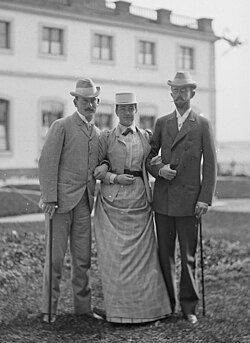
Key Facts
- Full Name: Maximilian Alexander Friedrich Wilhelm.
- Primary Role: Last Chancellor of the German Empire and Minister President of Prussia (1918).
- Key Achievement: Negotiated the armistice of World War I based on Woodrow Wilson's Fourteen Points.
- Political Legacy: Unilaterally announced the abdication of Emperor Wilhelm II on November 9, 1918.
- Educational Contribution: Co-founded the Schule Schloss Salem boarding school.
Early Life and Military Career
Maximilian was born on July 10, 1867, in Baden-Baden. He was the son of Prince Wilhelm of Baden and Princess Maria Maximilianovna of Leuchtenberg. After studying law at Leipzig University, he entered the Prussian Army, eventually reaching the rank of Generalmajor (Major General) before applying for discharge in 1911.
In 1907, following the death of his uncle, Grand Duke Frederick I, Maximilian became the heir presumptive to the throne of the Grand Duchy of Baden. He also took on political responsibilities as the president of the Erste Badische Kammer, the upper house of Baden's parliament.
World War I and Humanitarian Efforts
At the start of World War I in 1914, Maximilian served as a general staff officer for the XIV Corps. However, due to poor health and dissatisfaction with his military role, he soon retired from active duty. He pivoted toward humanitarian work, becoming the honorary president of the Baden section of the German Red Cross.
Using his extensive international connections to the Swedish and Russian courts, he worked tirelessly for the welfare of prisoners of war. His liberal views often put him at odds with the Oberste Heeresleitung (OHL), or Supreme Army Command, led by Paul von Hindenburg and Erich Ludendorff. Specifically, he opposed the resumption of unrestricted submarine warfare in 1917, a policy that eventually drew the United States into the conflict.
The Final Chancellorship
By late September 1918, the German military front was collapsing. Emperor Wilhelm II appointed Maximilian as Chancellor on October 3, 1918, replacing Georg von Hertling. Max was chosen because of his reputation as an urbane moderate and his perceived links to the Social Democrats (SPD).
The Struggle for Peace
Maximilian's primary objective was to secure an armistice with the Allies. He based these negotiations on U.S. President Woodrow Wilson's Fourteen Points, a set of principles intended to ensure a lasting peace. However, he faced internal resistance from General Ludendorff, who wished to continue fighting. In a decisive move on October 25, Maximilian forced Ludendorff's resignation with the Emperor's approval.
The Fall of the Empire
As the German Revolution spread in November 1918, the situation became untenable. Suffering from the Spanish influenza, Maximilian urged Wilhelm II to abdicate to prevent further bloodshed. When the Emperor refused to renounce the Prussian crown, Maximilian took a drastic step. On November 9, 1918, he unilaterally announced the abdication of the Emperor and the Crown Prince, handing power to SPD Chairman Friedrich Ebert.
Later Life and Legacy
Following the revolution, Maximilian retired to Baden. He declined a seat in the 1919 Weimar National Assembly and focused on education and writing. In 1920, alongside Kurt Hahn, he established the Schule Schloss Salem, a boarding school designed to cultivate a new intellectual elite for Germany.
In 1928, he became the head of the House of Baden, assuming the title of Margrave of Baden. He passed away on November 6, 1929, in Salem.
| Category | Details |
|---|---|
| Lifespan | 1867 – 1929 |
| Political Offices | Chancellor of the German Empire; Minister President of Prussia |
| Tenure as Chancellor | October 3, 1918 – November 9, 1918 |
| Key Adversary | Erich Ludendorff (OHL) |
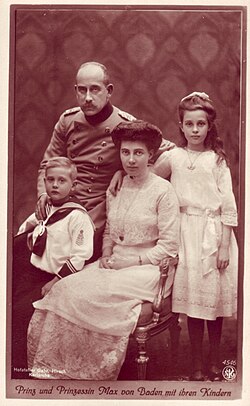
| Family | Spouse: Princess Marie Louise of Hanover; Children: Marie Alexandra and Berthold |
Frequently Asked Questions
Why was Prince Maximilian appointed Chancellor in 1918?
He was appointed because the German military front was collapsing and the government needed a moderate figure who could negotiate an armistice with the Allies and was acceptable to the majority parties of the Reichstag.
What was Maximilian's role in the end of the German monarchy?
On November 9, 1918, amidst a spreading revolution, Maximilian unilaterally announced the abdication of Emperor Wilhelm II and the Crown Prince, effectively ending the German Empire.
How did he contribute to humanitarian efforts during WWI?
As honorary president of the Baden section of the German Red Cross, he used his royal connections in Sweden and Russia to improve the welfare of prisoners of war.
What is the Schule Schloss Salem?
It is a private boarding school co-founded by Prince Maximilian and Kurt Hahn in 1920, aimed at educating a new generation of German intellectual leaders.
Did he support the parliamentary system?
While he had initial reservations and expressed skepticism in private letters, as Chancellor he took significant steps toward transforming the German government into a parliamentary monarchy before the revolution occurred.