Prince Chlodwig zu Hohenlohe-Schillingsfürst: The Statesman of the German Empire
Chlodwig Carl Viktor, Prince of Hohenlohe-Schillingsfürst (1819–1901), was a pivotal figure in the political landscape of 19th-century Germany. A seasoned diplomat and administrator, he ascended to the highest offices of state, serving as the Imperial Chancellor of the German Empire and the Minister-President of Prussia. His career spanned several decades of intense national transformation, navigating the complexities of German unification and the assertive reign of Emperor Wilhelm II.
Born into the princely house of Hohenlohe, Chlodwig's trajectory was marked by a blend of aristocratic duty and liberal political leanings. He became known as one of the most prominent liberal politicians of his era, often balancing the rigid demands of the Prussian monarchy with a more conciliatory approach to governance.
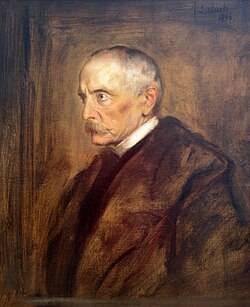
Key Facts
- Full Name: Chlodwig Carl Viktor zu Hohenlohe-Schillingsfürst.
- Highest Office: Imperial Chancellor of the German Empire (1894–1900).
- Key Roles: Minister-President of Bavaria, Governor of Alsace-Lorraine, and German Ambassador to France.
- Political Stance: Independent with affiliations to the Imperial Liberal Party; supporter of the Kulturkampf (Bismarck's struggle against the influence of the Catholic Church).
- Succession: Succeeded Leo von Caprivi as Chancellor and was succeeded by Bernhard von Bülow.
Early Life and Rise to Power
Born on March 31, 1819, in Rotenburg an der Fulda, Chlodwig began his professional life in the Prussian civil service. Despite his noble birth, he was required by King Frederick William IV to complete the standard preliminary steps of the service, which included working as an auscultator (a legal trainee) in the courts at Koblenz.
Succession and Titles
The Prince's path to leadership was shaped by complex family successions. In 1840, his older brother renounced his rights to the Principality of Hohenlohe-Schillingsfürst, leading Chlodwig to receive the titles of Prince of Ratibor and Corvey. Following the death of his father in 1841 and his brother Philipp Ernst in 1845, Chlodwig became the seventh Prince of Hohenlohe-Schillingsfürst. This role granted him a hereditary seat in the Upper House of the Bavarian Reichsrat, necessitating his formal discharge from Prussian service in 1846.
Political Career and Diplomatic Missions
Hohenlohe's political ascent accelerated in 1866 when he was appointed Minister-President of Bavaria, an appointment reportedly instigated by the composer Richard Wagner. During this time, he was viewed as one of the most significant statesmen in Germany, second only to Otto von Bismarck. However, his pro-Prussian views and opposition to ultramontanism (the belief in the absolute authority of the Pope) led to his resignation in 1870.
Despite this setback, he remained influential. He served as a member and vice president of the Reichstag (the German parliament) from 1871 to 1881. His diplomatic skills were further utilized when Bismarck appointed him as the German ambassador in Paris in 1873. Later, in 1885, he was appointed governor of Alsace-Lorraine, where his conciliatory nature helped ease the local population's transition to German rule, even as he privately disagreed with some of Bismarck's coercive measures.
The Chancellorship (1894–1900)
In October 1894, Emperor Wilhelm II appointed the aging Prince as Imperial Chancellor following the dismissal of Leo von Caprivi. Due to his advanced age, Hohenlohe's tenure was characterized by a delegation of power. He granted significant independence to his secretaries of state, most notably Bernhard von Bülow.
As Wilhelm II became more assertive in his personal control of foreign policy, Hohenlohe's actual power diminished. He found himself unable to stop the shift toward an imperialist global strategy, including the naval armaments race and the deterioration of relations with Great Britain. Despite this, he successfully oversaw the adoption of the Bürgerliches Gesetzbuch (the German Civil Code) in 1896 and initiated reforms to the Law on Associations and Prussian Military Law.
Summary of Political Offices
| Office | Tenure | Monarch/Superior |
|---|---|---|
| Minister-President of Bavaria | 1866–1870 | Ludwig II |
| Member of the Reichstag | 1871–1881 | N/A |
| Ambassador to France | 1873–1880 | Otto von Bismarck |
| Governor of Alsace-Lorraine | 1885–1894 | Otto von Bismarck |
| Imperial Chancellor of Germany | 1894–1900 | Wilhelm II |
| Minister-President of Prussia | 1894–1900 | Wilhelm II |
Personal Life and Legacy
On February 16, 1847, Chlodwig married Princess Marie von Sayn-Wittgenstein-Sayn, who brought vast estates in Imperial Russia to the marriage. The couple had six children, including Philipp Ernst and Moritz, who succeeded him as princes. Hohenlohe was a highly decorated figure, receiving numerous honors including the Knight of the Black Eagle and the Grand Cross of the Legion of Honour.
Prince Chlodwig resigned his office on October 17, 1900, and passed away a year later on July 6, 1901, at the age of 82 in Bad Ragaz, Switzerland.
Frequently Asked Questions
Who appointed Chlodwig zu Hohenlohe-Schillingsfürst as Chancellor?
He was appointed by Emperor Wilhelm II on October 29, 1894, following the dismissal of Leo von Caprivi.
What was the Kulturkampf and Hohenlohe's role in it?
The Kulturkampf was a conflict between the German Empire and the Catholic Church. Prince Hohenlohe was a strenuous supporter of Otto von Bismarck's anti-papal measures during this period.
How did Richard Wagner influence the Prince's career?
According to the Prince's son, Alexander, it was at the instigation of the composer Richard Wagner that Chlodwig was appointed Minister-President of Bavaria in 1866.
What was the nature of his relationship with Emperor Wilhelm II?
While the Emperor initially requested his service, the relationship was marked by the Kaiser's increasing assertiveness. This led to a de facto disempowerment of Hohenlohe, as the Emperor took more direct control over foreign policy and naval expansion.
What significant legal achievement occurred during his chancellorship?
The Bürgerliches Gesetzbuch, the comprehensive German Civil Code, was adopted in 1896 during his tenure as Chancellor.