Pine Nuts: Botany, Global Production, and Culinary Uses
Pine nuts—known as piñón in Spanish and pinoli or pignoli in Italian—are the edible seeds of pines within the genus Pinus. While many pine species produce seeds, only 29 are considered edible, and just 20 are traded commercially because their seeds are large enough to make harvesting economically viable. Today, the primary global exporters of these prized seeds are China, Russia, North Korea, and Pakistan.
From a botanical perspective, pine nuts are not "true nuts." Pines are gymnosperms (meaning "naked seed"), unlike angiosperms (flowering plants) whose seeds are enclosed within an ovary that develops into a fruit. The similarity between pine nuts and certain botanical fruits is a result of convergent evolution.
Key Facts
- Botanical Status: They are seeds of gymnosperms, not true botanical nuts.
- Major Producers: China, Russia, North Korea, and Pakistan are the leading exporters.
- Key Species: The Korean pine (P. koraiensis) dominates international trade, while the stone pine (P. pinea) is the European standard.
- Nutritional Profile: High in healthy fats (68%) and rich in manganese, copper, and magnesium.
- Storage: Unshelled nuts last longer; shelled nuts can become rancid quickly if not refrigerated or frozen.
Species and Geographic Distribution
Asia
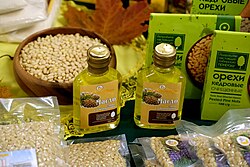
The Korean pine (Pinus koraiensis) is the most significant species for international trade in Northeast Asia. In the western Himalaya, the chilgoza pine (P. gerardiana) is widely harvested. Other species used to a lesser extent include the Siberian pine (P. sibirica), Siberian dwarf pine (P. pumila), Chinese white pine (P. armandii), and lacebark pine (P. bungeana). Russia is the world's largest producer of P. sibirica, with Russia, Mongolia, and Afghanistan each producing over 10,000 metric tons annually, mostly for export to China.
Europe
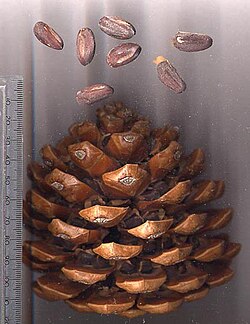
European production centers on the stone pine (P. pinea), which has been cultivated for over 5,000 years, though wild harvesting predates this. The Swiss pine (P. cembra) is also used, albeit on a very small scale.
North America
In the United States, pine nuts are primarily harvested by Hispano and Native American communities, including the Navajo, Hopi, Pueblo, Shoshone, Paiute, and Washoe. In New Mexico, the term piñon is legally protected for use with indigenous pine species. Certain treaties and Nevada state laws specifically guarantee the harvesting rights of Native Americans.

Pollination and Seed Development
The maturity of pine nuts depends heavily on favorable environmental conditions. For several American species, the process begins with spring pollination. A small cone forms between mid-spring and late summer, remains dormant through the winter, and reaches maturity by the end of its second summer.
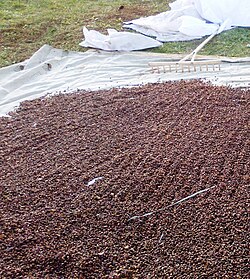
Harvesting typically occurs ten days before the green cone opens. Harvesters often place cones in burlap bags and expose them to heat (such as the sun) for about 20 days to dry and open. The seeds are then extracted by striking the bag against a rough surface to shatter the cones. Alternatively, seeds can be gathered from cones that open naturally on the tree or from those that have fallen to the ground.
Ecology and Production Factors
Increased culinary demand in the 21st century has led to overharvesting, threatening local ecosystems. In the U.S., millions of hectares of pinyon pine woods have been lost to land conversion. In Russia and China, production capacity has declined due to timber removal and destructive harvesting methods, such as breaking off entire branches to reach cones.
The Role of Elevation
Elevation significantly impacts cone production. In the U.S., pinyon pines typically produce the most cones between 1,800 and 2,600 meters (6,000 to 8,500 ft), with an ideal peak at 2,100 meters (7,000 ft). Below 1,800 meters, higher spring temperatures dry out the moisture and snow packs necessary for maturity. Above 2,600 meters, extreme temperature fluctuations and gusty winds can cause freeze-drying, which stunts growth and deteriorates the seeds.
Physical and Nutritional Characteristics
Pine nuts consist of a nutrient-rich embryo (sporophyte) protected by a hard seed coat. European varieties are generally longer and more slender, while Asian varieties are stubbier, resembling corn kernels. American piñon nuts are noted for their large size and ease of shelling.
Because of their high fat content, shelled pine nuts deteriorate rapidly in warm, humid conditions. To prevent them from becoming rancid, they are often frozen or kept refrigerated between -5 and 2 °C (23 to 36 °F).
| Nutrient | Amount | % Daily Value (DV) |
|---|---|---|
| Energy | 673 kcal | - |
| Fat | 68.4 g | - |
| Protein | 13.7 g | - |
| Carbohydrates | 13.1 g | - |
| Manganese | - | 383% |
| Copper | - | 144% |
| Zinc | - | 58% |
| Magnesium | - | 60% |
| Vitamin E | - | 62% |
Culinary Applications
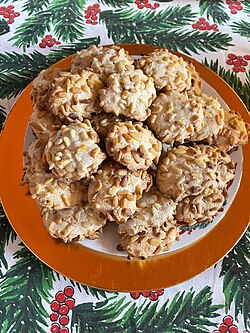
Consumed since the Paleolithic period, pine nuts are versatile ingredients in meat, fish, salads, and breads. They are a cornerstone of Italian pesto and are used in desserts like Torta della nonna and Italian-American pignoli cookies (almond flour dough topped with pine nuts).
In Levantine cuisine, they are essential for dishes such as kibbeh, sambusak, fatayer, maqluba, and desserts like baklava and meghli. While the stone pine (P. pinea) is traditional for these regions, the more affordable Asian varieties are often used in budget-friendly preparations.
Taste Disturbances and Food Fraud
Some consumers experience pine mouth syndrome, a temporary taste disturbance characterized by a bitter, metallic taste that appears 1–3 days after ingestion and can last up to two weeks. This is typically self-limiting and has no lasting clinical side effects.
Investigations by the FDA between 2008 and 2012 revealed that this syndrome was often the result of food fraud. Some manufacturers substituted expensive edible species with non-food pine species, such as Pinus armandii from China, which is linked to the metallic taste.
Other Uses
Beyond food, Native American tribes use the hard shells of pine nuts for traditional jewelry and regalia. In Northern California, tribes may burn intricate designs into the shells of grey or bull pine nuts, mirroring the patterns found in their traditional basketry.
Frequently Asked Questions
Are pine nuts actually nuts?
Botanically, no. They are seeds of gymnosperms, meaning they are "naked seeds" not enclosed in an ovary, unlike true botanical nuts which are fruits.
What causes "pine mouth"?
Pine mouth is a metallic taste disturbance often caused by the consumption of certain non-food pine species, such as Pinus armandii, sometimes introduced into the supply chain through food fraud.
How should I store pine nuts to keep them fresh?
Shelled pine nuts can become rancid quickly. It is best to keep them frozen or refrigerated (between -5 and 2 °C) to preserve their flavor.
Which pine nut species is most common in pesto?
Traditionally, the stone pine (Pinus pinea) is used in Italian pesto, though Asian varieties are sometimes used as a cheaper alternative.
Why does elevation matter for pine nut production?
Elevation affects temperature and moisture. Too low, and spring humidity dries up too quickly; too high, and winter freeze-drying can damage the dormant cones and stunt seed growth.