Pinus pinea: The Iconic Italian Stone Pine of the Mediterranean
The Pinus pinea, commonly known as the Italian stone pine or Mediterranean stone pine, is a distinguished coniferous evergreen belonging to the pine family, Pinaceae. Renowned for its striking silhouette and edible seeds, this tree is a defining feature of the Mediterranean landscape, stretching from Southern Europe to the Levant.
Beyond its natural beauty, the stone pine has a deep historical connection with humanity. Cultivated since prehistoric times for its valuable pine nuts, it has transitioned from a wild forest species to a global ornamental favorite, appearing in parks and gardens from California to South Africa.
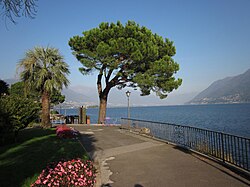
Key Facts
- Scientific Name: Pinus pinea
- Conservation Status: Least Concern (IUCN 3.1)
- Native Range: Mediterranean region (Southern Europe and the Levant)
- Primary Use: Production of edible pine nuts and ornamental landscaping
- Distinctive Shape: Develops a broad, umbrella-like canopy in maturity
- Growth Height: Typically 12–20 meters, though some exceed 25 meters
Botanical Description
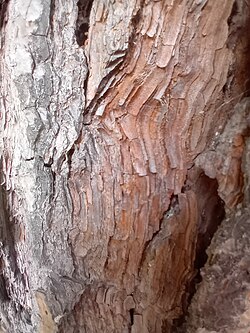
The stone pine is characterized by its dramatic growth stages. In its youth, the tree appears as a bushy globe. As it reaches mid-age, it develops a thick trunk topped with an umbrella-shaped canopy. In full maturity, the crown becomes broad and flat, often exceeding 8 meters in width. The bark is thick, red-brown, and deeply fissured into broad vertical plates.
Foliage and Needles
The foliage consists of flexible, mid-green needle-like leaves. Adult leaves grow in bundles of two and typically measure 10–20 cm in length. Interestingly, young trees (up to 5–10 years old) produce juvenile leaves, which are single, shorter (2–4 cm), and a glaucous blue-green color. These are eventually replaced by adult leaves by the tenth year, though they may reappear if an older tree suffers injury.
Cones and Seeds
The cones of the Pinus pinea are broad and ovoid, measuring 8–15 cm in length. They have the longest maturation period of any pine, taking 36 months to fully develop. Inside these cones are the prized pine nuts (known as piñones, pinhões, pinoli, or pignons).
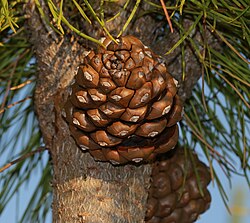
These seeds are approximately 2 cm long, pale brown, and covered in a powdery black coating. Unlike many pines, the seeds have a rudimentary wing that is ineffective for wind dispersal. Instead, they are dispersed by animals—originally the Iberian magpie—and more recently by human cultivation.
Distribution and Habitat
The exact native origin of Pinus pinea is a subject of scientific debate. Strong evidence points to the Western Mediterranean, specifically the Iberian Peninsula (Spain and Portugal), where the most extensive natural stands and highest altitudes are found. Paleolithic and Pleistocene remains in Southern Iberia and pollen data from Southern France support this theory.
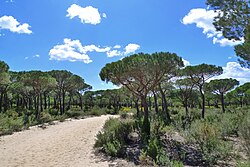
Other theories suggest native origins in the Central and Eastern Mediterranean, including Italy, Greece, Turkey, and Lebanon. Because the tree has been intensively cultivated since at least the 4th century B.C., it is often difficult to distinguish between original native stands and ancient artificial plantings.
Global Presence and Ecoregions
Today, the species is found across several key ecoregions:
- Southern Europe: Including the Iberian conifer forests, the sclerophyllous forests of Italy and France, and the Aegean forests of Greece.
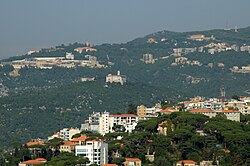
- Western Asia: Found in Turkey, Syria, Lebanon, Israel, and the Palestinian Territories.
- Northern Africa: Present in Morocco, Algeria, and Tunisia.
- Introduced Regions: Naturalized in the Canary Islands, New South Wales, and South Africa (where it is known as kroonden).
Ecology and Threats
While the stone pine is hardy, it faces significant threats from invasive pests and pathogens. The Western conifer seed bug (Leptoglossus occidentalis), accidentally introduced to Italy from the US in the 1990s, feeds on the sap of developing cones, causing seeds to wither and destroying much of the pine nut crop in Italy.
Additionally, the fungus Pestalotiopsis pini has emerged as a pathogen in Portugal, causing shoot blight and stem necrosis. These factors combined have led to a decrease in edible pine nut production in affected regions.
Human Uses and Cultural Significance
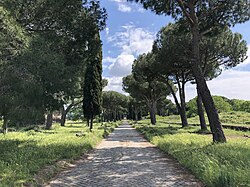
The stone pine is as much a cultural icon as it is a biological species. It is one of the primary symbols of Rome, where it was planted during the Roman Republic to line historic roads like the Via Appia.
Economic and Ornamental Value
The tree provides several valuable resources:
- Food: Edible pine nuts have been traded for over 6,000 years.
- Industry: The tree yields resin, bark for tannin extraction, and cone shells for fuel.
- Environment: It is used for soil conservation, consolidating coastal dunes, and protecting agricultural crops.
- Horticulture: Due to its aesthetic appeal, it has received the Royal Horticultural Society's Award of Garden Merit and is used in bonsai and as small tabletop Christmas trees.
| Feature | Detail |
|---|---|
| Typical Height | 12–20 meters (up to 25m) |
| Crown Shape | Umbrella-shaped / Broad and flat |
| Cone Maturation | 36 months |
| Leaf Arrangement | Bundles of two (Adults) |
| Primary Pests | Western conifer seed bug, Pestalotiopsis pini |
Frequently Asked Questions
What makes the stone pine different from other pines?
The stone pine is most distinguished by its umbrella-shaped canopy in maturity and its exceptionally long cone maturation period of 36 months, which is longer than any other pine species.
Are the seeds of Pinus pinea edible?
Yes, the seeds are the well-known pine nuts used in culinary dishes worldwide. They have been cultivated and traded for at least 6,000 years.
Where is the stone pine native to?
It is native to the Mediterranean region, with strong evidence suggesting its primary origin is in the Western Mediterranean, particularly the Iberian Peninsula.
Why are stone pines common in Rome?
They were planted during the Roman Republic for ornamental purposes, specifically to embellish historic roads like the Via Appia, and have since become a symbol of the city.
What is the difference between juvenile and adult leaves?
Juvenile leaves are single, shorter (2–4 cm), and blue-green, whereas adult leaves grow in pairs and are longer (10–20 cm) and mid-green.