The World of Evergreens: Nature's Year-Round Greenery
In the diverse world of botany, plants are often categorized by how they manage their foliage. While many plants shed their leaves to survive seasonal changes, evergreen plants maintain green, functional foliage throughout the entire year. This stands in stark contrast to deciduous plants, which completely shed their leaves during the winter or a particularly dry season.
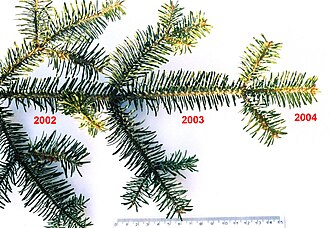
Key Facts
- Evergreens maintain green foliage year-round, unlike deciduous plants.
- The term sempervirens is used to describe plants that are "always green."
- Individual evergreen leaves can last from a few months to as long as 45 years.
- Evergreens are often better adapted to nutrient-poor soils and specific climates like tropical rainforests or boreal forests.
- Conifer needles have historically been used as a source of Vitamin C.
Evergreen Species and Diversity
Evergreen characteristics are found across a wide variety of plant types, including trees, shrubs, and vines. While many people immediately think of needle-leaved trees, the category is much broader.
Common Types of Evergreens
The evergreen trait is found in several distinct groups:
- Most conifers (such as pine, spruce, hemlock, and fir), though it is important to note that not all conifers are evergreens; for example, the larch is deciduous.
- Certain broadleaf species like holly and live oak.
- Ancient gymnosperms (plants that produce seeds without flowers), such as cycads.
- Many woody plants found in frost-free climates.
- Trees that dominate tropical rainforests.
- All species within the eucalyptus genus.
- Clubmosses and their relatives, as well as most bamboos.
The Meaning of "Always Green"
In botanical naming, the Latin binomial sempervirens is frequently used to denote a plant's evergreen nature. This term literally translates to "always green." Examples include the Sequoia sempervirens (sequoia) and the Cupressus sempervirens (a type of cypress).
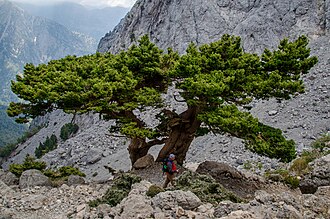
Leaf Longevity
The lifespan of an individual leaf varies significantly among species. While some leaves may only last a few months, others can persist for decades. The record for longevity is held by the Great Basin bristlecone pine (Pinus longaeva), which can retain leaves for up to 45 years.
Biological and Physiological Differences
Evergreen and deciduous plants differ significantly in their physical structures and how they function. Generally, broad-leaved evergreens possess thicker leaves than their deciduous counterparts. These leaves contain a larger volume of parenchyma (a fundamental plant tissue) and more air spaces per unit of leaf area.
Because they have a larger amount of leaf biomass relative to their surface area, evergreens have a lower specific leaf area (the ratio of leaf area to leaf mass). While evergreens typically hold a larger fraction of their total plant biomass in their leaves, they often exhibit a lower rate of photosynthesis compared to deciduous species.
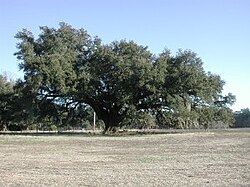
Survival Strategies: Why Go Evergreen?
The decision to be evergreen or deciduous is often an evolutionary response to environmental pressures like temperature and water availability. Deciduous trees typically shed leaves to survive extreme cold or seasonal droughts. In contrast, evergreens replace their leaves gradually rather than all at once.
Climate Adaptations
Climate plays a decisive role in which strategy a plant employs:
- Tropical Rainforests: Most plants here are evergreens, replacing leaves gradually as they age.
- Warm Temperate Climates: These areas are home to many evergreen species.
- Cool Temperate Climates: Evergreens are less common here. Conifers tend to dominate because few evergreen broadleaf plants can survive temperatures below −26 °C (−15 °F).
![Ecuadorian Amazon rainforest. This humid tropical forest has warm temperatures and receives rainfall year round. Vegetation consists of a majority of broadleaf evergreen species.[7]](/images/2e/3c/2e3cf3f299366834b5c4c5761fb4473c4b4ef6af27cddb816d1e80a09490a7ff.jpg)
Temperature also affects the root systems, which are highly vulnerable. While soil provides some insulation, if soil temperatures drop too low, the plant can die. For instance, the roots of the White Spruce (Picea glauca) can be killed at −10 °F (−23 °C).
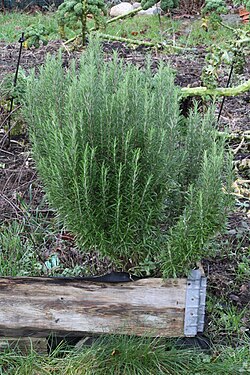
Nutrient and Soil Management
In environments where resources are scarce, being evergreen can be a major advantage. Evergreens are often adapted to low nutrient levels and possess "hard" leaves with excellent water economy. Unlike deciduous trees, which lose nutrients every time they shed their leaves, evergreens conserve these resources.
In taiga (boreal forests), the cold prevents organic matter from decaying quickly, making soil nutrients difficult to access. This environment favors evergreens. Furthermore, evergreen litter has a higher carbon-to-nitrogen (C:N) ratio than deciduous litter. This contributes to higher soil acidity and lower nitrogen levels, creating a cycle that favors the growth of more evergreens while making it difficult for deciduous plants to survive.
Human Uses of Evergreens
Evergreens provide value far beyond their biological functions, serving decorative, functional, and even medicinal purposes.
Landscaping and Culture
In many landscapes, evergreens are prized for their sturdy structure and vibrant color during months when other plants are dormant. They can also serve as effective windbreaks, helping to reduce heat loss from buildings when planted on the appropriate side of a structure.
Culturally, evergreens are widely recognized as symbols of life, endurance, and renewal due to their ability to remain green through the harshest winters.
Medicinal and Culinary Uses
Historically, conifer needles have been used to make teas rich in Vitamin C, helping to prevent or treat scurvy and aiding with colds, coughs, and fatigue. These needles often contain terpenes and phenols, which provide antimicrobial, anti-inflammatory, and expectorant properties.
In modern culinary trends, evergreen teas are enjoyed for their distinct resinous, citrus, and forest-like notes. They are increasingly used in craft beers, craft sodas, herbal infusions, and foraging-based cuisine.
Prominent Evergreen Families
| Family Name | Example |
|---|---|
| Cyatheaceae | Australian tree fern |
| Cycadaceae | Queen sago |
| Araucariaceae | Kauri |
| Podocarpaceae | Real yellowwood |
| Taxaceae | Yew |
| Cupressaceae | Sequoia |
| Pinaceae | Pine |
| Aquifoliaceae | Holly |
| Fagaceae | Live oak |
| Rosaceae | Loquat |
| Fabaceae | Wattle |
| Rutaceae | Citrus |
| Apocynaceae | Oleander |
| Ericaceae | Rhododendron |
| Oleaceae | Olive |
| Myrtaceae | Eucalyptus |
| Arecaceae | Coconut |
| Lauraceae | Bay |
| Magnoliaceae | Southern magnolia |
Frequently Asked Questions
What is the main difference between evergreen and deciduous plants?
The primary difference is how they manage their foliage. Evergreens keep their leaves green and functional throughout the year, while deciduous plants shed all their leaves during specific seasons, such as winter or a dry period.
Are all conifers evergreens?
No, while most conifers are evergreens, there are exceptions. For example, the larch is a conifer that is deciduous.
Why do evergreens thrive in nutrient-poor soils?
Evergreens are often better adapted to low-nutrient environments because they do not lose their leaves (and the nutrients contained within them) every season. This allows them to conserve resources more effectively than deciduous plants.
Can evergreen leaves be used for health purposes?
Yes, conifer needle teas have been used as a source of Vitamin C to help prevent scurvy and as a remedy for colds and coughs, thanks to the antimicrobial and anti-inflammatory properties of terpenes and phenols found in the needles.
How long can an evergreen leaf live?
The lifespan of an evergreen leaf can range from just a few months to several decades. The Great Basin bristlecone pine holds a record, with leaves that can last up to 45 years.