Cultivar: The Science and Art of Cultivated Plants
Whether you are strolling through a botanical garden or browsing a local nursery, you have likely encountered plants with striking colors, unusual shapes, or impressive yields. These are often not wild species, but cultivars. A cultivar—a portmanteau of "cultivated variety"—is a plant that has been deliberately selected by humans for specific, desirable traits and maintains those characteristics when propagated.
From the vibrant petals of ornamental flowers to the high-yield grains in our fields, cultivars play a critical role in horticulture, agriculture, and forestry. Understanding how they are created, named, and protected reveals the complex intersection of botany and human ingenuity.
What Exactly is a Cultivar?
At its core, a cultivar is an assemblage of plants selected for a particular character or combination of characters. To qualify as a cultivar, the plant must be distinct (easily distinguishable from others), uniform (consistent across the group), and stable (retaining its traits through repeated propagation).
Cultivars are produced through various propagation methods, which are techniques used to create new plants from a single parent. These include:
- Division and offsets (separating parts of the plant).
- Root and stem cuttings.
- Grafting (joining tissues from two different plants).
- Tissue culture (growing cells in a sterile laboratory environment).
- Carefully controlled seed production.
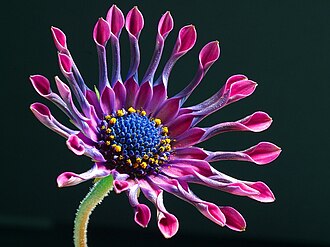
Common examples include popular ornamental plants like azaleas, rhododendrons, camellias, and roses, which are often selected for their floral size or color. In agriculture, almost all food crops are cultivars selected for flavor, disease resistance, or improved yield. Even forestry utilizes them; for instance, the American company Weyerhaeuser grows genetically modified Douglas-fir trees to enhance timber quality.
Cultivars vs. Cultigens
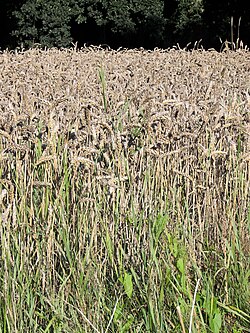
It is common to confuse the terms cultivar and cultigen, but they represent different levels of classification. A cultigen is a broader category: any plant whose origin or selection is primarily due to intentional human activity. While all cultivars are cultigens, not all cultigens are cultivars. A cultigen only becomes a cultivar once it is formally distinguished and named.
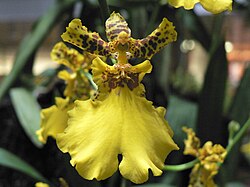
Furthermore, a cultivar is distinct from a botanical variety. In botany, a variety is a formal taxonomic rank below the level of subspecies. The rules for naming botanical varieties differ significantly from those used for cultivars.
The History and Etymology of the Term
The distinction between wild plants and those altered by human cultivation is not new. The Greek philosopher Theophrastus, known as the "Father of Botany," recognized the difference between wild and cultivated plants in his works, noting the limits of phenotypic changes (observable physical characteristics) versus genetic constitution.
For centuries, "garden-derived" plants were given various horticultural names, often in Latin or local languages. However, as international trade grew, a standardized system was needed. In 1923, Liberty Hyde Bailey of Cornell University coined the word "cultivar." Bailey intended the term to describe a botanical variety or race that originated under cultivation, providing a "euphonious" and unambiguous term for the global community.

How Cultivars are Developed
Depending on the desired trait and the plant species, cultivars are created using different biological paths.
Asexual Propagation and Clones
Cultivars produced asexually are genetically identical to the parent and are known as clones. This occurs through cuttings, grafting, or budding. Some cultivars are chimeras, meaning they possess mutant tissues alongside normal tissue, or graft-chimeras, resulting from the grafting of different plant types.
Seed-Produced Cultivars
Some cultivars "come true from seed," meaning the offspring retain the parent's traits. These may be produced through:
- Inbreeding or self-fertilization to create stable "lines."
- F1 hybrids, which result from a single, repeatable cross between two pure lines.
- Agamospermous reproduction, where plants retain their genetic composition without fertilization.
Genetic Modification and Ploidy
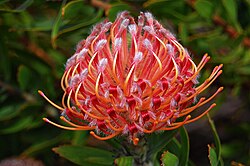
Modern science allows for the creation of cultivars through the implantation of genetic material from different germplasms (genetic resources). Additionally, some cultivars are selected based on changes in ploidy level (the number of sets of chromosomes), which can result in more desirable physical characteristics.
The Rules of Naming and Registration
To prevent confusion, the naming of cultivars is governed by the International Code of Nomenclature for Cultivated Plants (ICNCP). A correct cultivar name consists of the scientific Latin botanical name followed by a cultivar epithet.
Formatting Guidelines
- The cultivar epithet must be enclosed in single quotation marks (e.g., Solanum tuberosum 'King Edward').
- The epithet should not be italicized, even if the botanical name is.
- Each word in the epithet must be capitalized.
- Since January 1, 1959, all new cultivar epithets must be in a modern vernacular language, not Latin.
Group Names
When several similar cultivars exist, they may be organized into a Group. Group names are capitalized but not placed in single quotes. For example, Brassica oleracea Capitata Group refers to typical cabbages. If a specific cultivar is mentioned within a group, the group name is placed in parentheses: Hydrangea macrophylla (Hortensia Group) 'Ayesha'.
Legal Protection and Trade Designations
Because developing a new cultivar requires significant time and investment, plant breeders often seek legal protection through plant patents or plant breeders' rights (PBR). The International Union for the Protection of New Varieties of Plants (UPOV) coordinates this protection globally, ensuring that new cultivars are distinct, uniform, and stable.
Trade Designations vs. Scientific Names
There is a difference between a cultivar's scientific name and its trade designation (or selling name). While a scientific name like Rosa 'Poulmax' is in the public domain, a retailer may market it under a catchy name like Rosa Fascination. Trade designations are used for marketing and are not governed by the ICNCP.
The Role of the ICRA
The International Cultivar Registration Authority (ICRA) is a voluntary organization that maintains registers for specific plant genera (such as Dahlias or Rhododendrons). The ICRA ensures that new names are not duplicated and conform to the Cultivated Plant Code, providing stability to plant nomenclature worldwide.
Summary of Key Botanical Terms
| Term | Definition | Key Characteristic | Example |
|---|---|---|---|
| Cultigen | Any plant altered by human activity. | Broadest category of cultivated plants. | Bread wheat (Triticum aestivum) |
| Cultivar | A selected plant that retains traits during propagation. | Must be distinct, uniform, and stable. | Solanum tuberosum 'King Edward' |
| Clone | A cultivar produced asexually. | Genetically identical to the parent. | Plants from stem cuttings |
| Botanical Variety | A taxonomic rank below subspecies. | Governed by different naming rules than cultivars. | Wild botanical variations |