Phoenician Language and the Evolution of the Alphabet
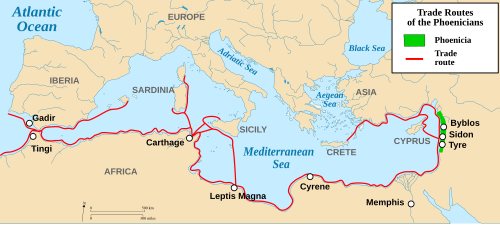
The Phoenician language served as the linguistic backbone of one of the ancient world's most influential maritime civilizations. Native to Canaan, Lebanon, North Africa, Cyprus, Iberia, Sicily, Malta, and Sardinia, this language was a primary vehicle for trade and diplomacy across the Mediterranean Basin from the mid-11th century BC until the 2nd century BC.
As a member of the Afro-Asiatic family, specifically within the Northwest Semitic branch of the Canaanite group, Phoenician is most famous for its revolutionary approach to writing. By transitioning from complex symbols to a streamlined phonetic system, the Phoenicians laid the groundwork for nearly all modern alphabets.
Key Facts
- Language Family: Afro-Asiatic > Semitic > Northwest Semitic > Canaanite.
- Writing System: An abjad (a consonantal alphabet) that influenced the Greek and Latin scripts.
- Timeline: Attested in Canaan from the mid-11th century BC to the 2nd century BC.
- Major Dialects: Included Byblian, Tyro-Sidonian, Eastern, Western, and Punic.
- Decipherment: First decoded by Jean-Jacques Barthélemy in 1758 using the Cippi of Melqart.
The Phoenician Writing System
The Phoenicians were the first state-level society to implement extensive use of the Semitic alphabet. Before the mid-11th century BC, the script is generally referred to as Proto-Canaanite. After 1050 BC, it is formally recognized as the Phoenician alphabet.
Unlike modern English, Phoenician was an abjad, meaning it primarily recorded consonants. This system was adopted and modified by the Greeks, who added vowels, and later by the Etruscans, leading to the development of the Latin alphabet used today.
Evolution into Punic and Neo-Punic
As the Phoenician civilization expanded, particularly in North Africa, the language evolved into Punic. The Punic script became more cursive and began marking vowels (specifically final vowels) using letters like aleph or ayin by the 3rd century BC.
Following the destruction of Carthage around 149 BC, a further variation known as Neo-Punic became predominant. Neo-Punic utilized matres lectionis (consonantal letters used to indicate vowels) more systematically. In later centuries, Punic was even written using the Greek alphabet in Algeria (1st century BC) and the Latin alphabet in Tripolitania (3rd and 4th centuries AD).
Linguistic Structure and Phonology
Phoenician phonology featured a complex array of consonants, including bilabial, alveolar, palatal, velar, uvular, pharyngeal, and glottal sounds. It distinguished between plain and emphatic consonants, a common trait in Semitic languages.
Grammar and Morphology
The language employed a sophisticated system of nominal morphology, distinguishing between singular, dual, and plural forms, as well as masculine and feminine genders. Numerals also followed strict gender rules; for example, the number one functioned as an adjective, while numbers three through ten functioned as nouns in the singular.
| Feature | Description |
|---|---|
| Script Type | Abjad (Consonantal) |
| Primary Regions | Lebanon, North Africa, Iberia, Cyprus, Sicily, Malta, Sardinia |
| Key Descendants | Punic, Neo-Punic |
| Alphabet Influence | Greek → Etruscan → Latin |
| Surviving Records | Approx. 10,000 inscriptions |
Survival and Historical Influence
While the language eventually became extinct, its influence persists in modern geography and biology. One theory suggests that Hispania (the Iberian Peninsula) derives from the Punic I-Shaphan, meaning "coast of hyraxes," resulting from a misidentification of local rabbits as hyraxes.
Similarly, the word gorillai entered the Greek language via Punic interpreters describing "hairy people" encountered by Hanno the Navigator in the Gulf of Guinea. This term was later adopted by Thomas S. Savage in 1847 to name the western gorilla.
The Path to Decipherment
Our knowledge of Phoenician comes primarily from roughly 10,000 surviving inscriptions. For centuries, the language remained a mystery until the discovery of the Cippi of Melqart in Malta in 1694. This bilingual inscription in Ancient Greek and Carthaginian allowed Jean-Jacques Barthélemy to reconstruct the alphabet in 1758.
Other critical surviving artifacts include the Ahiram sarcophagus, the Pyrgi Tablets (which helped decipher the Etruscan language), and the Karatepe bilingual inscription.
Frequently Asked Questions
What is an abjad?
An abjad is a type of writing system where each symbol represents a consonant, and the reader must supply the appropriate vowels based on context. The Phoenician alphabet is one of the oldest verified examples of an abjad.
How did Phoenician influence the English alphabet?
The Phoenician script was adopted by the Greeks, who introduced vowel characters. This Greek system was then adapted by the Etruscans and subsequently the Romans, forming the Latin alphabet that serves as the basis for English.
What is the difference between Phoenician and Punic?
Phoenician refers to the original language and script of the Levant. Punic is the later Western dialect and script used primarily in Carthage and North Africa, characterized by more cursive lettering and a greater tendency to mark vowels.
How was the Phoenician language finally decoded?
The language was decoded in 1758 by Jean-Jacques Barthélemy. He used the Cippi of Melqart, a bilingual stone found in Malta featuring both Greek and Carthaginian (Punic) text, to bridge the gap between the known Greek language and the unknown Phoenician script.