Phoenician Civilization: Masters of the Mediterranean Sea
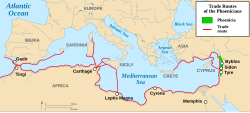
Between approximately 2000 BC and 64 BC, a remarkable maritime culture known as the Phoenicians shaped the course of ancient history. Rather than a single unified empire, Phoenicia was a collection of powerful, independent city-states—most notably Byblos, Sidon, and Tyre—that leveraged their coastal positions to become the premier traders of the ancient world.
Emerging as a distinct force during the Late Bronze Age collapse (c. 1200–1150 BC), these city-states navigated the vacuum left by the weakening of the Egyptian and Hittite empires. While other civilizations faltered, the Phoenicians thrived, asserting their maritime interests and establishing a commercial network that stretched across the Mediterranean.
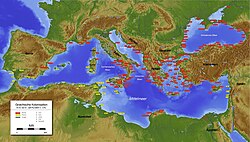
![Approximate extent of Phoenician settlements and trade routes c. 800 BC.[51]](/images/6d/64/6d6405d07eb8ac3a43b15c4084a7bd5a55a0efc5ffabc6130a1dbf9ccfdb4166.jpg)
Key Facts
- Major Cities: Byblos, Sidon, and Tyre.
- Core Language: Phoenician (a Canaanite dialect).
- Major Innovation: The 22-letter Phoenician alphabet (an abjad).
- Economic Drivers: Maritime trade, shipbuilding, and specialized industries like Tyrian purple.
- Key Era: Ascendance occurred between 1200 and 800 BC.
- Legacy: The founding of Carthage in 814 BC.
The Engines of Prosperity: Trade and Industry
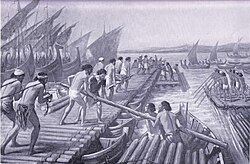
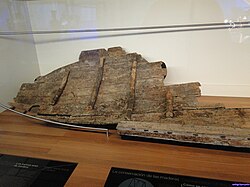
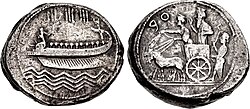
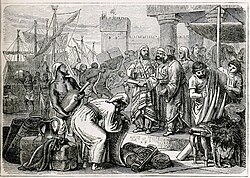
The Phoenician economy was built upon the sea. Their expertise in shipbuilding allowed them to dominate long-distance maritime routes. Archaeological evidence, such as a 39-foot trading ship found near Gozo, Malta, dating to 700 BC, highlights their advanced nautical capabilities.
One of their most significant technical contributions was the development of mortise and tenon joinery. This method of using pegged joints to connect timber made their vessels exceptionally sturdy, a technique often referred to as "Phoenician joints" in archaeological contexts.
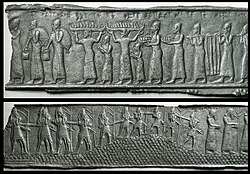
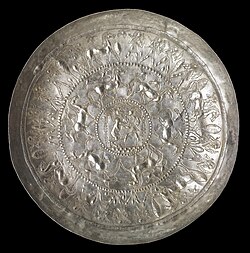
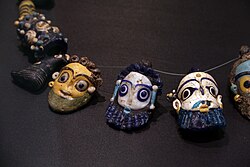
Beyond shipping, the Phoenicians were master artisans. They were famous for Tyrian purple, a highly valued dye, and for their ability to adapt artistic styles from neighboring cultures, including Egyptian and Mesopotamian influences. This cultural fluidity is evident in their metalwork and glass production.
The Phoenician Alphabet and Cultural Legacy
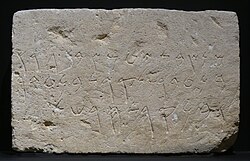
Perhaps the most enduring contribution of the Phoenicians was the development of their alphabet around 1050 BC. Unlike complex logographic systems, this script consisted of 22 letters, all of which were consonants. This system, known as an abjad, was spread throughout Anatolia, North Africa, and Europe via their extensive trade networks, laying the groundwork for many modern writing systems.
Their influence extended far beyond writing. Through colonization, they established outposts that would become major powers in their own right. The most famous of these, Carthage, was founded in 814 BC and would eventually become a dominant force in the Western Mediterranean until its Roman annexation in 64 BC.
Political and Social Structure
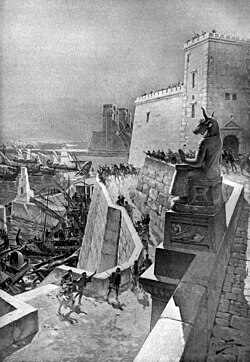
The political landscape of Phoenicia was characterized by independent city-states ruled by kings. Notable rulers included Hiram I of Tyre, who oversaw the city's rise to dominance in the 10th century BC, and Pygmalion of Tyre. However, the importance of commerce meant that power was often shared between the monarchy and influential assemblies of merchant families.
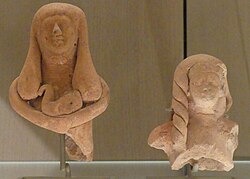
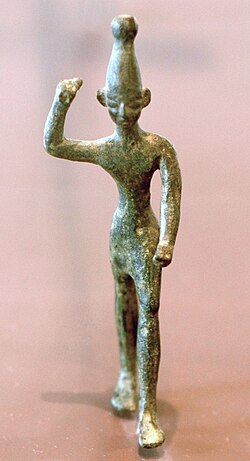
Religion played a central role in daily life, centered on the Canaanite religion. Votive figurines and temple remains suggest a deeply spiritual society that honored various deities through ritual and art.
Summary of Phoenician History and Geography
| Category | Details |
|---|---|
| Timeline | c. 2000 BC – 64 BC |
| Primary Cities | Byblos, Sidon, Tyre |
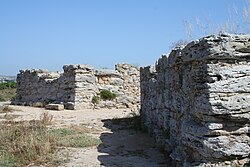
| Major Colonies | Carthage (founded 814 BC), Motya |
| Writing System | 22-letter consonantal alphabet |
| Key Industries | Shipbuilding, Purple Dye, Metalwork, Glass |
Frequently Asked Questions
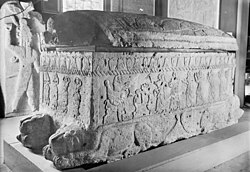
![Phoenician sarcophagi found in Cádiz, Spain, thought to have been imported from the Phoenician homeland around Sidon.[103][104] Archaeological Museum of Cádiz.](/images/30/6a/306abf0209a67cf9c75aa75f6404cc7980624a7861851627579f22d1f337520e.jpg)
What was the significance of the Phoenician alphabet?
The Phoenician alphabet was a 22-letter consonantal script (an abjad) that was much simpler than previous writing systems. Because it was spread through maritime trade, it became a foundational element for many subsequent alphabets in Europe and North Africa.
Which city was the most powerful in Phoenicia?
While Byblos, Sidon, and Tyre were all major centers, Tyre became a particularly dominant city-state under the reign of King Hiram I around 969 BC.
How did the Phoenicians influence the Greeks?
The Phoenicians maintained deep ties with the Greeks, beginning as early as the Minoan civilization. Their trade networks and the spread of their alphabet significantly influenced the development of classical Greek culture.
What happened to the Phoenician city-states?
Over time, the Phoenician cities faced various pressures, including vassalage under the Assyrians and Babylonians, and later the Persian Empire. Eventually, the region was absorbed by the Roman Republic in 64 BC.
What is "Tyrian purple"?
Tyrian purple was a highly prized and expensive dye produced by the Phoenicians, which became a symbol of status and wealth in the ancient world.