Alphabets: The Evolution of Human Writing Systems
At its core, an alphabet is a writing system that utilizes a standardized set of symbols, known as letters, to represent the sounds of a spoken language. These letters typically correspond to phonemes—the smallest units of sound that can distinguish one word from another. While we often think of alphabets as the primary way to write, they are just one of several methods used to record human speech.
Other systems include syllabaries, which assign symbols to entire syllables, and logographies, which use symbols to represent words, morphemes (the smallest units of meaning), or other semantic units. The transition from complex logographic systems to streamlined alphabets represents one of the most significant shifts in human communication.

Key Facts
- Alphabets use letters to represent individual sounds (phonemes).
- The Proto-Sinaitic script is considered one of the earliest phonemic scripts.
- The Phoenician alphabet is the ancestor of many modern scripts, including Latin, Greek, and Arabic.
- Writing systems can be alphabetic, syllabic, or logographic.
- Bopomofo is a semi-syllabary used in Taiwan to transcribe Standard Chinese.
The Origins of Phonetic Writing
The journey toward the modern alphabet began in Ancient Egypt. Lexicographers identify a set of approximately 24 uniliteral signs—hieroglyphs that represent a single sound. These were used as pronunciation guides for logograms, to indicate grammatical inflections, and eventually to transcribe foreign names and loanwords. This system remained in use until the 5th century AD, after which it was largely forgotten following the closure of pagan temples, until the discovery of the Rosetta Stone.
The first truly phonemic script is believed to be the Proto-Sinaitic script. Emerging around 1840 BC in the Egyptian turquoise mines of the Sinai Peninsula, this script was likely developed by Canaanite workers. Recent archaeological evidence from the Wadi el-Hol valley suggests that an earlier version of this script may have existed as far back as 1800 BC, adapted from Egyptian hieroglyphs dating to 2000 BC.
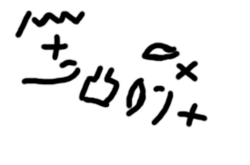
While the Proto-Sinaitic script was a major milestone, it originally lacked characters for vowels and may have functioned as a syllabary before being refined. Another notable Bronze Age system was Ugaritic, an alphabetic cuneiform script used in Ugarit before the 15th century BC. It featured 30 signs, including three that indicated following vowels, but fell out of use after the destruction of Ugarit in 1178 BC.
The Rise of the Phoenician Alphabet
The Proto-Sinaitic script eventually evolved into the Phoenician alphabet (also known as Proto-Canaanite) by approximately 1050 BC. The oldest known Phoenician text is an inscription on the sarcophagus of King Ahiram, dating to roughly 1000 BC. This system is widely regarded as the parent script for most Western alphabets.
By the 10th century BC, the Phoenician system branched into different forms, such as Canaanite and Aramaic. The Aramaic script, in turn, became the foundation for the Hebrew alphabet. This lineage continues to influence the scripts used across the globe today.
| System Type | Unit of Representation | Example Concept |
|---|---|---|
| Alphabet | Phonemes (individual sounds) | Letters representing single sounds |
| Syllabary | Syllables (consonant + vowel) | One symbol per syllable |
| Logography | Words or Morphemes | One symbol per meaning/word |
Diverse Scripts and Modern Variations
As civilizations expanded, so did the variety of writing systems. The Latin alphabet, derived from the Phoenician lineage, has become the most widely used script, serving languages across Europe, Africa, the Americas, and Oceania.

In Asia, writing systems developed unique characteristics. For instance, Bopomofo (also known as Zhuyin) is a semi-syllabary used in Taiwan to transcribe Standard Chinese. It functions as a hybrid: individual symbols represent syllable initials (like an alphabet), but specific characters represent entire syllable finals (like a syllabary). While its use on mainland China is limited due to the adoption of Hanyu Pinyin, it remains a vital tool for pronunciation aid and digital input methods.
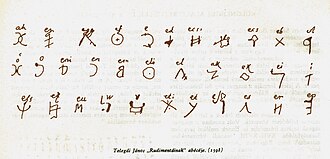
Other specialized scripts have also appeared throughout history, such as the Old Hungarian script, demonstrating the incredible diversity of human attempts to codify language through visual symbols.
Frequently Asked Questions
What is the difference between an alphabet and a syllabary?
An alphabet uses individual symbols to represent single sounds (phonemes), whereas a syllabary uses symbols to represent entire syllables (a combination of sounds).
Which script is considered the ancestor of most modern Western alphabets?
The Phoenician alphabet is considered the primary ancestor of most Western writing systems, including the Latin, Greek, and Cyrillic scripts.
What are uniliteral signs?
Uniliteral signs are specific Egyptian hieroglyphs that represent a single sound. They were used as pronunciation guides and to write grammatical inflections.
How does Bopomofo work?
Bopomofo is a semi-syllabary. It uses individual symbols for syllable initials, but uses unique characters to represent entire syllable finals.
Why did the Egyptian hieroglyphic system fall out of use?
The system was largely forgotten after the 5th century AD, following the closure of pagan temples, until the Rosetta Stone allowed for its modern decipherment.