Ancient Lebanon: From Prehistoric Settlements to Roman Rule
The history of the region now known as Lebanon is a chronicle of strategic geography and maritime mastery. Situated in the Eastern Mediterranean, this land served as a vital bridge between continents, evolving from Neolithic fishing villages into a powerful network of city-states that shaped the course of Western civilization through trade, art, and the invention of the alphabet.
Prehistoric Foundations
Human settlement in Lebanon dates back to before 5000 BC. The city of Byblos stands as a primary example, regarded as the oldest continuously inhabited city in the world. Archaeological findings there—including primitive weapons, burial jars, and huts with crushed limestone floors—reveal the existence of Neolithic and Chalcolithic fishing communities living along the coast over 8,000 years ago.
The Bronze Age and the Rise of the Phoenicians
By 4000 BC, the region emerged in historical records as a collection of coastal cities backed by dense forests. This area was inhabited by the Canaanites, a Semitic people. The Greeks later referred to them as "Phoenicians," derived from phoinikies, the purple dye they produced and traded.
Rather than forming a centralized empire with a single capital, the Canaanites established a Thalassocracy—a system of maritime supremacy based on independent city-states. Key centers included:
- Tyre and Sidon: Primary hubs for maritime trade.
- Gubla (Byblos) and Berytus (Beirut): Centers of religion and commerce.
Gubla was particularly notable for its early trade with the Egyptian Old Kingdom (2686-2181 BC), exchanging cedar, wine, and olive oil for gold from the Nile Valley.
Egyptian Influence and Autonomy
Relations with Egypt fluctuated over centuries. After a period of rule by the Hyksos (1600-1570 BC), the pharaoh Thutmose III (1490-1436 BC) incorporated Canaan into the Egyptian Empire. However, as Egyptian power waned toward the 12th century BC, the city-states regained their autonomy.
This era of independence sparked a golden age of prosperity. The Canaanites invented the alphabet, which revolutionized trade and communication. They became masters of glassmaking, metalwork, ivory carving, and textile production, establishing colonies in Cyprus, Rhodes, Crete, and Carthage.
The Beqa Valley Trade Routes
During the Middle Bronze IIA, the Beqa Valley served as a critical trade artery between the Kingdom of Qatna in the north and the Kingdom of Hazor in the south. Kamid el-Loz functioned as a central hub, featuring a palace and temple that connected routes leading to Beirut, Sidon, Damascus, and Baalbek.
By the Late Bronze II, the valley's control shifted. Kamid el-Loz became the seat of an Egyptian governor, while the northern region became a contested borderland between the Egyptian Empire and the Hittite Empire, following the campaigns of Suppiluliuma I around 1350 BC.
The Era of Great Empires
Assyrian and Babylonian Dominance
The independence of the city-states ended with the Assyrian rule (875-608 BC). Despite repeated rebellions by Tyre and Byblos, rulers like Tiglath-Pileser III and Sargon II imposed heavy tributes and brutal sieges. Sidon was completely destroyed by Esarhaddon (681-668 BC), and its people were enslaved.
Following the collapse of the Assyrians, the Babylonians took control. Under Nebuchadnezzar II, Tyre resisted a Babylonian siege for thirteen years (587-574 BC) before finally capitulating, resulting in the dethronement of its king and the enslavement of its citizens.
The Achaemenid Persian Period
In 539/8 BC, Cyrus the Great conquered Babylon, bringing Phoenicia under the Achaemenid Empire. For two centuries, the Canaanite navy supported Persia, most notably during the Greco-Persian Wars. However, heavy tributes eventually sparked new revolts against the successors of Darius I.
Classical Antiquity and Hellenistic Influence
The Persian era ended in the 4th century BC with the arrival of Alexander the Great. While most cities accepted his rule, Tyre resisted. Alexander besieged the city in 332 BC for six months before it fell. This conquest introduced a lasting Greek cultural imprint on the cosmopolitan Phoenician population.
After Alexander's death in 323 BC, the region became a battleground between his generals. Eventually, the Seleucid dynasty, founded by Seleucus I, secured control over Canaan and northern Syria after a forty-year conflict with Ptolemy.
The Roman and Byzantine Epochs
In 64 BC, the Roman general Pompey annexed the region, making it a Roman province. Under the Pax Romana (Roman Peace), the region flourished. Byblos, Sidon, and Tyre were granted Roman citizenship and became industrial hubs for glass, pottery, and purple dye.
The Romans invested heavily in urban development, building paved roads and massive architectural complexes. In Heliopolis (modern Baalbek), they constructed a colossal temple complex dedicated to Jupiter, Bacchus, and Venus, as well as a temple to Mercury.
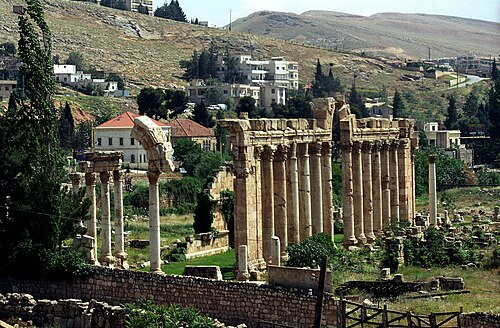
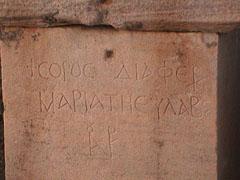
Berytus (Beirut) became a colonia in 14 BC and was renowned for its prestigious school of law. Famous jurists such as Papinian and Ulpian taught there under the Severan emperors. In 193 AD, Emperor Septimius Severus established the province of Phoenice, separating it from Syria Coele.
By 395 AD, the region fell under the Eastern Roman (Byzantine) Empire. While cities continued to prosper for a time, the late 6th century brought disaster. A series of earthquakes devastated Berytus—killing nearly 30,000 people and destroying the law school—and damaged the temples of Heliopolis. Weakened by natural disasters, religious strife, and corruption, the region was eventually conquered by Muslim Arabs in 642 AD.
Key Facts
- Byblos: Considered the oldest continuously inhabited city in the world.
- Thalassocracy: The Canaanites operated as a maritime-based network of city-states rather than a centralized empire.
- Innovation: The Canaanites are credited with the invention of the alphabet and mastery of purple dye production.
- Heliopolis: Home to the largest religious building in the Roman Empire, featuring the Temple of Jupiter.
- Berytus: A Roman colony famous for its influential school of law.
| Period | Approximate Dates | Key Characteristic/Ruler |
|---|---|---|
| Prehistoric | Before 5000 BC | Neolithic fishing communities in Byblos |
| Bronze Age | 4000 BC - 1200 BC | Canaanite city-states and Egyptian influence |
| Assyrian Period | 875 - 608 BC | Loss of independence; heavy tributes |
| Babylonian Period | 685 - 636 BC | Rule of Nebuchadnezzar II |
| Persian Period | 538 - 332 BC | Achaemenid Empire; naval support for Persia |
| Macedonian/Seleucid | 332 - 64 BC | Alexander the Great and Hellenistic culture |
| Roman/Byzantine | 64 BC - 642 AD | Pax Romana; Law school of Berytus; Byzantine rule |
Frequently Asked Questions
Why were the Canaanites called Phoenicians?
The Greeks called them Phoenicians because of the phoinikies (purple dye) they produced and sold, which was a highly prized commodity in the ancient world.
What was a Thalassocracy?
A thalassocracy is a state with primarily maritime supremacy. The Canaanites utilized this model by establishing a network of independent city-states and overseas colonies rather than a land-based empire with a single capital.
What was the significance of Berytus in the Roman Empire?
Berytus (modern Beirut) was a Roman colony and a major intellectual center, most famous for its school of law where renowned jurists like Papinian and Ulpian taught.
Which city is considered the oldest continuously inhabited in the world?
Byblos is considered the oldest continuously inhabited city in the world, with evidence of settlement dating back over 8,000 years.
What led to the end of Byzantine rule in Lebanon?
A combination of devastating earthquakes in the 6th century, internal religious dissension, and administrative corruption weakened the empire, making the region vulnerable to the Muslim Arab invasion in 642 AD.