The 551 AD Beirut Earthquake: A Catastrophic Seismic Event in Byzantine Phoenicia
On July 9, 551 AD, a massive earthquake struck the region of Byzantine Phoenicia, leaving a trail of devastation across the eastern Mediterranean coast. With an estimated moment magnitude (Mw)—a measure of the total energy released by an earthquake—of 7.5, the event remains one of the most significant seismic disasters in the history of the Levant. The quake not only leveled cities but triggered a powerful tsunami that ravaged coastal settlements from Tyre to Tripoli.
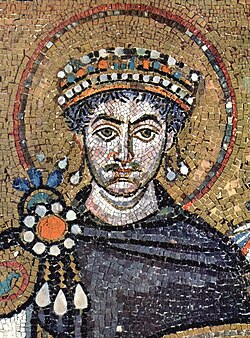
The disaster occurred during the reign of the Eastern Roman Emperor Justinian I, a period of significant architectural and legal development in the empire. The impact was so severe that it altered the geography of the coastline and forced the relocation of prestigious academic institutions.
Key Facts
- Date: July 9, 551 AD
- Estimated Magnitude: 7.5 Mw
- Maximum Intensity: MMI X (Extreme) on the Mercalli scale
- Casualties: Over 30,000 (estimated for Beirut alone)
- Primary Cause: Movement on the Mount Lebanon thrust
- Secondary Disaster: A devastating tsunami with sea withdrawal up to 3 km
Tectonic Setting and Geological Cause
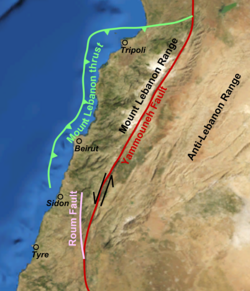
Modern-day Lebanon is situated atop the Dead Sea Transform, a complex fault system that marks the boundary between the African and Arabian tectonic plates. In this region, the fault zone creates a "restraining bend," where the fault trace shifts to the right, leading to transpressional deformation—a combination of compression and shearing.
This geological pressure created several thrust faults. Recent scientific analysis identifies the Mount Lebanon thrust as the primary culprit for the 551 AD event. This fault underlies the city of Beirut and extends offshore to the seabed. Evidence of this movement is found in marine-cut terraces and an uplifted vermetid bench (a biological limestone structure) showing a vertical shift of approximately 80 cm during the sixth century.
The Impact: Destruction and Death
The earthquake was felt across a vast area, stretching from Alexandria in the southwest to Antioch in the north. The most extreme damage occurred between Tripoli and Tyre, where the intensity reached level VIII or higher on the Mercalli scale.
The Ruin of Berytus
The city of Berytus (modern-day Beirut), known as the "jewel of Phoenicia," suffered catastrophic losses. The historian Agathias described the city as being reduced to a heap of rubble, with only the bare pavements remaining. Berytus was a world-renowned center for the study of Law; the disaster killed many distinguished students and professors, forcing the law schools to relocate to the neighboring city of Sidon until Berytus could be rebuilt.
The Tsunami and Coastal Changes
Following the initial shock, the sea receded by as much as 1,600 meters (1 mile) in some areas and up to 3 kilometers (2 miles) in others. This withdrawal destroyed numerous ships before the water returned as a devastating tsunami. In the city of Botrys, a portion of the mountain known as Lithoprosopon collapsed into the sea, creating a new harbor capable of accommodating large ships—a feature the city had previously lacked.
Summary of the 551 AD Seismic Event
| Feature | Details |
|---|---|
| Epicenter | 33°54′N 35°30′E |
| Rupture Length | 100 to 150 kilometers |
| Affected Regions | Palestine, Arabia, Mesopotamia, Antioch, Phoenice Maritima, and Phoenice Libanensis |
| Key Cities Destroyed | Beirut, Tyre, Sidon, Tripoli, Byblos, and Botrys |
| Imperial Response | Financial assistance and restoration efforts provided by Emperor Justinian I |
Future Seismic Hazard
Geologists estimate that the return time for large earthquakes on the Mount Lebanon thrust is between 1,500 and 1,750 years. However, some researchers suggest a shorter return period may be possible depending on the dating of the most recent sea-level highstand. If the shorter interval is accurate, a repeat of a magnitude 7.5 event may be long overdue for the region.
Frequently Asked Questions
How many people died in the 551 AD earthquake?
While total casualties are not fully documented, the anonymous pilgrim of Piacenza estimated that over 30,000 people died in the city of Berytus (Beirut) alone.
What caused the tsunami associated with this earthquake?
While older theories suggested an underwater landslide or the Roum Fault, recent seabed surveys indicate that movement on the Mount Lebanon thrust caused the vertical displacement of the seafloor, triggering the tsunami.
Which cities were most affected by the disaster?
The coastal cities of Phoenicia were hardest hit, specifically Beirut, Tyre, Sidon, Tripoli, Byblos, and Botrys.
How did the earthquake affect the legal education of the time?
Berytus was a world-famous center for Law. Because the city was completely ruined and many professors and students were killed, the law schools were forced to move to Sidon until the city was restored.
What was the immediate response from the Byzantine government?
Emperor Justinian I provided financial aid to the affected provinces and funded restoration efforts to rebuild the damaged cities.