Peter Behrens: The Pioneer of Corporate Identity and Modern Architecture
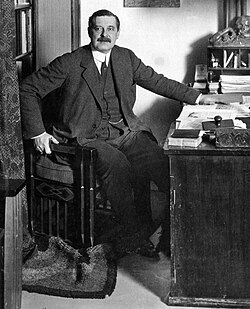
Peter Behrens (1868–1940) was a visionary German architect, graphic designer, and industrial designer whose work bridged the gap between 19th-century artistry and 20th-century industrialism. From his early days in the Jugendstil (Art Nouveau) movement to his later embrace of New Objectivity, Behrens redefined how the world viewed the relationship between art, industry, and function.
His legacy is perhaps most evident in his role as a mentor; some of the most influential figures of European modernism, including Walter Gropius, Le Corbusier, and Ludwig Mies van der Rohe, all began their careers working in Behrens' Berlin office.
Key Facts
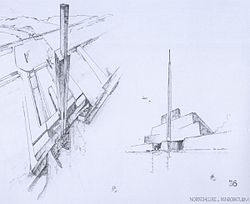
- First Industrial Designer: Credited as the first industrial designer in history for creating a comprehensive corporate identity for AEG.
- Werkbund Founder: A founding member of the German Werkbund in 1907, an organization dedicated to improving the design of everyday products.
- Architectural Range: His style evolved from Jugendstil to Industrial Classicism, Brick Expressionism, and finally New Objectivity.
- Educational Leader: Headed the architecture school at the Academy of Fine Arts Vienna from 1922 to 1936.
- Masterpiece: The 1909 AEG Turbine Factory is regarded as a seminal early example of Modernism.
Early Career and the Darmstadt Colony
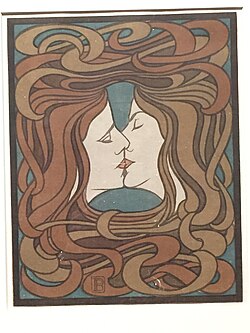
Behrens began his journey studying painting in Hamburg, Düsseldorf, and Karlsruhe. In the 1890s, he was active in the Munich Secession, a movement of young artists seeking art that reflected modern German life. A pivotal moment occurred in 1899 when he joined the Darmstadt Artists' Colony under the invitation of Grand Duke Ernst-Ludwig of Hesse.
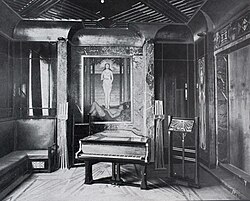
In 1901, Behrens designed and built his own house in the Jugendstil style. This project was a total work of art, where he conceived everything from the architecture and furniture to the pottery and towels. This success marked his transition from a painter and illustrator to a professional architect.
The AEG Era and the Birth of Corporate Design
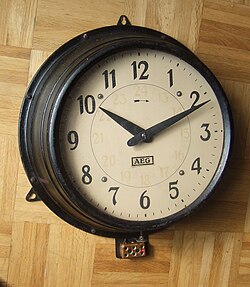
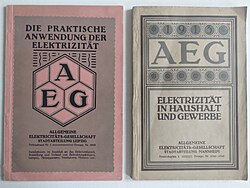
In 1907, the electrical company AEG (Allgemeine Elektrizitäts-Gesellschaft) hired Behrens as an artistic consultant. This partnership revolutionized the business world. Behrens did not just design buildings; he created a unified corporate identity, encompassing the company's logotype, publicity, and product designs.
His most famous contribution to the company was the 1909 AEG Turbine Factory in Berlin-Moabit. This structure is celebrated as an early example of industrial classicism, blending massive, bold forms with modern functionality.
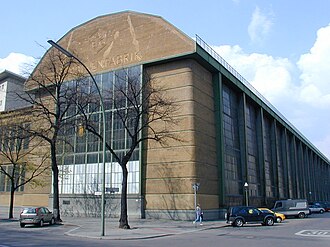
Beyond the Turbine Factory, Behrens designed various other AEG facilities, including the High Voltage Factory and the Large and Small Motors Factories at the Humboldthain site. His work for AEG demonstrated that industrial buildings could possess aesthetic dignity and monumental power.

Evolution of Style: From Classicism to New Objectivity
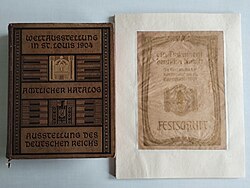
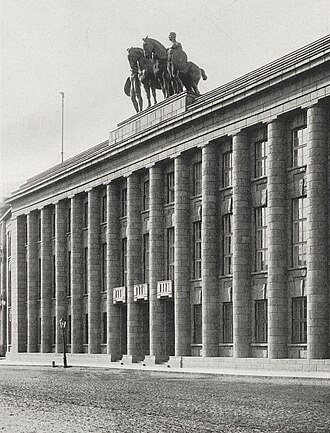
Following his work with AEG, Behrens moved toward a stripped-down classical form known as the German Reform Architecture movement. A prime example is the 1912 German Embassy in St. Petersburg, which showcased a bold, monumental presence.
Brick Expressionism
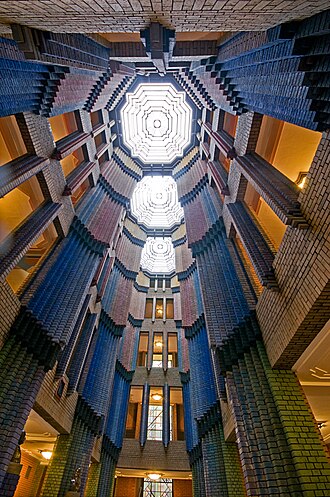
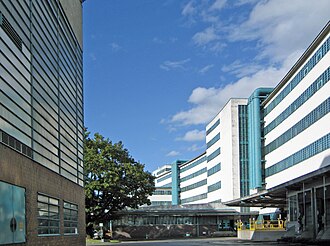
After World War I, Behrens explored Brick Expressionism, a style characterized by the dramatic use of clinker bricks. His most representative work in this vein is the Technical Administration Building of Hoechst AG in Frankfurt, featuring a soaring atrium clad in colored bricks that mirrored the company's dye products.
New Objectivity
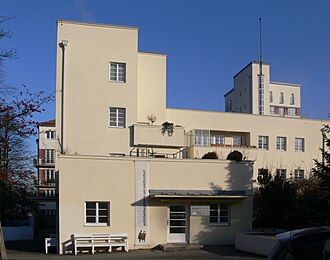
By the mid-1920s, Behrens transitioned toward New Objectivity (Neue Sachlichkeit), a style emphasizing functionalism and the rejection of ornament. This shift is evident in the 'New Ways' house in Northampton, UK (1926), often cited as the first modernist house in Britain, and his contributions to the Weissenhof Estate in Stuttgart.
Major Late Works and Legacy
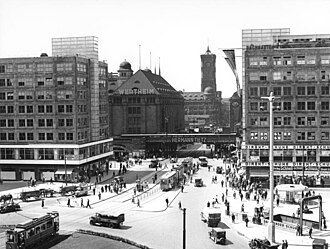
In his later years, Behrens continued to win international competitions and commissions. He designed the New Synagogue in Zilina, Slovakia, and the Alexanderhaus and Berolinahaus at Alexanderplatz in Berlin. One of his most striking late designs was the Tobacco Factory in Linz, Austria, featuring a long, horizontal, slightly curved facade.
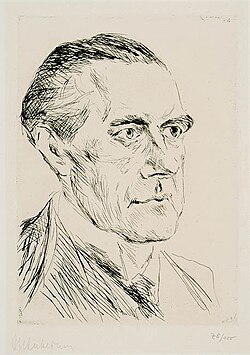
Behrens spent his final years teaching at the Prussian Academy of Arts in Berlin. He died on February 27, 1940, leaving behind a legacy that fundamentally shaped the trajectory of modern architecture and design.
Summary of Key Projects
| Year | Project | Location | Style/Significance |
|---|---|---|---|
| 1901 | Behrens House | Darmstadt, Germany | Jugendstil / Total Work of Art |
| 1909 | AEG Turbine Factory | Berlin, Germany | Industrial Classicism / Modernism |
| 1912 | German Embassy | St. Petersburg, Russia | Stripped Classicism |
| 1921-25 | Hoechst Administration Building | Frankfurt, Germany | Brick Expressionism |
| 1926 | 'New Ways' House | Northampton, UK | Early British Modernism |
| 1929-35 | Tobacco Factory | Linz, Austria | New Objectivity |
Frequently Asked Questions
Why is Peter Behrens considered the first industrial designer?
Behrens is credited as the first industrial designer because he created a comprehensive, unified visual identity for AEG, integrating the design of the company's logo, its advertising, its products, and its architecture into one cohesive system.
Who were the famous architects that worked for Behrens?
Three of the most influential figures of modern architecture—Walter Gropius, Ludwig Mies van der Rohe, and Le Corbusier—all worked as assistants or students in Behrens' office during the 1910s.
What was the German Werkbund?
Founded in 1907, the German Werkbund was an association of artists, architects, and industrialists aimed at improving the quality and design of German manufactured goods, blending the principles of the Arts and Crafts movement with industrial production.
How did Behrens' style change over time?
Behrens' career saw a progression from the decorative curves of Jugendstil to the monumental forms of Industrial Classicism, the dramatic textures of Brick Expressionism, and finally the stark, functional minimalism of New Objectivity.
What is the significance of the AEG Turbine Factory?
The AEG Turbine Factory is a landmark of modern architecture because it applied classical proportions and monumental scale to an industrial building, proving that factories could be aesthetically significant and architecturally innovative.