Permian Period: Life, Climate, and the Great Mass Extinction
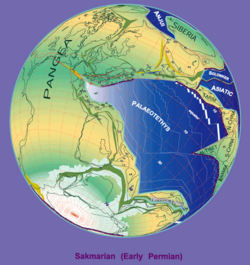
The Permian Period represents one of the most transformative eras in Earth's history. Spanning from approximately 298.9 to 251.9 million years ago, this period serves as the final chapter of the Paleozoic Era. It was a time of dramatic geological shifts, the assembly of the supercontinent Pangea, and a biological evolution that would eventually lead to the rise of modern terrestrial life—before being interrupted by the most severe extinction event in the history of life on Earth.
Geological Timeline and Structure
The Permian is formally recognized as a period within the Paleozoic Era. To better understand its vast duration, geologists divide the period into three distinct series, which are further subdivided into epochs and stages. These divisions help scientists track the specific changes in rock layers and fossil records over millions of years.
The Three Series of the Permian
- Cisuralian: The earliest part of the Permian, containing stages such as the Asselian, Sakmarian, Artinskian, and Kungurian.
- Guadalupian: The middle portion, comprising the Roadian, Wordian, and Capitanian stages.
- Lopingian: The final stage of the Permian, including the Wuchiapingian and Changhsingian stages.
The boundaries of the Permian are scientifically defined by Global Stratotype Section and Points (GSSPs). The lower boundary is located at Aidaralash in the Ural Mountains of Kazakhstan, while the upper boundary, marking the transition to the Triassic, is defined at Meishan in Zhejiang, China.
Key Facts
- Duration: Approximately 298.9 to 251.9 million years ago.
- Era: The final period of the Paleozoic Era.
- Major Event: Ended with the Permian–Triassic mass extinction.
- Geology: Characterized by the presence of the supercontinent Pangea.
- Defining Boundaries: Lower boundary in Kazakhstan; upper boundary in China.
Climate and Paleogeography
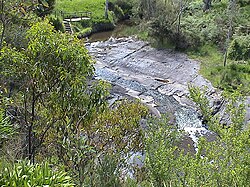
During the Permian, the Earth's landmasses were largely consolidated into the supercontinent Pangea. This massive landmass significantly influenced global climate patterns. The interior of the continent often experienced extreme conditions, ranging from arid deserts to seasonal shifts. In some regions, such as present-day South Australia, evidence of glacial pavements suggests that much of the world was once subject to significant ice cover during the early stages of the period.
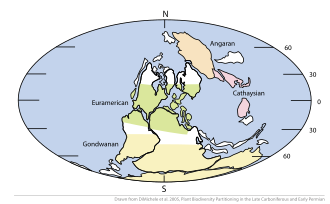
The climate was not uniform across the globe. While some areas faced intense aridity, others maintained wetland environments that supported diverse ecosystems. These environmental shifts, including changes in sea levels and temperature gradients, played a critical role in the distribution of flora and fauna.
Biological Diversity: Marine and Terrestrial Life
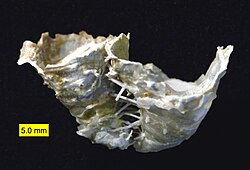
The Permian was a period of immense biological experimentation. In the oceans, marine life was dominated by various invertebrates. Brachiopods (shelled marine animals) were common, with some species, such as Hercosestria cribrosa, acting as reef-formers.
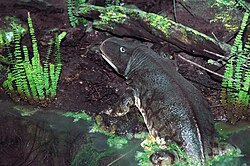
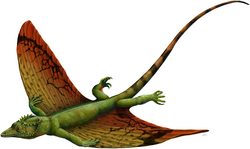
On land, the Permian saw the diversification of tetrapods (four-limbed vertebrates) and insects. Early reptiles and advanced amphibians, such as Eryops, occupied various ecological niches. One of the most remarkable evolutionary developments was the appearance of weigeltisaurids, which are considered the oldest known gliding vertebrates.
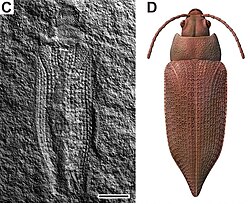
Insects also flourished, with specialized forms like the Permocupes sojanensis beetle appearing in the fossil record. The flora was equally diverse, featuring iconic plants like Glossopteris, which were vital to the Gondwanan ecosystems.
The Permian–Triassic Mass Extinction
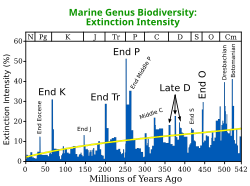
The period concluded with the Permian–Triassic extinction event, often referred to as the "Great Dying." This event is recognized as the most significant mass extinction in Earth's history, resulting in the loss of a vast majority of marine and terrestrial species. The exact causes are a subject of ongoing scientific study, but it is widely understood to have been a catastrophic disruption of the global ecosystem.
| Series | Major Stages | Approximate Timing (Ma) |
|---|---|---|
| Cisuralian | Asselian to Kungurian | ~298.9 – 283.3 |
| Guadalupian | Roadian to Capitanian | ~283.3 – 264.3 |
| Lopingian | Wuchiapingian to Changhsingian | ~264.3 – 251.9 |
Frequently Asked Questions
What defines the start and end of the Permian Period?
The Permian begins at the base of the Asselian stage (marked by the GSSP in Kazakhstan) and ends at the boundary with the Triassic period (marked by the GSSP in China).
What was the most significant event at the end of the Permian?
The Permian–Triassic mass extinction event occurred, which is the most significant extinction event for marine genera in the fossil record.
What kind of animals lived during this time?
The period featured diverse life, including reef-forming brachiopods in the sea, various tetrapods (like amphibians and early reptiles) on land, and specialized insects.
How did the climate affect Permian life?
The formation of Pangea led to varied climates, including extreme aridity in continental interiors and glacial conditions in certain high-latitude regions.
What are weigeltisaurids?
Weigeltisaurids are a group of reptiles from the Late Permian that represent the oldest known gliding vertebrates.