Ordovician Period: A Deep Dive into Earth's Marine Revolution
The Ordovician Period represents a pivotal chapter in Earth's history, serving as the second period of the Paleozoic Era. Spanning approximately 43.75 million years—from 486.85 million years ago (Ma) to 443.1 Ma—this era was defined by dramatic shifts in sea levels, tectonic movements, and a massive explosion of marine biodiversity known as the Ordovician Radiation.
During this time, the oceans became bustling hubs of life, hosting a diverse array of organisms that would set the stage for much of the complex life seen in later geological periods.
![Paleogeographic map of the Earth in the early Ordovician, 480 million years ago[citation needed]](/images/ea/75/ea756ca45a0a123c4dbfef7fa15036bb2f8f4b15a9e0b51d746cc8c318660e87.png)
Key Facts
- Duration: Approximately 43.75 million years.
- Geologic Era: Part of the Paleozoic Era and the Phanerozoic Eon.
- Major Biological Event: Significant diversification of marine life.
- Climate Shift: Transitioned from high sea levels to intense glaciations at the period's end.
- Boundary Markers: Defined by the appearance of the conodont Iapetognathus fluctivagus (lower) and the graptolite Akidograptus ascensus (upper).
Chronology and Subdivisions
The Ordovician is systematically divided into three distinct series, which are further broken down into specific stages or ages. This chronological framework helps geologists track the evolution of life and environmental changes over time.
Lower (Early) Ordovician
The period begins with the Tremadocian stage, followed by the Floian. This era saw the early stages of tectonic shifts and the initial expansion of marine ecosystems.
Middle Ordovician
The middle portion of the period includes the Dapingian and Darriwilian stages. This was a time of significant biological activity and changing ocean chemistry.
Upper (Late) Ordovician
The final stretch consists of the Sandbian, Katian, and the Hirnantian. The Hirnantian is particularly notable for the intense glaciations that marked the end of the period.
![Paleogeographic map of the Earth in the middle Ordovician, 470 million years ago[citation needed]](/images/d1/b1/d1b1fea1685a680fb20ab17b1329e3e42de2fea39d5100f2eb97c2ba1264fd5b.png)
| Series/Epoch | Stage/Age | Approximate Start (Ma) |
|---|---|---|
| Upper Ordovician | Hirnantian | 445.2 ± 0.9 |
| Upper Ordovician | Katian | 452.8 ± 0.7 |
| Upper Ordovician | Sandbian | 458.2 ± 0.7 |
| Middle Ordovician | Darriwilian | 469.4 ± 0.9 |
| Middle Ordovician | Dapingian | 471.3 ± 1.4 |
| Lower Ordovician | Floian | 477.1 ± 1.2 |
| Lower Ordovician | Tremadocian | 486.85 ± 1.5 |
Paleogeography and Climate
The Earth's landscape during the Ordovician was vastly different from today. Tectonic activity led to the rifting of landmasses, such as the early rifting of Avalonia, which contributed to the birth of the Rheic Ocean. Sea levels were generally much higher than present-day levels, reaching up to 180–220 meters above current levels during much of the period.
![Paleogeographic map of the Earth in the late Ordovician, 450 million years ago[citation needed]](/images/35/c2/35c2fcd15a33f6afe5900a644d43b8c7e9cd2f33d8917970d95f89a4c30ec98b.png)
However, this high-sea-level environment was not permanent. Toward the end of the Ordovician, the climate underwent a drastic shift. Intense glaciations caused sea levels to fall sharply to approximately 141 meters below present-day levels, contributing to a major mass extinction event.
Marine Life and Fauna
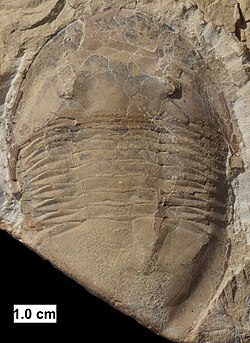
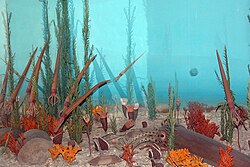
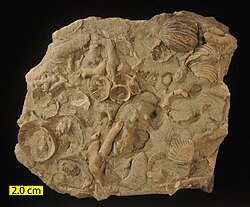
The Ordovician is most famous for its incredible marine fauna. The oceans were dominated by invertebrates, including brachiopods (shelled organisms similar to clams), bryozoans (tiny colonial animals), and trilobites (extinct marine arthropods).
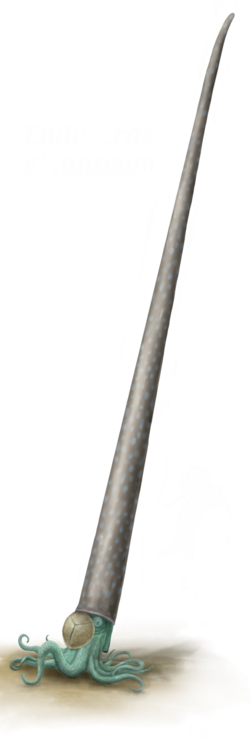
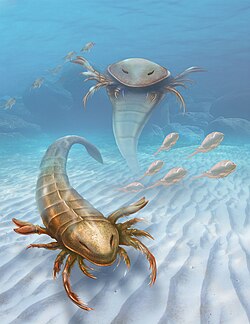
Predators also played a significant role in the ecosystem. Large cephalopods, such as Endoceras, were among the most formidable hunters of the era. Other notable creatures included eurypterids (sea scorpions) and various types of graptolites (colonial hemichordates).
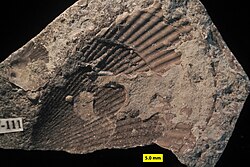
The fossil record provides stunning evidence of this diversity. For example, the Anomalodonta gigantea, a type of bivalve, left behind detailed molds on the sea floor after its original aragonite shell dissolved. Other fossils, like the Isotelus trilobite or the filter-feeding Aegirocassis, showcase the specialized niches occupied by Ordovician life.
Flora and Early Land Colonization
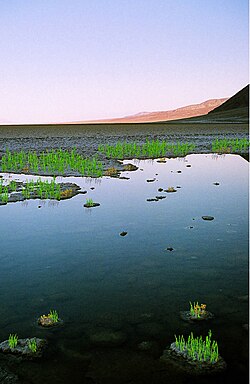
While the oceans were the primary theater of life, the Ordovician also saw the very first steps toward terrestrial life. The appearance of the first land plant spores suggests that life was beginning to move toward the shorelines, though colonization was likely limited to coastal environments during this time.
The End of the Period
The Ordovician period concluded with a significant mass extinction. This event was closely tied to the rapid climatic changes and the onset of glaciation. The transition into the Silurian period was marked by a recovery of life, as seen in diverse assemblages like the Anji Biota, which preserved a wide range of marine animals following the extinction.
![The Anji Biota (Wenchang Formation, Zhejiang Province, China) preserves abundant and diverse glass sponges and graptolites as well as rare examples of other marine animals (such as the eurypterid Archopterus) living at a depth of several hundred metres. It is dated to just after the Hirnantian mass extinction at the end of the Ordovician period.[96]](/images/fc/03/fc03d67fb4615fd292a78143440c9522abdbd883a424d515f33269d5b9e878a3.jpg)
Frequently Asked Questions
How long did the Ordovician period last?
The Ordovician period lasted for approximately 43.75 million years.
What were the dominant animals during this time?
The oceans were dominated by marine invertebrates such as trilobites, brachiopods, bryozoans, and large predatory cephalopods like Endoceras.
Did plants exist during the Ordovician?
Yes, the first land plant spores appeared during this period, indicating the very beginning of plant colonization on land, primarily near shorelines.
What caused the end of the Ordovician period?
The period ended with a mass extinction event, which is linked to significant climatic shifts and intense glaciations that caused sea levels to drop sharply.
What is the difference between the Early and Late Ordovician?
The Early Ordovician was characterized by rising sea levels and the expansion of marine life, while the Late Ordovician saw significant climatic cooling and the onset of major glaciations.