Paul von Hindenburg: The Military Icon and President Who Shaped Germany
Paul von Hindenburg was a towering figure in German history, transitioning from a decorated Prussian officer to the President of the Weimar Republic. His life spanned the unification of the German Empire and the rise of the Third Reich, leaving a complex legacy as both a national savior during World War I and the man who ultimately facilitated the appointment of Adolf Hitler as Chancellor.
Born into minor Prussian nobility in Posen, Hindenburg's early career was defined by the rigid discipline of the Prussian military. He rose through the ranks during the 19th century's defining conflicts, establishing a reputation for competence and loyalty that would later make him a symbol of German stability.
Key Facts
![Map of the Michael offensive showing in red the section of the British front that was not assaulted frontally; its defenders were to be encircled by the attackers on their flanks.[77]](/images/26/6b/266b3f9fd6a528f9513cc2b8ee918609ff72af11ffd70789ebdc8df5ab915b81.jpg)
- Military Peak: Achieved national fame as the victor of the Battle of Tannenberg in 1914.
- War Leadership: Served as Chief of the Great General Staff from 1916 to 1919.
- Political Role: Served as the President of Germany from May 12, 1925, until his death in 1934.
- Historical Impact: Appointed Adolf Hitler as Chancellor in January 1933, enabling the Nazi seizure of power.
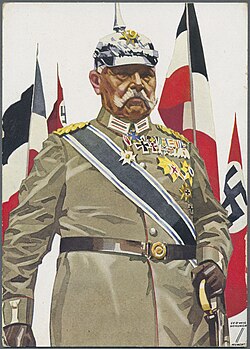
- Military Rank: Attained the highest rank of Generalfeldmarschall (Field Marshal).
Early Life and Military Ascent
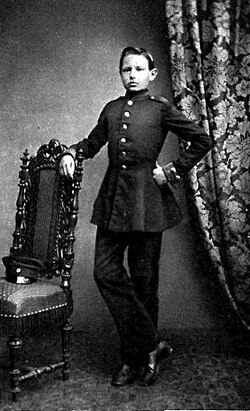
Paul Ludwig Hans Anton von Beneckendorff und von Hindenburg was born on October 2, 1847. After completing his cadet education, he joined the Third Regiment of Foot Guards, where he saw active combat in the Austro-Prussian and Franco-Prussian wars. His intellectual approach to warfare led him to the Prussian War College in Berlin in 1873, eventually securing him a place in the prestigious General Staff Corps.
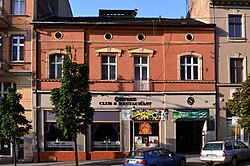
By 1900, Hindenburg had reached the rank of lieutenant general. Although he retired in 1911, his military career was far from over. The outbreak of World War I in 1914 saw him recalled to service, a move that would propel him from a retired officer to a national icon.
![Hindenburg as a lieutenant in the 3rd Garderegiment in 1870[clarification needed]](/images/17/6b/176b92fedd5f5bf8df112e528f0cf4f1bcaff0cf7740f699b8433f8ecdb143fd.jpg)
World War I and the Rise of the "Silent Dictatorship"
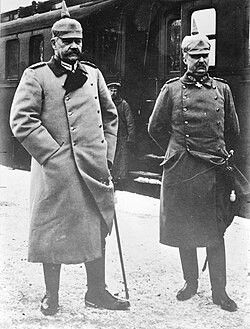
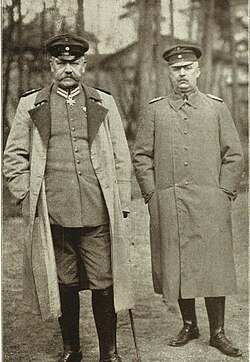
Hindenburg's return to the spotlight occurred on the Eastern Front. His victory at the Battle of Tannenberg transformed him into a national hero, sparking a personality cult across Germany. Promoted to field marshal on November 1, 1914, he was given command of all German forces in the East.
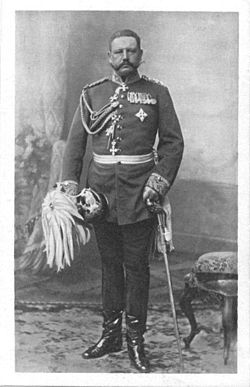
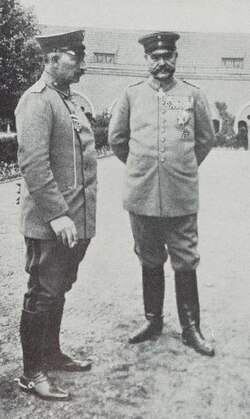
In 1916, Hindenburg replaced General Erich von Falkenhayn as Chief of the Great General Staff. Alongside his deputy, General Erich Ludendorff, Hindenburg exercised immense authority. Together, they established a de facto military dictatorship, leveraging the delegation of power from Kaiser Wilhelm II to dominate German war efforts.
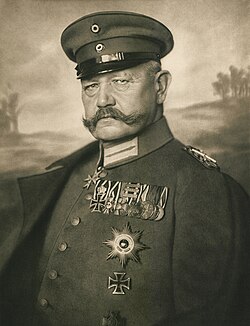
While they secured a major defeat of Russia on the Eastern Front, the partnership eventually faced the limits of German power. Despite the Hindenburg program's efforts to bolster defense and the launch of the spring offensive, Germany was defeated by the Allies' Hundred Days Offensive. Hindenburg stepped down as Chief of the Army General Staff following the armistice and retired again in 1919.
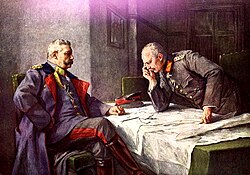
The Eastern Front and Strategic Challenges
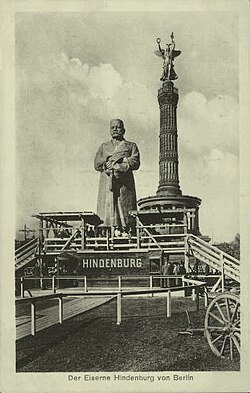
Hindenburg's command was marked by high-stakes maneuvers. During the Brusilov Offensive, his forces narrowly avoided a complete collapse by stripping soldiers from less threatened positions to shore up weak points. Despite these crises, his image as the "Iron Hindenburg" remained intact in the eyes of the German public.
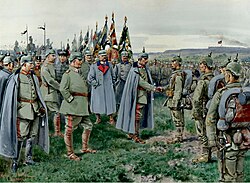
The Presidency and the Weimar Republic
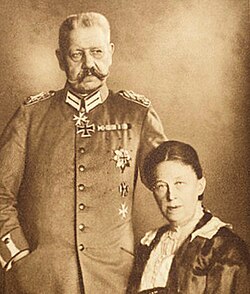
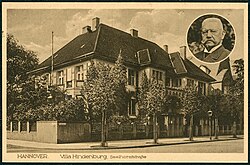
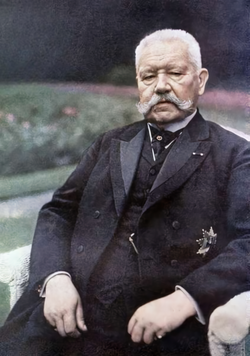
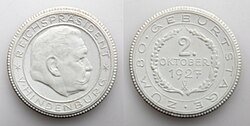
After years of retirement in Hanover, Hindenburg was drawn back into politics during the instability of the Weimar Republic. In 1925, he was elected President of Germany, viewed by many as a non-partisan figure of national unity.
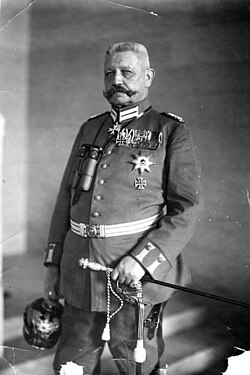
His presidency was characterized by a shift from parliamentary governance to presidential rule. While he initially worked with chancellors like Hermann Müller—whom he considered his best chancellor—the deepening economic and political crises of the late 1920s led to more frequent use of emergency decrees.
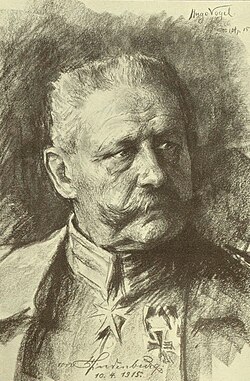
The Path to the Third Reich
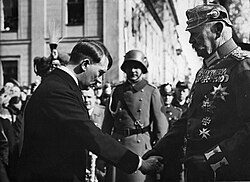
Though Hindenburg personally disliked Adolf Hitler, he was attracted to Hitler's goal of creating a Volksgemeinschaft (people's community). In January 1933, despite previous public declarations to the contrary, Hindenburg appointed Hitler as Chancellor.
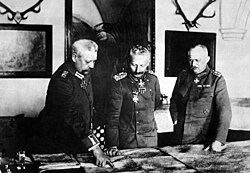
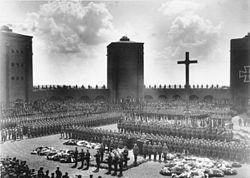
This decision proved pivotal, as it provided the legal veneer for the Nazi party to dismantle democratic institutions. Hindenburg remained President until his death on August 2, 1934, at the age of 86. Upon his passing, Hitler merged the offices of President and Chancellor to become the Führer.
Summary of Hindenburg's Career
| Period | Role | Key Achievement/Event |
|---|---|---|
| 1866–1911 | Prussian Army Officer | Combat in Austro-Prussian and Franco-Prussian Wars |
| 1914–1916 | Commander in the East | Victory at the Battle of Tannenberg |
| 1916–1919 | Chief of the Great General Staff | Co-led military dictatorship with Erich Ludendorff |
| 1925–1934 | President of Germany | Appointment of Adolf Hitler as Chancellor (1933) |
Frequently Asked Questions
What was Hindenburg's role in the Battle of Tannenberg?
Hindenburg commanded the German forces on the Eastern Front and achieved a decisive victory against the Russian Empire in 1914, which elevated him to the status of a national hero in Germany.
How did Hindenburg and Ludendorff govern during WWI?
They established a de facto military dictatorship by utilizing the broad authority delegated to them by Kaiser Wilhelm II, effectively controlling both military strategy and domestic policy.
Did Hindenburg support the Nazi ideology?
Hindenburg was ideologically opposed to Nazism and personally disliked Hitler; however, he supported the concept of a "Government of National Concentration" and the creation of a unified people's community.
How did Hindenburg's presidency end?
Hindenburg served as President until his death on August 2, 1934. His death allowed Adolf Hitler to consolidate power by combining the roles of Chancellor and President into the title of Führer.
What is the historical criticism of Hindenburg's political career?
Historians, such as Christopher Clark, have criticized him for betraying his constitutional oaths to the Republic and for manipulating the political process to install Hitler in the Chancellery.