Parliamentary Systems: Structure, History, and Global Application
A parliamentary system is a model of government defined by the fusion of powers, where the executive branch derives its democratic legitimacy from its ability to command the support, or "confidence," of the legislature. Unlike presidential systems, where the head of government is elected independently, a parliamentary leader is held directly accountable to the parliament and can be replaced by a simple majority vote.
In these systems, there is typically a distinction between the head of government (the chief executive, often a prime minister) and the head of state (a ceremonial figure). Depending on the country, the head of state may be a constitutional monarch or a president. While the head of government is almost always a member of parliament, the head of state may be elected by popular vote, an electoral college, or the parliament itself.
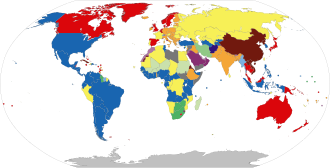
Key Facts
- Fusion of Powers: The executive branch is integrated with and accountable to the legislative branch.
- Confidence: The head of government must maintain the support of a parliamentary majority to remain in power.
- Dual Executive: Most systems separate the ceremonial duties of the head of state from the political duties of the head of government.
- Global Reach: This system is predominant in the European Union, Oceania, and former British Empire territories.
- Fiscal Tendencies: Research suggests parliamentary systems may rely more on fiscal expansion and higher spending before elections compared to presidential systems.
The Evolution of Parliamentary Governance
The roots of parliamentary systems trace back to the Middle Ages in Europe. One of the earliest examples is the Icelandic Althing, which gathered around 930 AD. However, the first written record of a formal assembly separate from the general population, convened by a king, occurred in 1188 with the Cortes of León. The Corts of Catalonia later became the first European parliament to officially obtain the power to pass legislation.
In England, the development of the system was marked by key figures like Simon de Montfort, who convened parliaments in 1258 and 1265 that limited the king's unlimited authority and included ordinary citizens. The 17th century saw the rise of liberal democracy, culminating in the Glorious Revolution and the Bill of Rights 1689.
The role of the prime minister emerged organically. During the reign of King George I, whose limited English proficiency led him to stop chairing cabinet meetings, the responsibility fell to the leading minister, Robert Walpole. By the 19th century, the Great Reform Act of 1832 solidified parliamentary dominance in choosing the government.
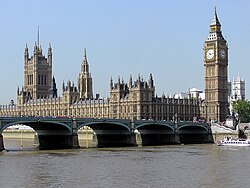
Structural Characteristics
Parliamentary systems are categorized by their legislative structure:
- Unicameral: A system with a single parliamentary chamber.
- Bicameral: A system with two chambers. This usually includes a directly elected lower house, which determines the executive government, and an upper house that may be appointed or elected through different mechanisms.
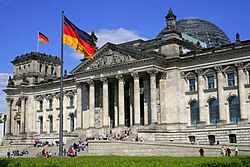
Global Variations and Implementation
While the Westminster system (originating in the UK) is widely known, other variations like the Consensus system are common in Western Europe. The implementation of these systems varies by region:
The Americas and Oceania
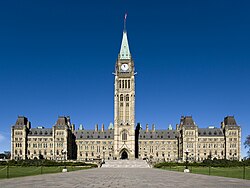
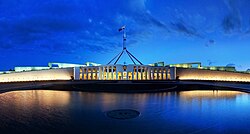
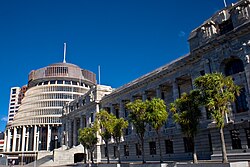
Many nations in the Americas (such as Canada and Belize) and Oceania (such as Australia and New Zealand) utilize parliamentary structures, often as constitutional monarchies.

Asia and Africa
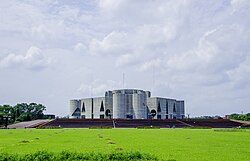
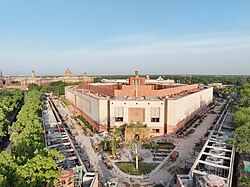
In Asia, countries like India, Japan, and Bangladesh employ parliamentary systems. In Africa, nations such as Botswana and South Africa use variations where the parliament elects the president, who then appoints the cabinet.
Europe
Europe features a diverse array of parliamentary republics and monarchies. In Germany, the Bundestag elects the Federal Chancellor, while in Italy, the parliament grants or revokes confidence in a cabinet appointed by the president.

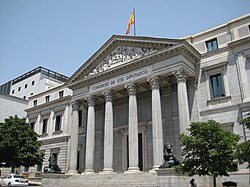

Comparative Summary of Parliamentary Connections
| Region | Example Country | Connection Mechanism |
|---|---|---|
| Africa | South Africa | Parliament elects President; President appoints Cabinet |
| Americas | Suriname | National Assembly elects President; President appoints Cabinet |
| Asia | Japan | National Diet nominates Prime Minister; PM appoints Cabinet |
| Europe | Germany | Bundestag elects Chancellor (nominated by President) |
| Oceania | Vanuatu | Parliament appoints the Cabinet |
Analysis of the Parliamentary Model
Advantages
- Adaptability: The ability to change leadership quickly via a vote of no confidence without waiting for a fixed election date.
- Accountability: Constant scrutiny of the executive by the legislature.
- Efficiency: Reduced deadlock between the executive and legislative branches due to the fusion of powers.
Disadvantages
- Incomplete Separation: The lack of a strict divide between those who make laws and those who execute them.
- Fragmentation: Potential for political instability if no single party holds a majority, leading to fragile coalitions.
- Unaccountability: In some cases, the process of choosing the head of government is indirect, removing it from a direct popular vote.
Frequently Asked Questions
What is the main difference between a parliamentary and a presidential system?
The primary difference is the source of executive legitimacy. In a parliamentary system, the executive is fused with the legislature and depends on its confidence. In a presidential system, the president is elected independently and serves as a separate branch of government.
Can a parliamentary system have a King or Queen?
Yes. These are known as constitutional monarchies, where the monarch serves as the ceremonial head of state, while the prime minister serves as the head of government.
What happens during a "vote of no confidence"?
A vote of no confidence is a formal motion showing that the majority of the parliament no longer supports the head of government. If passed, it typically forces the government to resign or triggers a new general election.
What is a bicameral parliament?
A bicameral parliament is one that consists of two separate houses or chambers, typically a lower house (often directly elected) and an upper house (which may be appointed or elected differently).
How is the head of state chosen in a parliamentary republic?
Depending on the country's constitution, the head of state in a republic may be elected by a popular vote, an electoral college (as in Germany), or by the members of parliament (as in Italy).