Constitutional Monarchy: Evolution, Power Structures, and Modern Application
A constitutional monarchy, also referred to as a limited, parliamentary, or democratic monarchy, is a system of government where the monarch's authority is exercised in accordance with a constitution. Unlike an absolute monarchy, where a single ruler holds total decision-making power, a constitutional monarch is bound by an established legal framework. In many modern states, the monarch serves as a visible symbol of national unity, though their actual influence varies significantly across different nations.
Depending on the specific legal structure, some monarchs act as purely hereditary symbolic heads of state with no executive power. Others retain meaningful formal authorities, such as the power to appoint officials, veto legislation, or dissolve parliament.
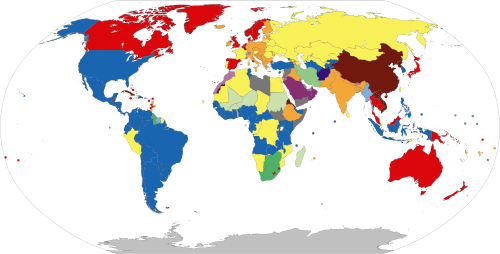
Key Facts
- Legal Constraint: Monarchs must operate within the limits of a written or unwritten constitution.
- Varied Power: Systems range from purely ceremonial (symbolic) to executive (active policy influence).
- Commonwealth Realms: There are currently 15 constitutional monarchies that share King Charles III as their sovereign.
- Reserve Powers: Some systems maintain "prerogative" powers to be used only during extreme constitutional crises.
- National Symbolism: The monarch often represents continuity and national identity rather than political leadership.
The Historical Evolution of Limited Monarchy
Developments in the United Kingdom and Scotland
The transition toward constitutionalism in the British Isles began early with the Magna Carta of 1215. This process was accelerated by the Glorious Revolution of 1688, leading to the Bill of Rights 1689 and the Act of Settlement 1701. Simultaneously, Scotland's Convention of Estates enacted the Claim of Right Act 1689 to place similar restrictions on the Scottish monarchy.
Over time, the personal power of the sovereign steadily declined. Queen Anne was the last monarch to veto an Act of Parliament in 1708. While later Hanoverian monarchs, such as George III, still attempted to dictate policy—notably blocking Catholic Emancipation—their influence over the choice of prime minister waned. By the reign of Queen Victoria, the monarch's ability to keep a prime minister in power against the will of Parliament had effectively ended, though she still influenced some Cabinet appointments.
Continental Europe and Philosophical Foundations
Poland was a pioneer in continental Europe, establishing the Constitution of 3 May 1791, the world's second single-document constitution after that of the United States. The concept further evolved during and after the French Revolution. Napoleon Bonaparte shifted the perception of monarchy, presenting the ruler as an embodiment of the nation rather than a divinely appointed leader.
This shift was supported by the philosopher Georg Wilhelm Friedrich Hegel, who argued in 1820 that a constitutional monarch with limited powers could provide essential continuity and embody national character during emergencies. This philosophical framework influenced the development of monarchies in both Europe and Japan.
Executive vs. Ceremonial Monarchy
Modern constitutional monarchies are generally divided into two categories: those where the monarch is a figurehead and those where they retain active executive functions.
Ceremonial Systems
In ceremonial systems, the monarch's role is primarily formal. For example, in the United Kingdom, while the monarch theoretically possesses an absolute veto via the withholding of royal assent, this power has not been used since 1708 and is widely considered a lapsed power.
Executive and Reserve Powers
Some monarchs retain active roles. In Thailand, the monarch is the Head of State and Armed Forces, and is protected by lèse majesté laws, which carry strict criminal penalties for those who insult the monarchy. Historically, King Bhumibol Adulyadej acted as a critical mediator during political disputes.
In the 15 Commonwealth realms, the monarch and their Governors-General hold reserve powers (or prerogative powers). These are intended for extreme emergencies to uphold parliamentary government. A notable example occurred during the 1975 Australian constitutional crisis, when the Governor-General dismissed Prime Minister Gough Whitlam to resolve a deadlock between the government and the Senate.
Comparative Overview of Monarchy Types
| Type | Decision-Making Power | Legal Constraint | Example/Context |
|---|---|---|---|
| Absolute Monarchy | Sole decision-maker | None/Minimal | Traditional autocracies |
| Ceremonial Monarchy | Symbolic/Figurehead | Strict Constitution | Modern UK, Japan |
| Executive Monarchy | Active policy/veto role | Constitution (with gaps) | Thailand, Liechtenstein |
| Commonwealth Realms | Reserve/Prerogative powers | Constitutional framework | Australia, Canada |
Frequently Asked Questions
What is the difference between a constitutional and an absolute monarchy?
An absolute monarchy grants the ruler total power over the state. In contrast, a constitutional monarchy limits the ruler's authority through a legal framework or constitution, often sharing power with a parliament.
What are "reserve powers" in a monarchy?
Reserve powers are specific authorities held by a monarch or their representative (like a Governor-General) that can be exercised during extreme constitutional crises to ensure the government continues to function legally.
Does every constitutional monarch have the power to veto laws?
No. While some monarchs retain a formal veto, many in ceremonial systems have "lapsed powers," meaning the authority exists on paper but is no longer exercised in practice.
What is a Commonwealth realm?
A Commonwealth realm is a sovereign state that recognizes the British monarch (currently King Charles III) as its head of state, though the monarch's role is typically ceremonial and performed via a Governor-General.
How does the Japanese monarchy differ from others?
Japan is unique as the only remaining country in the world that maintains an emperor as its head of state.