Papinian: The Most Revered Jurist of Ancient Rome
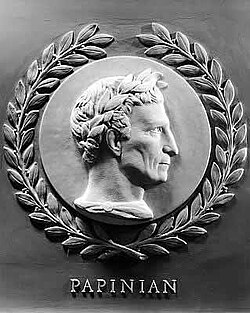
In the annals of legal history, few figures command as much respect as Aemilius Paulus Papinianus, known simply as Papinian. A Syrian-born legal mastermind who rose to the highest echelons of the Roman Empire, Papinian is remembered not only for his administrative brilliance but for his unwavering commitment to the law. His influence was so profound that centuries after his death, his opinions remained the gold standard for legal interpretation in the Western world.
Key Facts
- Full Name: Aemilius Paulus Papinianus.
- Origin: Emesa, Roman Syria.
- Highest Rank: Praetorian prefect (commander of the Praetorian Guard).
- Legal Status: One of the five decisive jurists under the Law of Citations of 426 CE.
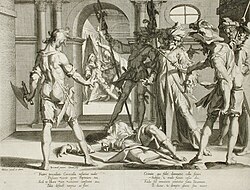
- Death: Beheaded in 212 CE by order of Emperor Caracalla.
The Rise of a Legal Giant
Born in Emesa, Roman Syria, Papinian was likely a kinsman of Julia Domna, the second wife of Emperor Septimius Severus. This connection to the Emesene dynasty may have facilitated his ascent within the imperial court. Papinian's education was rooted in casuistry—the process of resolving moral problems by applying general rules to specific instances—and he is believed to have been a pupil or follower of the renowned jurist Quintus Cervidius Scaevola.
His professional trajectory was meteoric. He served as the advocatus fisci (attorney general) and the magister libellorum (master of petitions), managing the legal requests sent to the Emperor. His relationship with Septimius Severus was one of deep trust; Papinian accompanied the Emperor to Britain in 207 CE to assist in the forum of York during an uprising by Scottish Highlanders.
By 205 CE, following the death of Gaius Fulvius Plautianus, Papinian reached the pinnacle of imperial administration as the Praetorian prefect, serving as both the Captain of the Guard and a key advisor to the throne.
Legal Legacy and the Law of Citations
Papinian's reputation for integrity and intellect earned him the title "the Asylum of Right and Treasurer of the Laws." His influence on legal education was so significant that third-year law students were referred to as Papinianistae, signifying they were finally worthy of studying his complex works.
His lasting impact was codified in the Law of Citations of 426 CE. This law designated five jurists—Papinian, Gaius, Paulus, Modestinus, and Ulpian—whose views were considered decisive in legal disputes. Crucially, if the views of these five differed, Papinian's opinion prevailed over the others. This ensured his work became a primary source for the Codex Theodosianus and the Corpus Juris Civilis (the body of civil law).
| Category | Details |
|---|---|
| Lifespan | 142 CE – 212 CE |
| Birthplace | Emesa, Roman Syria |
| Key Roles | Praetorian Prefect, Attorney General, Master of Petitions |
| Major Works | Quaestiones, Responsa, Definitiones, De adulteriis |
| Legal Influence | Primary authority for the Corpus Juris Civilis |
The Tragic End of a Jurist
Despite his brilliance, Papinian's life ended in tragedy due to the volatility of the imperial succession. Emperor Septimius Severus had entrusted his two sons, Caracalla and Geta, to Papinian's care. However, the relationship between the brothers deteriorated into a bitter rivalry for power.
Papinian attempted to mediate and maintain peace between the siblings, but his efforts only fueled Caracalla's resentment. After Caracalla murdered Geta in 212 CE, he turned his wrath toward those associated with his brother. Papinian was ordered to be beheaded, and his body was dragged through the streets of Rome. Some sources suggest this purge included up to 20,000 people.
Literary and Legal Works
While much of his writing has been lost over the millennia, the surviving fragments highlight his versatility. His principal works include:
- Quaestiones: A 37-book series written before 198 CE.
- Responsa: Nineteen books of legal responses written between 204 CE and 212 CE.
- Definitiones and De adulteriis: Two books focusing on legal definitions and adultery.
- Astynomikos: A practical manual on city administration, specifically the duties of commissioners for streets and bridges.
Frequently Asked Questions
Who was Papinian in the context of Roman law?
Papinian was one of the most celebrated Roman jurists, serving as a Praetorian prefect and attorney general. He is regarded as one of the primary authorities of ancient jurisprudence, with his views often taking precedence over other legal experts.
What was the Law of Citations?
The Law of Citations was a decree from 426 CE that identified five jurists whose recorded opinions were legally decisive. Papinian was the most senior of these five, meaning his opinion was the tie-breaker if the other four disagreed.
Why was Papinian executed?
Papinian was executed by Emperor Caracalla in 212 CE. This occurred after Caracalla murdered his brother Geta; Papinian's attempts to keep peace between the brothers were viewed by Caracalla as a sign of opposition or association with Geta.
What are some of Papinian's surviving works?
Although much was lost, his surviving contributions include the Quaestiones, Responsa, and a manual on city administration called Astynomikos.
What does the term "Papinianistae" mean?
The term Papinianistae was used to describe third-year law students in ancient Rome, indicating that they had reached a level of study where they were finally worthy of analyzing Papinian's complex legal theories.