Severan Dynasty: The Rise and Fall of Rome's Military Emperors
The Severan dynasty (also known as the Septimian dynasty) ruled the Roman Empire from 193 to 235 AD. Emerging from the chaos of the Year of the Five Emperors, this era was defined by a shift toward military dominance, the influential role of imperial women, and a gradual descent into the political instability that would eventually trigger the Crisis of the Third Century.
Founded by Septimius Severus, the dynasty transitioned the empire from the administrative stability of the Antonines to a regime where the loyalty of the legions and the power of the Praetorian Guard—the emperor's elite bodyguard—became the primary currencies of power.
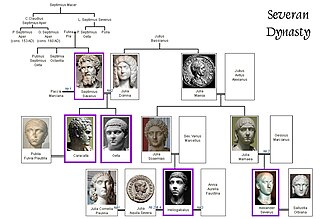
Key Facts
- Duration: 193–235 AD.
- Founder: Septimius Severus, a military leader from Leptis Magna (modern-day Libya).
- Key Figures: Caracalla, Elagabalus, and Alexander Severus.
- Influence: Marked by the significant political power of the augustae (empresses).
- Legacy: Ended with the assassination of Alexander Severus, leading directly into the Crisis of the Third Century.
The Foundation: Septimius Severus (193–211)
Lucius Septimius Severus was born in 145 AD in Leptis Magna, Africa Proconsularis. Of Libyan-Punic and Italic descent, he rose through the military ranks to achieve consular status. In 187 AD, he married Julia Domna, a Syrian Arab noblewoman who would become a central political figure in her own right.
Severus was proclaimed emperor in 193 AD by his legions in Noricum. After defeating his rival Clodius Albinus at the Battle of Lugdunum in 197 AD, he secured sole control of the empire. His reign was characterized by successful military campaigns against the Parthians and barbarian incursions in Roman Britain, where he oversaw the rebuilding of Hadrian's Wall.
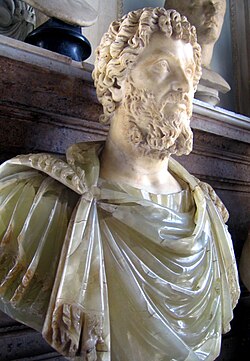
While popular with the common people and the military—whose salaries he increased—Severus had a strained relationship with the Senate. Economically, he debased the Roman currency to fund his military expenditures, reducing the silver purity of the denarius (the standard Roman silver coin) from 81.5% to 78.5%. He died of natural causes in early 211 AD while on campaign in Britain.
![A dynastic aureus of Septimius Severus, minted in 202. The reverse feature the portraits of Geta (right), Julia Domna (centre), and Caracalla (left).[8]](/images/13/75/13759642539fabfa20b401551f1b8f2a0f57fbfb116227853cb5537c2a903d78.jpg)
The Era of the Sons: Caracalla and Geta
Septimius Severus attempted to establish a stable succession by naming his sons, Caracalla and Geta, as co-emperors. However, the relationship between the brothers was defined by intense hatred.
Caracalla (198–217)
Born Lucius Septimius Bassianus, Caracalla (named for his preferred Gallic hooded tunic) became augustus in 198 AD. In 211 AD, shortly after their father's death, Caracalla murdered Geta in their mother's apartments to seize sole power.
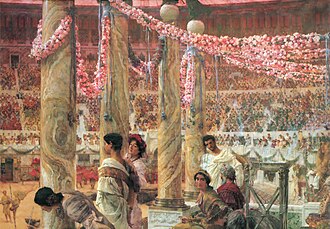
Caracalla's reign was marked by lavish spending to maintain army loyalty and a desire to emulate Alexander the Great, which included raising a Macedonian phalanx. One of his most significant legal acts was granting Roman citizenship to all non-slave inhabitants of the empire. He was eventually assassinated in 217 AD by a member of the Praetorian Guard on the orders of the prefect Macrinus.
Geta (209–211)
Geta served as caesar (official heir) from 198 AD and became co-augustus around 209 or 210 AD. His brief tenure as a primary ruler ended abruptly with his assassination by his brother.
The Interlude and the Return of the Severans
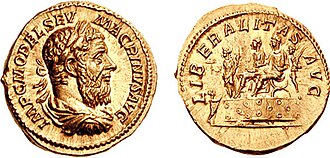
Following Caracalla's death, Macrinus (217–218 AD) took power. He was the first emperor not to come from a senatorial family, having risen from equestrian rank. However, his reign was short-lived due to his attempt to reduce pay for new recruits and a peace treaty with the Parthians that the army viewed as degrading.
The dynasty was restored through the efforts of Julia Maesa, the sister of Julia Domna. She leveraged her wealth and influence to place her grandnephews on the throne, beginning with Elagabalus.
Elagabalus (218–222)
Elagabalus, a priest of the Syrian sun god Elagabal, was crowned at age 14. His reign is often depicted as decadent and scandalous. He replaced Jupiter with the god Elagabal as the primary deity of Rome and married a Vestal Virgin, Aquilia Severa. While ancient sources emphasize his extravagance and licentiousness, modern evidence suggests many of his executions were politically motivated rather than random acts of cruelty.
![An aureus of Elagabalus, minted at Antioch. The reverse commemorates the journey to Rome of the sacred black stone of Emesus, which is depicted on the quadriga.[10]](/images/97/80/9780cccc2f71cb17ac722da71ca575e64ad69a0ce3923af556d8f23338173911.png)
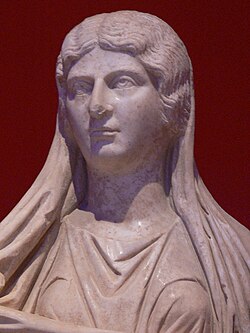
Alexander Severus (222–235)
After Elagabalus was murdered by the troops in 222 AD, his cousin Alexander Severus ascended the throne. Ruling from age 14, Alexander was heavily influenced by his mother, Julia Avita Mamaea. His reign was generally more efficient and stable, though he faced the rising threat of the Sasanian Empire in the east.
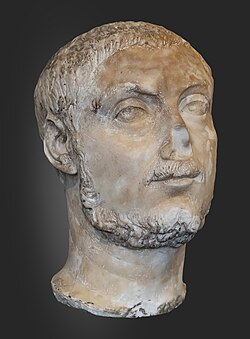
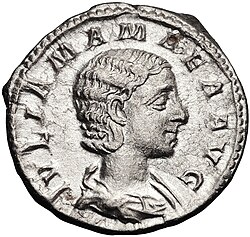
Alexander's rule ended in 235 AD when he and his mother were murdered by their own troops while wintering in Germany. This event is widely regarded as the starting point of the Crisis of the Third Century.
Dynastic Summary
| Emperor | Reign | Key Characteristic | End of Reign |
|---|---|---|---|
| Septimius Severus | 193–211 | Founder; Military focus | Natural causes |
| Caracalla | 198–217 | Universal citizenship; Fratricide | Assassinated |
| Geta | 209–211 | Co-emperor | Murdered by Caracalla |
| Macrinus | 217–218 | Non-senatorial interlude | Assassinated |
| Elagabalus | 218–222 | Religious upheaval | Assassinated |
| Alexander Severus | 222–235 | Last Severan; Maternal influence | Assassinated |
Frequently Asked Questions
Who were the most powerful women in the Severan dynasty?
Julia Domna, Julia Maesa, Julia Soaemias, and Julia Mamaea were all powerful augustae. They played critical roles in government and were instrumental in securing the imperial throne for their sons and grandnephews.
What was the significance of Caracalla's citizenship decree?
Caracalla granted Roman citizenship to all non-slave residents within the empire's borders, a move that expanded the legal status of millions of people, though the exact motivations for this act remain debated.
How did the Severan dynasty contribute to the Crisis of the Third Century?
The dynasty's reliance on military loyalty over senatorial cooperation, the debasement of the currency, and the increasing power of the Praetorian prefects created a volatile political environment that collapsed after the death of Alexander Severus.
Was Elagabalus as decadent as historical sources claim?
While he did introduce foreign religious practices and marry a Vestal Virgin, many of the more extreme stories regarding his effeminacy and licentiousness are believed by modern historians to be exaggerations by ancient authors.
What was the role of Macrinus in the dynasty?
Macrinus served as a brief interruption to the dynasty. A former Praetorian prefect, he orchestrated the assassination of Caracalla and ruled for about a year before being overthrown by the forces of Elagabalus.