Legio III Gallica: The Bull of the Roman East
The Legio III Gallica (Third Gallic Legion) was one of the most influential military units of the Imperial Roman army. From its origins in the late Roman Republic to its presence in the 4th century, this legion played a pivotal role in the political stability and territorial expansion of the empire, particularly in the East.
The legion's name, Gallica, indicates that its initial recruits were veterans from Julius Caesar's Gallic campaigns. This connection is further evidenced by the legion's emblem—the bull—a symbol closely associated with Caesar himself.
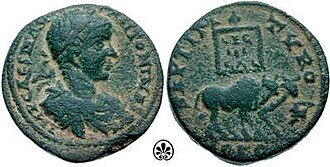
Key Facts
- Founded: 49 or 48 BCE by Julius Caesar.
- Primary Base: Raphanea, Roman Syria.
- Emblem: The Bull.
- Active Period: From the late Republic until the early 4th century.
- Key Regions: Gaul, Italy, Moesia (Danube), and Syria.
Origins Under the Roman Republic
Julius Caesar established the Legio III Gallica in either 49 or 48 BCE to support his efforts in the civil war against Pompey. The original ranks were composed exclusively of soldiers from Cisalpine and Transalpine Gaul.
Following Caesar's assassination, the legion joined the forces of Mark Antony. During this period, they fought in significant engagements at the battles of Munda and Philippi. Later, they were part of the army raised by Lucius Antonius and Fulvia to oppose Octavian, eventually surrendering at Perugia in the winter of 41 BCE.
Service During the Early Empire
The legion's early Imperial history was marked by constant movement and strategic deployments. They participated in Mark Antony's Parthian War in 36 BCE and, following the Battle of Actium and Antony's death, were stationed as a garrison in the province of Syria.
The Campaigns of Corbulo and the Danube
Between 58 and 68 AD, the general Gnaeus Domitius Corbulo utilized the III Gallica and Legio VI Ferrata as the core of his army to secure Roman control over Armenia against the Parthians. However, the success of these campaigns sparked the jealousy of Emperor Nero, leading to Corbulo's forced suicide. In 68 AD, the legion was transferred to Moesia, located along the Danube river.
The Year of the Four Emperors
In 69 AD, during the chaotic Year of the Four Emperors, the III Gallica shifted its allegiance from Otho to Vespasian. Under the command of Marcus Antonius Primus, they marched into northern Italy to defeat the forces of Vitellius at the Second Battle of Bedriacum.
A famous anecdote from this battle describes the legion's custom of saluting the rising sun—a habit acquired during their time in Syria. When the soldiers turned east at dawn, the Vitellian forces mistakenly believed reinforcements had arrived from the east and lost their morale. After securing Rome for Vespasian, the legion was eventually sent back to Syria by Mucianus to maintain stability.
The Syrian Stronghold and Political Influence
Upon returning to Syria, the legion established its permanent base at Raphanaea. Over the next two centuries, they were involved in various conflicts, including the Jewish rebellion of 132 AD and campaigns against the Parthians under Lucius Verus and Gaius Avidius Cassius. They also likely provided vexillations (detachments) for Trajan and Domitian's Dacian wars.
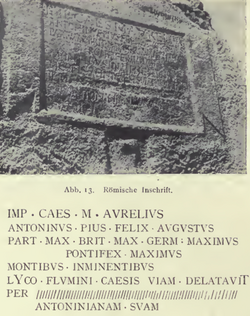
Kingmakers of the Empire
The III Gallica often found itself at the center of imperial power struggles. During the Year of the Five Emperors, they supported Pescennius Niger before eventually serving Septimius Severus in his Parthian campaigns. Under Caracalla, the legion left a lasting mark on the landscape via inscriptions at Nahr el-Kalb.
The legion's most dramatic political intervention occurred in 218 AD. Julia Maesa secured the loyalty of the legion under commander Publius Valerius Comazon through generous donations. The legion subsequently proclaimed the fourteen-year-old Elagabalus as emperor. However, the relationship soured due to Elagabalus' excesses. In 219 AD, the legion supported Senator Verus in a bid for the throne, resulting in Verus' execution and the temporary dispersal of the legion to the Africa provinces (Legio III Augusta). The legion was later reconstituted and returned to Syria by Alexander Severus to fight the Sassanids.
Legionary Summary
| Category | Details |
|---|---|
| Founder | Julius Caesar |
| Primary Base | Raphanea, Syria |
| Key Adversaries | Pompey, Parthians, Sassanids, Jewish rebels |
| Notable Commanders | Marcus Antonius Primus, Publius Valerius Comazon, Avidius Cassius |
| Symbol | The Bull |
Frequently Asked Questions
Why was the legion called "Gallica"?
The name refers to the origin of its earliest recruits, who were veterans from the Gallic legions of Julius Caesar in Transalpine and Cisalpine Gaul.
What was the significance of the bull emblem?
The bull was a symbol associated with Julius Caesar, reinforcing the legion's direct link to its founder.
How did the legion influence the Battle of Bedriacum?
The legion's habit of saluting the rising sun misled the enemy into believing that eastern reinforcements had arrived, causing the Vitellian forces to lose heart.
Which emperor did the III Gallica proclaim in 218 AD?
The legion proclaimed the fourteen-year-old Elagabalus as emperor after receiving donations from his grandmother, Julia Maesa.
Where was the legion based for most of its history?
For the majority of its existence, the Legio III Gallica was based at Raphanaea in the province of Roman Syria.