Justinian I: The Architect of the Byzantine Golden Age
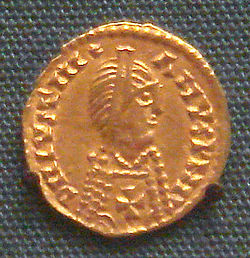
Justinian I, often remembered as Justinian the Great, reigned as the Eastern Roman emperor from 527 to 565 AD. His tenure was defined by a monumental ambition known as renovatio imperii, or the "restoration of the Empire." This vision sought to reclaim the lost territories of the defunct Western Roman Empire and unify the Mediterranean world under a single Roman authority.
Born as Petrus Sabbatius in 482 AD in Tauresium, Dardania, Justinian rose to power through the patronage of his uncle, Justin I. By the time he was crowned co-emperor on April 1, 527, Justinian had already established himself as a formidable political force, serving as a virtual regent and commander of the army of the east. He became the sole ruler upon Justin's death in August 527, embarking on a reign that would fundamentally reshape law, architecture, and the borders of the ancient world.
![The Carmagnola, an imperial porphyry head in Venice perhaps representing Justinian[47]](/images/c5/5a/c55afcc2a80d8c17b46da1f750017ac7c755c1b6e158a271ffe6b4613bcac90e.jpg)
Key Facts
- Reign: 527–565 AD.
- Primary Goal: Renovatio imperii (Restoration of the Empire).
- Legal Legacy: Created the Corpus Juris Civilis, the foundation of many modern legal systems.
- Territorial Gains: Reconquered Italia, Dalmatia, Africa, and southern Hispania.
- Economic Status: Inherited a surplus of 28.8 million solidi from his predecessors.
The Legal Revolution: Corpus Juris Civilis
One of Justinian's most enduring contributions was the systematic overhaul of Roman law. To resolve contradictions and redundancies in centuries of legislation, he appointed the quaestor Tribonian to lead a massive codification project. This resulted in the Corpus Juris Civilis (Body of Civil Law), which consisted of four main parts:
- Codex Justinianeus: A collection of imperial constitutions issued from the 2nd century onward.
- Digesta (Pandectae): A comprehensive compilation of writings by classical Roman jurists.
- Institutiones: An introductory textbook designed to teach the principles of law to students.
- Novellae: New laws issued during Justinian's own reign, notably written in Greek to reflect the common language of the Eastern Empire.
Military Ambitions and Territorial Expansion
Justinian sought to restore the glory of Rome by reclaiming lands lost to Germanic tribes and other adversaries. His military campaigns were extensive and costly, focusing on several key fronts:
The Reconquest of the West
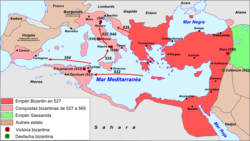
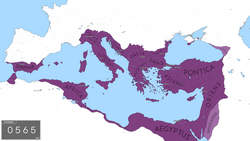
Through his generals, Justinian successfully reclaimed North Africa (533–534 AD) and launched a protracted, two-phase war in Italy (535–554 AD). He also extended Byzantine influence into Dalmatia and southern Hispania, bringing the empire to its greatest extent since the fall of the Western Roman Empire.
Conflicts in the East
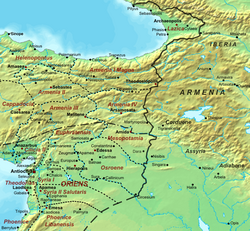
While expanding westward, Justinian faced constant pressure from the Sassanid Empire. This resulted in two major wars (527–532 and 540–562 AD). A strategic flashpoint was the region of Lazica on the Black Sea shore, which became a primary battlefield in the Roman–Persian conflicts.
Economy, Administration, and Crisis
Justinian inherited a wealthy treasury of 28.8 million solidi (approximately 400,000 pounds of gold). He utilized these resources to fund his wars and architectural projects while implementing reforms to curb provincial corruption and streamline tax collection. By 550 AD, annual state revenue had increased from 5 million to 6 million solidi.
However, the empire faced severe setbacks. Between 541 and 543 AD, a devastating plague struck, causing a population collapse that led to labor shortages and rising wages. The financial strain of continuous warfare in Italy and Persia forced Justinian to curtail public services, including the government-run post service.
Summary of Justinian's Reign
| Category | Details |
|---|---|
| Legal Work | Codification of Roman Law (Corpus Juris Civilis) |
| Territories Recovered | North Africa, Italy, Dalmatia, Southern Hispania |
| Major Adversaries | Sassanid Empire, Germanic tribes |
| Economic Peak | Annual revenue of 6 million solidi by 550 AD |
| Major Setback | The Plague (541–543 AD) |
Frequently Asked Questions
What was the purpose of the Corpus Juris Civilis?
The purpose was to organize, simplify, and codify centuries of Roman law into a single, coherent system, removing contradictions and providing a clear legal framework for the empire.
Which territories did Justinian reconquer?
Justinian successfully reclaimed North Africa, Italy, Dalmatia, and parts of southern Hispania, attempting to restore the borders of the old Western Roman Empire.
How did the plague affect the Byzantine Empire?
The plague (541–543 AD) significantly reduced the population, which created a scarcity of labor, increased wages, and potentially forced the empire to rely more heavily on "barbarian" mercenaries in its armies.
Who was the spouse of Justinian I?
Justinian was married to Empress Theodora, who remained his partner in power until her death in 548 AD.
What was the financial state of the empire under Justinian?
Justinian began his reign with a massive gold surplus of 28.8 million solidi. While he increased annual revenues through professionalized tax collection, the costs of perpetual war and the impact of the plague placed a heavy burden on imperial resources.