Otto Hahn: The Father of Nuclear Chemistry
Otto Hahn (1879–1968) was a pioneering German chemist whose work fundamentally altered our understanding of the atomic nucleus. Widely regarded as the father of nuclear chemistry, Hahn's research provided the scientific foundation for both nuclear reactors and nuclear weapons. His career was marked by a relentless pursuit of the properties of radioactive elements, leading to the discovery of nuclear fission and several new isotopes.
Throughout his life, Hahn collaborated with some of the most brilliant minds of the early 20th century, most notably physicist Lise Meitner. Together, they explored the decay chains of heavy elements, pushing the boundaries of chemistry and physics to reveal the hidden mechanics of the atom.
Key Facts
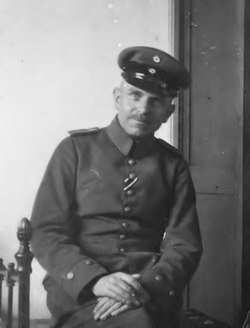
- Primary Achievement: Discovered nuclear fission in 1938 alongside Fritz Strassmann and Lise Meitner.
- Nobel Prize: Awarded the 1944 Nobel Prize in Chemistry for the discovery of the fission of heavy atomic nuclei.
- Element Discoveries: Identified radiothorium, radioactinium, mesothorium, ionium, and protactinium.
- Scientific Innovations: Pioneered rubidium-strontium dating and discovered nuclear isomerism and radioactive recoil.
- Leadership: Served as the founder and president of the Max Planck Society.
Early Career and the Pursuit of New Elements
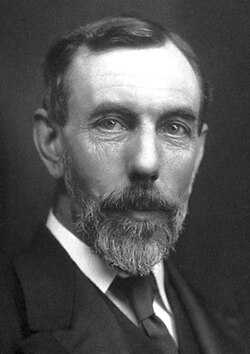
Hahn's academic journey took him from Marburg University and Ludwig-Maximilians-Universität München to international research hubs. In the early 1900s, he worked under the guidance of renowned scientists such as William Ramsay in London and Ernest Rutherford at McGill University in Canada.
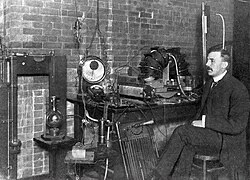
Between 1905 and 1921, Hahn focused on the discovery of radioactive elements. He successfully identified several isotopes and elements, including radiothorium (1905) and radioactinium (1906). His work during this period established him as a leader in radiochemistry—the chemistry of radioactive substances.
The Discovery of Protactinium
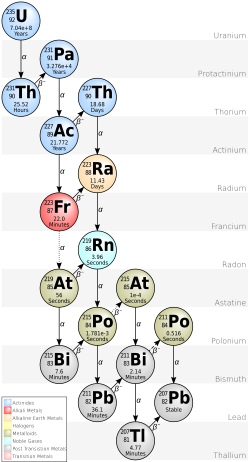
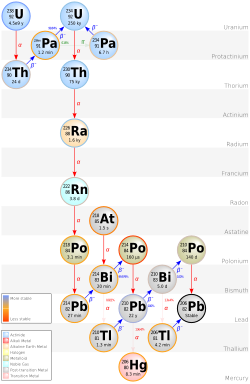
One of Hahn's most significant early triumphs was the discovery of protactinium (Pa) in 1917, a feat achieved in collaboration with Lise Meitner. While other scientists, such as Soddy and John Cranston, attempted to extract the isotope, they acknowledged the priority of Hahn and Meitner. The mystery of how protactinium related to uranium was not solved until the discovery of uranium-235 in 1929.
![Hahn and Meitner, 1913, in the chemical laboratory of the Kaiser Wilhelm Institute for Chemistry. When a colleague she did not recognise said that they had met before, Meitner replied: "You probably mistake me for Professor Hahn."[13]](/images/63/91/6391c6563d8c96ae89572f1f56549e78b2919f97f81a9d2b1d3b0714592a3dfc.jpg)
Advancements in Nuclear Science
Hahn's contributions extended beyond the discovery of elements. He explored the physical behavior of atoms, discovering radioactive recoil (the movement of a nucleus following the emission of a particle) in 1909 and nuclear isomerism (the existence of an atomic nucleus in different energy states) in 1921.
![Physicists and chemists in Berlin in 1920. Front row, left to right: Hertha Sponer, Albert Einstein, Ingrid Franck, James Franck, Lise Meitner, Fritz Haber, and Otto Hahn. Back row, left to right: Walter Grotrian, Wilhelm Westphal, Otto von Baeyer [de], Peter Pringsheim [de] and Gustav Hertz](/images/b8/f2/b8f27a6692e983d52760cdaf7ce8ec8f92035c51553c1221c540e8a2b6360d61.jpg)
Rubidium-Strontium Dating
Hahn also made a lasting impact on geology through the development of rubidium-strontium dating. By studying the radioactive decay of rubidium-87 into strontium-87, Hahn created a method to measure the age of minerals. This technique proved superior to uranium dating in certain contexts because it avoided the errors caused by the escape of helium gas from rocks.
![Former Kaiser Wilhelm Institute for Chemistry building in Berlin. Heavily damaged by bombing during the Second World War, it was restored and became part of the Free University of Berlin. It was renamed the Otto Hahn Building in 1956, and the Hahn-Meitner Building in 2010.[26][27]](/images/91/ea/91ea858eddda759947b5071454825d2dfb86710cd7b4aa9e44cc7ed099e8c4c5.jpg)
The Discovery of Nuclear Fission
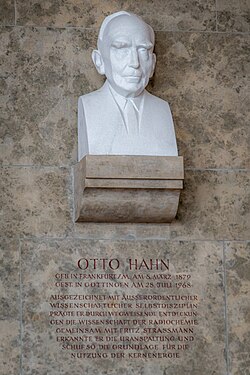
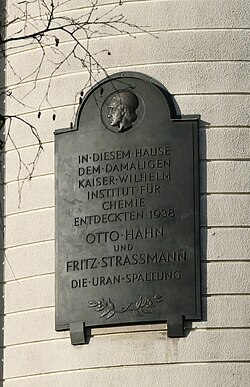
The pinnacle of Hahn's career came in 1938. Working with Fritz Strassmann and Lise Meitner, Hahn discovered nuclear fission—the process by which a heavy atomic nucleus splits into smaller nuclei, releasing a massive amount of energy.
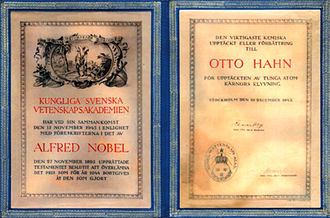
This discovery was a watershed moment in science, leading directly to the development of nuclear energy and atomic weaponry. For this achievement, Otto Hahn was awarded the 1944 Nobel Prize in Chemistry. However, the award was controversial as it was granted to Hahn alone, despite the critical theoretical contributions of Meitner and the experimental help of Strassmann.
Later Life and Legacy
![This set up is on display in the Deutsches Museum in Munich. The table and instruments are original, but the instruments would not have been together on the one table in the same room.[73] Pressure from historians, scientists and feminists caused the museum to alter the display in 1988 to acknowledge Lise Meitner, Otto Frisch and Fritz Strassmann.[74]](/images/c6/24/c62438208dcc0f2bf8dca3959afdbc3d6dd37027b98db40f4d46da007aa18dd4.jpg)
Following World War II, Hahn was briefly interned at Farm Hall in England, where he learned of his Nobel Prize via a newspaper. In the post-war era, he dedicated himself to the reconstruction of German science, becoming the founder and president of the Max Planck Society.
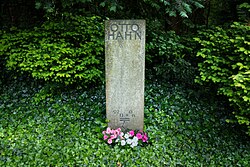
Hahn remained a respected figure in the scientific community until his death in Göttingen in 1968. His legacy is preserved not only in the textbooks of nuclear chemistry but also in the names of various awards, a lunar crater, and the asteroid 19126 Ottohahn.
Summary of Scientific Contributions
| Discovery/Contribution | Year | Significance |
|---|---|---|
| Radiothorium & Radioactinium | 1905–1906 | Early identification of radioactive isotopes. |
| Radioactive Recoil | 1909 | Understanding atomic movement during decay. |
| Protactinium | 1917 | Discovery of a new radioactive element. |
| Nuclear Isomerism | 1921 | Discovery of different energy states in nuclei. |
| Rubidium-Strontium Dating | 1938 | Advanced method for dating geological samples. |
| Nuclear Fission | 1938 | The basis for nuclear power and atomic weapons. |
Frequently Asked Questions
Why is Otto Hahn called the father of nuclear chemistry?
He is given this title because of his pioneering work in radiochemistry and his discovery of nuclear fission, which opened the entire field of nuclear chemistry and the practical application of nuclear energy.
Who else contributed to the discovery of nuclear fission?
While Otto Hahn received the Nobel Prize, the discovery was a collaborative effort involving physicist Lise Meitner, who provided the theoretical explanation, and chemist Fritz Strassmann, who assisted in the experimental work.
What is rubidium-strontium dating?
It is a geochronological method developed by Hahn that measures the ratio of rubidium-87 to strontium-87 in a mineral to determine its age, offering a more reliable alternative to uranium dating in some rock types.
What was the significance of the Max Planck Society?
Otto Hahn served as the founder and president of the Max Planck Society, an organization dedicated to promoting basic research in the natural sciences in Germany after World War II.
Did Otto Hahn discover any elements?
Yes, he is credited with the discovery of several radioactive elements and isotopes, most notably protactinium, as well as radiothorium and radioactinium.