Order of Saint Patrick: The History of Ireland's Dormant Order of Chivalry
The Most Illustrious Order of Saint Patrick is a dormant British order of chivalry associated with Ireland. Established in 1783 by King George III, the Order served as a prestigious honor for the Irish peerage and British royalty. While it remains technically extant under the sovereignty of King Charles III, it has not seen a new appointment since 1936, and the last surviving knight passed away in 1974.
The Order's motto, Quis separabit? (Latin for "Who will separate [us]?"), is an allusion to the Vulgate translation of Romans 8:35, reflecting a desire for unity. Within the hierarchy of British chivalry, it is the most junior of the three senior orders tied to specific constituent countries, following the Order of the Garter (England) and the Order of the Thistle (Scotland).
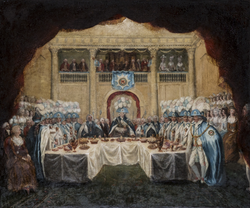
Key Facts
- Founded: 1783 by King George III.
- Sovereign: Currently King Charles III.
- Status: Dormant since 1974 (the death of the last knight).
- Motto: Quis separabit? ("Who will separate [us]?").
- Membership: Historically restricted to Irish peers and British princes.
- Last Appointment: 1936.
The Evolution of the Order
Early Foundation and Purpose
The Order was created a year after Ireland was granted substantial autonomy, primarily as a political tool to reward or secure support within the Irish Parliament. Membership was strictly regulated; statutes required candidates to be knights and gentlemen, with the latter defined as having three generations of noblesse (ancestors bearing coats of arms) on both parental sides.
The red saltire on a white background—the cross of Saint Patrick—became a primary symbol of the Order and was later incorporated into the Union Flag. One of the earliest knights was William FitzGerald, 2nd Duke of Leinster, whose family arms featured this cross.
The Impact of Irish Independence
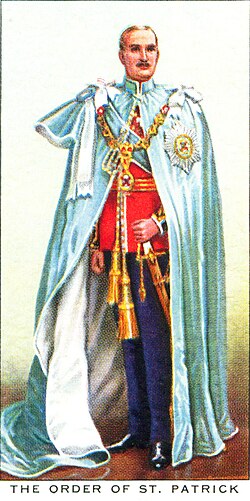
The regular appointment of knights continued until 1922, the year most of Ireland gained independence as the Irish Free State. James Hamilton, 3rd Duke of Abercorn, was the last non-royal member appointed that year. Following independence, the Irish Executive Council under W. T. Cosgrave ceased further appointments.
Between 1922 and 1936, only three royal appointments were made: the future King Edward VIII (1927), Prince Henry, Duke of Gloucester (1934), and the future King George VI (1936). The Constitution of Ireland (1937) further complicated the Order's status by prohibiting the acceptance of titles of nobility or honor without government approval.
Composition and Governance
Members and the Grand Master
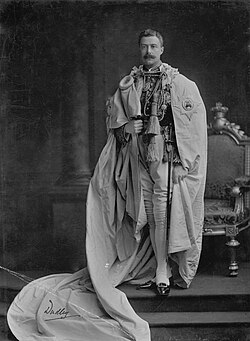
The British monarch serves as the Sovereign. Historically, the Lord Lieutenant of Ireland acted as the Grand Master. While the office of Lord Lieutenant was abolished in 1922, the role was central to the Order's administration. Originally limited to 15 knights, the membership cap was increased to 22 by William IV in 1833.
Unlike the English and Scottish counterparts, the Order of Saint Patrick only appointed peers and princes. Women were never admitted as members, with the sole exception of Queen Victoria in her role as Sovereign.
Officers of the Order
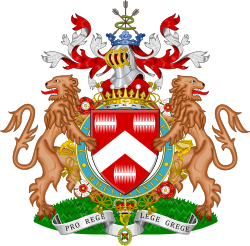
The Order maintained an extensive heraldic staff. The Archbishop of Dublin originally served as Chancellor, a role later held by the Chief Secretary for Ireland until 1922. The Ulster King of Arms served as Registrar and King of Arms; today, this function is maintained by the Norroy and Ulster King of Arms.
Other officers included the Cork and Dublin Heralds, several pursuivants, and the Usher of the Order, known as the Black Rod. The latter was an officer of the Irish House of Lords, and the position continued as Usher of the Order even after the Irish Lords were abolished in 1800.
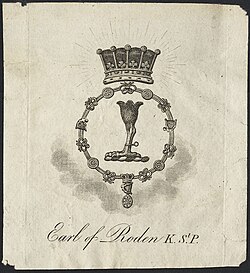
Regalia and Ceremonial Home
The Irish Crown Jewels
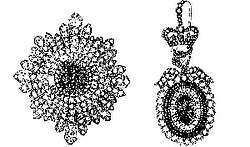
While knights used standard insignia, the Grand Master possessed a star and badge crafted from rubies, emeralds, and Brazilian diamonds. These were designated as the Irish Crown Jewels in the 1905 Statutes. Tragically, these jewels, along with the collars of five knights, were stolen in 1907 and have never been recovered.
St Patrick's Hall and Cathedral
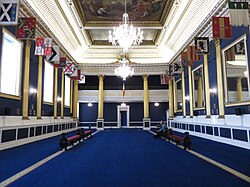
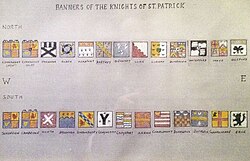
The Order's ceremonial home is St Patrick's Hall in Dublin Castle, which also served as its Chancery. The hall is decorated with the banners of the knights who were members in 1922. Today, this hall is used for the inauguration of the President of Ireland.
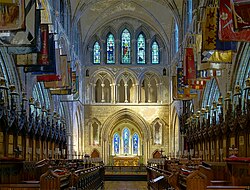
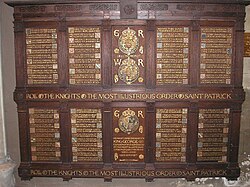
Additional records and tributes are found in St Patrick's Cathedral, Dublin, where banners and heraldic panels commemorate the knights.
Summary of the Order's Structure
| Feature | Detail |
|---|---|
| Sovereign | British Monarch (currently Charles III) |
| Grand Master | Lord Lieutenant of Ireland (abolished 1922) |
| Membership Limit | Originally 15, increased to 22 in 1833 |
| Eligibility | Irish peers and British princes |
| Key Officer | Norroy and Ulster King of Arms |
| Ceremonial Site | St Patrick's Hall, Dublin Castle |
Frequently Asked Questions
Is the Order of Saint Patrick still active?
The Order is considered dormant. While it technically exists and has a Sovereign, no new knights have been appointed since 1936, and the last surviving member died in 1974.
What happened to the Irish Crown Jewels?
The jewels, consisting of a star and badge made of diamonds, rubies, and emeralds, were stolen in 1907 along with several knights' collars. They have not been recovered to this day.
Who was the last knight of the Order?
The last surviving knight was Prince Henry, Duke of Gloucester, who died in 1974.
Can Irish citizens still be appointed to the Order?
This is a subject of legal debate. The 1937 Constitution of Ireland prohibits the acceptance of titles of nobility or honor without government approval, which some argue prevents such appointments.
Where can the Order's history be seen today?
Banners of the 1922 knights are displayed in St Patrick's Hall at Dublin Castle, and various robes and stars are held in the National Museum of Ireland, the Ulster Museum, and the National Gallery of Ireland.