Irish People: History, Genetics, and the Global Diaspora
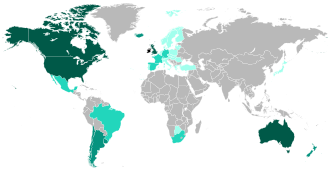
The Irish are an ethnic group and nation native to the island of Ireland, defined by a shared ancestry, a complex history, and a resilient culture. With a global population estimated between 70 and 80 million, the influence of the Irish extends far beyond the shores of their ancestral home, spanning continents from North America to Australasia.
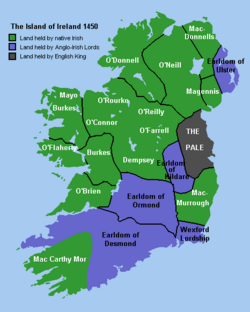
Human presence on the island dates back approximately 33,000 years, with continuous habitation for over 10,000 years. For the majority of recorded history, the Irish have been primarily a Gaelic people. Over the millennia, this identity has been shaped by various waves of migration and conquest, including Viking settlers in the 9th century—who became the Norse-Gaels—and Anglo-Norman conquests in the 12th century. Later, the English colonization of the 16th and 17th centuries introduced significant numbers of English and Lowland Scots, particularly to the northern regions.
Today, the island is divided into the Republic of Ireland and Northern Ireland (part of the United Kingdom), where residents maintain diverse national identities, including Irish, British, or a combination of both.
Key Facts
- Global Population: Approximately 70–80 million people worldwide.
- Genetic Marker: Haplogroup R1b is dominant in Irish males (nearly 80%), with the R-L21 subclade appearing in 65% of the population.
- Primary Languages: Irish, English (Hiberno-English dialects), and Scots (Ulster Scots dialects).
- Religious Landscape: Predominantly Roman Catholic, with significant Protestant minorities (Presbyterian, Anglican, and Methodist).
- Major Diaspora Hubs: The United States, United Kingdom, Australia, and Canada.
Genetic Origins and Ancestry
Modern genetic research provides a window into the prehistoric movements of the Irish people. Haplogroup R1b, the dominant paternal lineage among Irish males, is also common across Western Europe. Specifically, the R-L21 subclade is highly prevalent in Ireland, Scotland, Wales, and Brittany, tracing back to a common ancestor from approximately 2,500 BC.

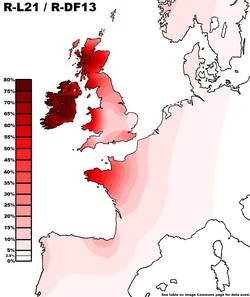
Archaeogenetics has revealed a shift in population over time. While older Neolithic farming populations showed similarities to present-day Sardinians, Bronze Age remains—such as those found on Rathlin Island between 2000 and 1500 BC—closely resemble modern Irish people. These ancient individuals belonged to Haplogroup R-L21 and possessed the gene for lactase persistence (the ability to digest milk into adulthood), suggesting strong genetic continuity from the Bronze Age to the present.
Historical Evolution and Colonization
The trajectory of Irish history is marked by the early expansion of Gaelic culture and the transformative arrival of Christianity. By the Middle Ages, the island saw further shifts through migration and invasion. The Tudor era brought significant conflict, such as the "Enterprise of Ulster," where Irish chieftain Shane O'Neill opposed Queen Elizabeth I.
Following the failure of the Ulster enterprise, the British-English government implemented the Munster plantations. This colonial effort began in 1580 with a population of 4,000 and grew to approximately 16,000 by the 1620s, fundamentally altering the land ownership and demographics of the region.
Cultural and Social Identity
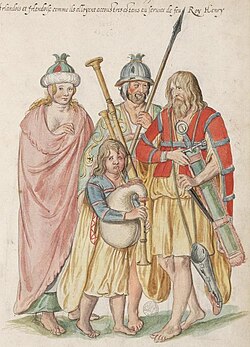
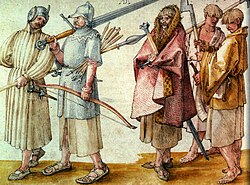
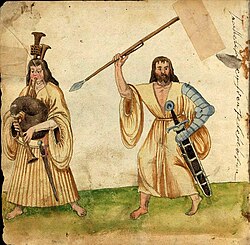
The Irish identity is multifaceted, encompassing the native Gaels, the Anglo-Irish, and the Irish Travellers. Throughout the 16th century, the distinct dress and social customs of the Irish were noted by foreign observers, reflecting a society that maintained its unique character despite external pressures.
![A 16th century perception of Irish women and girls, illustrated in the manuscript "Théâtre de tous les peuples et nations de la terre avec leurs habits et ornemens divers, tant anciens que modernes, diligemment depeints au naturel". Painted by Lucas d'Heere in the 2nd half of the 16th century. Preserved in the Ghent University Library.[63]](/images/cf/e6/cfe6df9a9c6b4378ef65e2286d673945f20f02c0b2e8767db73f2ba0f7294bef.jpg)
The Irish Diaspora
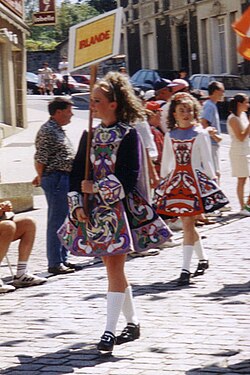
Driven by political upheaval and the devastation of An Górta Mór (The Great Famine) in the 19th century, millions of Irish people emigrated. This created a vast global diaspora that has contributed significantly to the development of various nations.
In the United States, the Irish became one of the most influential ethnic groups, while in Canada, they remain one of the largest self-reported ethnic groups (numbering over 4.3 million as of 2006). The diaspora also reached South America, with notable populations in Argentina and Chile, and Oceania, specifically Australia and New Zealand.

Global Influence and Notable Figures
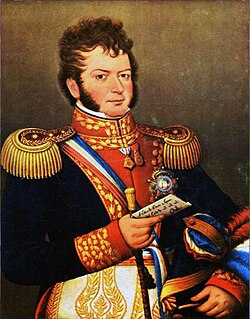
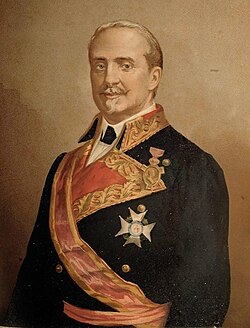
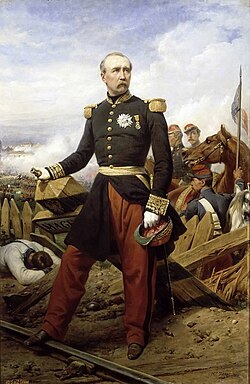
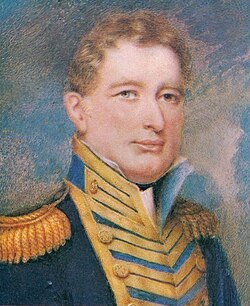
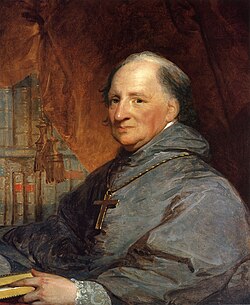
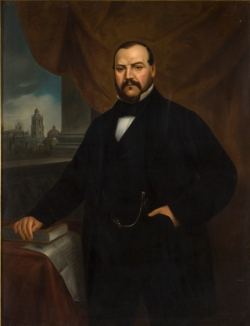
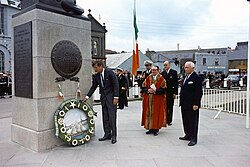
People of Irish descent have risen to prominence in politics, science, and military leadership worldwide. From Bernardo O'Higgins in Chile and William Brown in Argentina to John F. Kennedy in the United States, the Irish diaspora has left an indelible mark on global history.
Demographic Summary
| Region/Group | Estimated Population | Primary Religion/Identity |
|---|---|---|
| Republic of Ireland | 5,149,139 (2022) | 69.1% Catholic |
| Northern Ireland | 627,814 (2021) | 42.3% Catholic / 37.3% Protestant |
| United States | 14,000,000 | Mixed |
| Australia | 7,000,000 | Mixed |
| Canada | 4,627,000 | Mixed |
| Argentina | 500,000 | Mixed |
Frequently Asked Questions
What is the dominant genetic marker among the Irish?
The dominant paternal haplogroup among Irish males is R1b, which occurs in nearly 80% of the population. Specifically, the R-L21 subclade is the most frequent, appearing in about 65% of Irish men.
How long have humans lived in Ireland?
Evidence suggests that humans first arrived in Ireland approximately 33,000 years ago, and the island has been continuously inhabited for more than 10,000 years.
What are the primary languages spoken by the Irish?
The primary languages include Irish (Gaeilge), English (specifically Hiberno-English dialects), and Scots (specifically Ulster Scots dialects), as well as Irish and Northern Ireland Sign languages.
What is the religious distribution in Northern Ireland?
As of 2021, approximately 42.3% of the population in Northern Ireland is Catholic, while 37.3% is Protestant (including Presbyterian, Church of Ireland, and Methodist denominations).
Which countries have the largest Irish diaspora populations?
The largest populations of Irish descent are found in the United States, the United Kingdom, Australia, and Canada.