Orbital Marine Power: The Evolution of Floating Tidal Turbines
Harnessing the predictable power of the ocean's tides requires engineering that can withstand some of the harshest environments on Earth. Founded in Orkney in 2002 by Barry Johnston, Scotrenewables Tidal Power (now known as Orbital Marine Power) set out to pioneer floating tidal stream turbines—devices that capture the kinetic energy of moving water to generate clean electricity.
From its early prototypes to the massive commercial platforms of today, the company has consistently pushed the boundaries of marine engineering. In 2019, the company rebranded as Orbital Marine Power and launched a crowdfunding campaign that raised £7 million to fund the construction of its first commercial turbine, the O2.
Key Facts
- First in the World: Orbital was the first company to successfully grid-connect a floating tidal turbine (the SR250).
- Scaling Power: Turbine capacity has grown from 250 kW (SR250) to 2 MW (O2) and will reach 2.4 MW with the O2-X.
- Technological Leap: The O2 features 360° pitching blades, allowing power capture from both tidal directions without moving the platform.
- Future Deployment: Six next-generation O2-X turbines are expected to be deployed in Orkney between 2026 and 2028.
The Early Milestones: SR250 and SR2000
The SR250: A World First
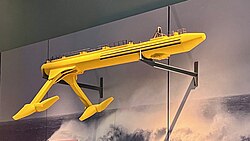
The SR250 was a landmark achievement in renewable energy, serving as the first floating tidal turbine to connect to the electricity grid. This 250 kW rated machine featured a 34-meter long buoyant hull and twin contra-rotating rotors, each 8 meters in diameter. To facilitate towing, the rotors were mounted on legs that could be raised to limit the draft (the vertical distance between the waterline and the bottom of the hull).
Constructed by Harland & Wolff in Belfast in 2010, the 100-tonne device was towed to the European Marine Energy Centre (EMEC) in Orkney. After achieving peak power in December 2011, it was officially connected to the Orkney grid in 2012.
The SR2000: Breaking Power Records
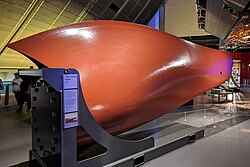
Building on the success of the SR250, the company developed the SR2000. Supported by a £1.24 million grant from the Scottish Government's WATERS scheme, this 2 MW turbine was launched in May 2016. At the time, it was the most powerful tidal stream turbine in the world.
The SR2000 was a massive leap in scale, featuring a 63-meter hull and twin 16-meter diameter rotors. During its 12-month continuous test program, it generated over 3 GWh of electricity—more power from a single turbine than the entire Scottish wave and tidal sector had produced cumulatively in the previous 12 years. It remained operational until September 2018, demonstrating the ability to generate power in significant wave heights of up to 2 meters.
The Commercial Era: The Orbital O2
The Orbital O2 represents the transition from prototype to commercial viability. Weighing 680 tonnes with a 72-meter hull, the O2 incorporates lessons from the SR2000 to achieve a 35% improvement in energy yield at the EMEC site. Its twin 20-meter rotors provide a combined swept area of over 600 square meters, the largest ever for a single tidal platform.
A critical innovation in the O2 is the ability of the blades to pitch 360°. This allows the turbine to capture energy from the tide regardless of direction without needing to yaw (rotate) the entire platform. The O2 was constructed in Dundee by Texo Group, with the hull produced in Cupar and composite blades manufactured in Gosport. After being launched into the Tay Estuary on April 22, 2021, it was towed to the Fall of Warness and connected to the grid in July 2021.

The platform is secured by a four-point mooring system, where each chain is capable of lifting over 50 double-decker buses. Power is transmitted via a dynamic cable to the seabed and then through a static cable to the onshore network.
The Future: O2-X and Serial Production
Orbital is currently developing the O2-X, a next-generation turbine capable of generating 2.4 MW of renewable energy. Designed for adaptability across multiple sites, the O2-X is undergoing a rigorous certification process with Lloyd's Register. The goal is to meet International Electrotechnical Commission (IEC) TS 62600–4 standards. In early 2025, Lloyd's issued an IECRE Feasibility Statement, a key step toward full certification and the start of serial production.
Technical Comparison of Orbital Turbines
| Model | Rated Power | Rotor Diameter | Hull Length | Weight |
|---|---|---|---|---|
| SR250 | 250 kW | 8 m | 34 m | 100 tonnes |
| SR2000 | 2 MW | 16 m | 63 m | 550 tonnes |
| O2 | 2 MW | 20 m | 72 m | 680 tonnes |
| O2-X | 2.4 MW | TBD | TBD | TBD |
Frequently Asked Questions
What makes the Orbital O2 different from previous models?
The O2 features larger 20-meter rotors and 360° pitching blades, which allow it to capture energy from both tidal directions without rotating the platform. It also offers a 35% improvement in yield compared to the SR2000.
How is the O2 turbine held in place in the ocean?
The O2 uses a four-point mooring system. Each of the mooring chains is exceptionally strong, with the capacity to lift more than 50 double-decker buses.
Where are the turbines tested and deployed?
Most of the testing and deployment has taken place at the European Marine Energy Centre (EMEC) in Orkney, Scotland, specifically at sites like the Fall of Warness.
What is the O2-X and when will it be deployed?
The O2-X is the next-generation turbine with a rated power of 2.4 MW. Six of these units are expected to be deployed in Orkney between 2026 and 2028.
How does the electricity get from the floating turbine to the land?
Electricity is transferred from the turbine through a dynamic cable that descends to the seabed, where it connects to a static cable that runs along the ocean floor to the onshore electricity network.