Nuvvuagittuq Greenstone Belt: Debating the Oldest Rocks on Earth
Deep within the North Eastern Superior Province (NESP) lies a geological formation that challenges our understanding of Earth's earliest history. The Nuvvuagittuq Greenstone Belt (NGB), formerly known as the Porpoise Cove Greenstone Belt, is a site of intense scientific scrutiny and debate. Located within the Inukjuak subprovince of the Minto Block, the NGB is part of a larger mafic unit—rocks rich in magnesium and iron—known as the Ujaraaluk unit.
First mapped in 1965 by the Quebec Ministry of Natural Resources, the region remained largely unexamined for decades. It wasn't until the 2000s that preliminary uranium-lead (U-Pb) zircon dating revealed ages reaching 3,750 million years (Ma), sparking a global interest in the belt's potential to hold the secrets of the Hadean eon, the earliest period of Earth's existence.
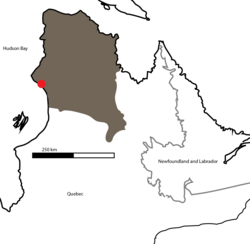
Key Facts
- Location: Inukjuak subprovince, Minto Block, North Eastern Superior Province (NESP).
- Composition: Part of the mafic Ujaraaluk unit.
- Minimum Accepted Age: 3,750 Ma (based on zircon dating).
- Contested Maximum Age: Up to 4,321 Ma.
- Current Status: Sampling permits were revoked in 2025 by the local Inuit tribe due to environmental damage.
The Age Controversy: How Old is the NGB?
Determining the exact age of the Nuvvuagittuq Greenstone Belt is a complex puzzle. Because the rocks have undergone significant geological changes, scientists use different isotopic dating methods, leading to conflicting results.
The 3.75 Billion Year Baseline
In 2007, researchers established a minimum age of 3,750 Ma. This was achieved using U-Pb zircon dating on granitic intrusions. Because these intrusions cut through the belt, they must be younger than the belt itself, providing a reliable lower boundary for the NGB's age.
The Claim for Hadean Origins
The debate intensified in 2012 when samarium–neodymium dating and neodymium isotope fractionation were applied to intruding gabbros and less-deformed members of the Ujaraaluk unit. This study suggested an age of 4,321 Ma. If accurate, this would officially make the Nuvvuagittuq Greenstone Belt the oldest known rocks on Earth.
Counter-Arguments and Detrital Zircons
Not all scientists agree with the 4,321 Ma figure. Another 2012 study analyzed detrital zircons (crystals eroded from older rocks and deposited in new ones) found in quartz–biotite schists. This research reported a maximum age of 3,780 Ma, suggesting that the older 4,321 Ma signature was not the age of the belt itself, but rather inherited isotope ratios from Hadean crust that melted to form the NGB's parent rocks.
Recent Evidence from 2025
New research published in June 2025 has added further weight to the Hadean theory. Scientists identified a gabbroic dike—a sheet of igneous rock—cross-cutting the Ujaraaluk unit with an age of 4,157 Ma. Based on field relationships, this establishes a new minimum age for the mafic units, supporting the conclusion that the NGB dates back to the Hadean eon.
Summary of Dating Evidence
| Year of Study | Method Used | Reported Age | Significance |
|---|---|---|---|
| 2007 | U-Pb Zircon Dating | 3,750 Ma | Widely accepted minimum age |
| 2012 | Samarium–Neodymium | 4,321 Ma | Potential oldest rocks on Earth |
| 2012 | Detrital Zircon Analysis | 3,780 Ma | Proposed maximum age; suggests inherited ratios |
| 2025 | Gabbroic Dike Dating | 4,157 Ma | Supports Hadean origin as a minimum age |
Frequently Asked Questions
What is the Nuvvuagittuq Greenstone Belt?
It is a geological formation in the North Eastern Superior Province of Quebec, part of the mafic Ujaraaluk unit, known for containing some of the oldest rock samples ever discovered.
Why is there a disagreement about its age?
Different dating methods yield different results. Some scientists believe the oldest dates reflect the actual age of the rock, while others argue those dates reflect older materials that were melted and recycled into the belt.
What is the significance of the 4,321 Ma date?
If this date is correct, the Nuvvuagittuq Greenstone Belt would be the oldest known rock formation on Earth, providing a rare window into the Hadean eon.
Can scientists still collect samples from the area?
As of 2025, sampling permits have been revoked by the local Inuit tribe to prevent further damage caused by excessive sampling in the region.
What is a mafic unit?
A mafic unit refers to igneous rocks that are rich in magnesium (Mg) and iron (Fe), typically appearing dark in color.