Archipelago: A Guide to the World's Island Chains
From the tropical shores of the Pacific to the icy waters of the Arctic, the Earth is dotted with stunning collections of islands. These formations, known as archipelagos, are more than just scenic destinations; they are complex geological structures that provide insight into the history of our planet. Whether they are formed by volcanic eruptions, shifting continents, or human ingenuity, archipelagos shape the geography, climate, and culture of the regions they inhabit.
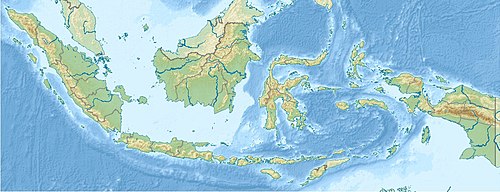
At its simplest, an archipelago—also referred to as an island group or island chain—is a cluster or collection of islands. These can be found in vast oceans, enclosed seas, or even smaller bodies of water. One of the most prominent examples is the Indonesian Archipelago, which forms the basis of the world's largest archipelagic state.
The Origins of the Word
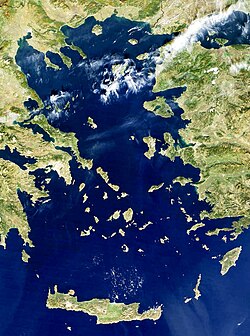
The term "archipelago" has a fascinating linguistic history. It is derived from the Italian word arcipelago, which was originally used as a proper name for the Aegean Sea. This Italian term was likely a variation of the Greek Αιγαίον Πέλαγος. Over time, the usage of the word shifted from describing the sea itself to describing the Aegean Islands because of the sheer number of islands found there.
There is also an academic theory, known as a paretymology, which suggests the word comes from the Ancient Greek arkhi- (meaning "chief") and pélagos (meaning "sea"). While this version is still cited, the connection to the Aegean Sea remains the primary origin.
Natural Types of Archipelagos
Archipelagos can be found in various environments, sometimes isolated in the middle of an ocean and other times hugging the coast of a large landmass. For instance, Scotland is surrounded by more than 700 islands that form an archipelago. Geologically, these formations are categorized based on how they were created.
Oceanic Islands
Oceanic islands are landmasses that typically form through volcanic activity. Unlike other islands, they rise directly from the seafloor and do not have any underlying continental rock. Examples include the Mascarene Islands in the south Indian Ocean, as well as the Hawaiian and Galapagos Islands in the Pacific. In some cases, these volcanic formations create lush landscapes and hot springs, such as the Azores archipelago of Portugal in the North Atlantic Ocean.
Continental Fragments
Continental fragments are islands that were once part of a larger continent but became separated due to natural disasters. They can also be formed by moving glaciers that carve out sections of land, which later fill with water. The Farallon Islands off the coast of California serve as a prime example of this geological process.
Continental Islands
Continental islands are those that were once connected to a continent and still sit on the continental shelf—the submerged edge of a continent that lies under the ocean. Examples of this type include the Canadian Arctic Archipelago and the islands of the Inside Passage off the coast of British Columbia.
Coral Cay Archipelagos
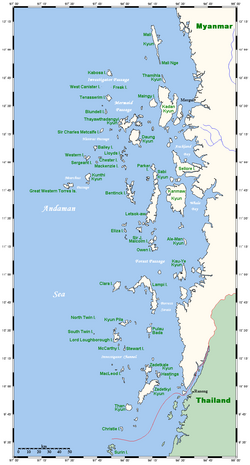
A coral cay archipelago forms when ocean currents transport sediments that gradually accumulate on top of coral reefs. The Florida Keys are a well-known example of this sediment-based formation. Other examples of island clusters, such as the Mergui Archipelago in Myanmar, further illustrate the diversity of these maritime groups.
Artificial Archipelagos
Not all archipelagos are the result of natural geological forces. Artificial archipelagos are man-made structures built for strategic, environmental, or leisure purposes. These are created using floating platforms, submerged structures, or land reclamation—the process of creating new land from the sea.
- Tourism and Leisure: In Dubai, The World Islands and the Palm Islands were designed specifically for tourism.
- Conservation: In the Netherlands, Marker Wadden is being constructed as a dedicated conservation area for wildlife and birds.
World Records and Superlatives
When measuring archipelagos, the results vary depending on whether you look at the number of islands, the total land area, or the population.
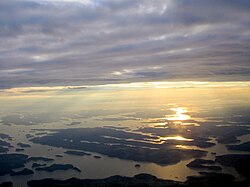
The Archipelago Sea, located in Finland, holds the record for the highest number of islands, with approximately 40,000—though most of these remain uninhabited.
In terms of area and population, Indonesia is the world leader. As the largest archipelagic state, it comprises more than 17,500 islands and is home to approximately 284 million people.
Summary of Archipelago Types
To better understand the differences between these formations, the following table summarizes the primary types of archipelagos.
| Type | Primary Cause of Formation | Key Characteristic | Example |
|---|---|---|---|
| Oceanic | Volcanic activity | No underlying continental rock | Hawaiian Islands |
| Continental Fragment | Natural disasters or glaciers | Separated from a main landmass | Farallon Islands |
| Continental | Sea level changes/Tectonics | Sits on the continental shelf | Canadian Arctic Archipelago |
| Coral Cay | Sediment buildup on reefs | Formed by ocean currents | Florida Keys |
| Artificial | Human construction | Land reclamation/Platforms | Palm Islands (Dubai) |