Neustrelitz: The Baroque Jewel of Mecklenburg-Vorpommern
Nestled on the serene shores of the Zierker See in the heart of the Mecklenburg Lake District, Neustrelitz is a town where history, nature, and art converge. Located in the Mecklenburgische Seenplatte district of Mecklenburg-Vorpommern, Germany, this town served as the capital of the Duchy of Mecklenburg-Strelitz for nearly two centuries. Its name, derived from the Polabian word Strelci meaning "archers" or "shooters," hints at a storied past that stretches back to the Middle Ages.
Key Facts
- State: Mecklenburg-Vorpommern, Germany.
- Historical Status: Capital of the Duchy of Mecklenburg-Strelitz (1738–1918).
- Population: 20,191 (as of December 31, 2024).
- Geography: Situated on the Zierker See with a total area of 139.86 km².
- Architecture: Renowned for its Baroque city center and Neo-Gothic monuments.
A History of Resilience and Renewal
The origins of the area date back to the village of Strelitz, first mentioned in 1278. By the 17th century, it was part of the Duchy of Mecklenburg-Güstrow. However, a catastrophic fire in 1712 destroyed both the castle and the town of Strelitz, prompting the ducal family to relocate to their hunting lodge by the Zierker See. This move led to the construction of Neustrelitz (New Strelitz), which officially became the capital of the newly established Duchy of Mecklenburg-Strelitz in 1736.
Neustrelitz remained the seat of power until 1918 and continued as the capital of the Free State of Mecklenburg-Strelitz until 1933. The town's history also contains darker chapters; during World War II, the arrival of the Red Army's 2nd Belorussian Front on April 30, 1945, was marked by a tragic wave of suicides, with 681 residents taking their own lives.
Architectural Sights and Cultural Monuments
The city center is a testament to Baroque architecture. At its heart lies the Marktplatz (Market Square), featuring the Stadtkirche (City Church), constructed between 1768 and 1778, and the Rathaus (Town Hall), built in 1841 by Friedrich W. Buttel, a student of the famous architect Karl Friedrich Schinkel.
While the Baroque Neustrelitz Palace was destroyed in 1945, the surrounding Schloßgarten (Palace Gardens) remains a highlight for visitors. Key structures within the gardens include:
- The Orangerie: An 18th-century building originally used as a summerhouse.
- Schloßkirche: An English Neo-Gothic palace church built between 1855 and 1859.
- Hebe Temple: A Neoclassic structure featuring a replica statue of the goddess Hebe.
- Louise Temple: Built in 1891 as a Greek-style temple to house the tomb of Queen Louise of Prussia.
Beyond the city center, the Glambeck See offers a protected natural area with lakeside dining options.
Dark Tourism and Reflection
Neustrelitz is also home to a former Nazi-era asylum for the "mentally ill." This site was central to the mass murder of disabled individuals and served as a transit station for those deemed unfit by the regime. Although the building has fallen into disrepair, guided tours have been available since 2010 to encourage reflection on this period of German history.
Culture, Entertainment, and Transport
The town is a vibrant cultural hub, boasting its own theatre with a resident cast that performs operas, musicals, and dramas for an audience of up to 400. Since 2000, the city has also hosted the Immergut Festival, which attracts nearly 5,000 visitors annually.
For travelers, Neustrelitz is well-connected via the Berlin Northern Railway, providing direct rail links to the major cities of Berlin and Rostock.
Notable Figures and Legacy
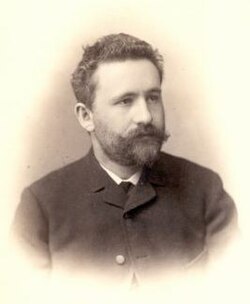
Neustrelitz has been the birthplace or home to many influential figures across various fields. In the realm of science and medicine, it is associated with Emil Kraepelin, the psychiatrist regarded as the father of modern psychiatry.
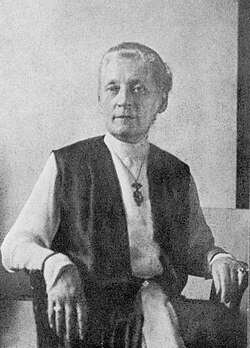
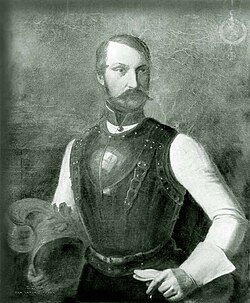
Other notable residents include the photographer and educator Marie Kundt and the military officer Prince Carl of Solms-Braunfels, who is credited with founding New Braunfels, Texas.
Summary of Town Specifications
| Attribute | Detail |
|---|---|
| Coordinates | 53°21′53″N 13°03′49″E |
| Total Area | 139.86 km² |
| Elevation | 75 m |
| Postal Code | 17235 |
| Vehicle Registration | MST |
Frequently Asked Questions
What is the origin of the name Neustrelitz?
The name is derived from the Polabian word "Strelci," which means "archers" or "shooters." The "Neu" prefix was added when the new town was established after the fire of 1712.
Was Neustrelitz ever a capital city?
Yes, it served as the capital of the Duchy of Mecklenburg-Strelitz from 1738 until 1918, and later as the capital of the district of Mecklenburg-Strelitz from 1994 to 2011.
What can visitors see in the palace gardens?
Visitors can explore the 18th-century Orangerie, the Neo-Gothic Schloßkirche, the Neoclassic Hebe temple, and the Louise Temple, which houses the tomb of Queen Louise of Prussia.
How can one travel to Neustrelitz?
The town is accessible via the Berlin Northern Railway, which offers direct connections to Berlin and Rostock.
Who is Emil Kraepelin?
Emil Kraepelin was a psychiatrist born in Neustrelitz who is widely considered the father of modern psychiatry.