Neo-Bop Jazz: The Rise of the Neotraditionalist Movement
In the landscape of modern music, neo-bop (also known as neotraditionalist jazz) emerged as a powerful reaction against the experimental trends of the mid-20th century. Gaining momentum in the early 1980s in the United States, this style represented a conscious return to the acoustic, swinging, and melodic forms of jazz. While the 1960s and 1970s were dominated by the boundary-pushing sounds of avant-garde jazz and the electric textures of jazz fusion, neo-bop musicians sought a deeper aesthetic affinity for the traditions of the past.
Key Facts
- Origins: Emerged in the early 1980s in the United States.
- Core Philosophy: A preference for acoustic sounds, swing, and blues tonalities over electric fusion and avant-garde experimentation.
- Central Figure: Trumpeter Wynton Marsalis, who framed the genre as an academic and artistic endeavor.
- Key Group: "The Young Lions," a cohort of musicians dedicated to traditional jazz styles.
- Institutional Support: The founding of Jazz at Lincoln Center in 1987.
Musical Style and Characteristics
Neo-bop is an eclectic mixture of several foundational styles, primarily drawing from bebop (a fast-tempo, complex jazz style), hard bop, post-bop, and modal jazz (jazz based on musical modes rather than chord progressions). Because it blends so many elements from the post-bebop era, academic distinctions between neo-bop and post-bop are often blurred.
The movement was embraced not only by new artists but also by established straight-ahead jazz musicians who had either avoided the fusion era or decided to return to traditional roots. This shift sparked significant debate in the jazz community. While Time magazine praised the return to accessible forms, legendary musician Miles Davis famously dismissed the movement as "warmed over turkey," suggesting it relied too heavily on the past.
The History of the Neotraditionalist Movement
The 1970s: Laying the Groundwork
The seeds of neo-bop were sown in the 1970s by musicians who rejected the electric instrumentation and rock influences of jazz fusion. Drummer Art Blakey played a pivotal role during this time; his band, the Jazz Messengers, served as a stylistic incubator for young musicians. Drummer Cindy Blackman has noted that Blakey's commitment to tradition prevented acoustic jazz from being completely eclipsed by fusion.
The theoretical framework for the movement was further developed by Albert Murray. In his 1976 book Stomping the Blues, Murray argued that true jazz must be based on three pillars: swing, blues tonalities, and acoustic sounds. These ideas were championed by critic Stanley Crouch and Wynton Marsalis, who viewed the stylistic choices of fusion and avant-garde jazz as a lack of true musicianship.
The 1980s: The Era of the Young Lions
Wynton Marsalis, the son of pianist Ellis Marsalis, became the face of the movement in the early 1980s. Influenced by figures like Fats Navarro and Kenny Dorham, Marsalis released his self-titled album in 1982, which the Los Angeles Times described as the starting point of the "Re-bop Renaissance."
Unlike the original beboppers of the 1940s, who were often associated with a rebellious, countercultural lifestyle, Marsalis approached neo-bop from an academic perspective. He advocated for jazz to be viewed as a "fine art," comparable to classical music rather than rock.
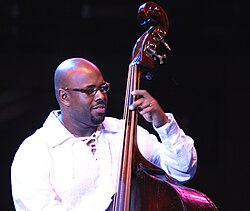
This vision attracted a group of talented musicians known as the "Young Lions," including Terence Blanchard, Donald Harrison, Wallace Roney, Kevin Eubanks, Stanley Jordan, Kenny Kirkland, and Jeff Watts. Later, other prominent figures such as Christian McBride, Marcus Roberts, and Roy Hargrove joined the movement.
To institutionalize this movement, Murray, Crouch, and Marsalis founded Jazz at Lincoln Center in New York in 1987, providing a permanent platform for neotraditionalist performance and education.
The 1990s: Establishing a Subgenre
By the 1990s, as hard bop returned to the mainstream, neo-bop began to be recognized as its own distinct subgenre. Critic Scott Yanow suggested that while it remained part of the broader straight-ahead category, it had evolved beyond simply "recycling the past." However, critics continued to argue that the style lacked the raw innovation of the original 1940s bebop pioneers and was perhaps too commercial in its approach.
Neo-Bop Summary Table
| Feature | Details |
|---|---|
| Primary Instruments | Trumpet, Saxophone, Piano, Double Bass, Drums |
| Stylistic Influences | Bebop, Hard Bop, Modal Jazz, Post-Bop |
| Key Figures | Wynton Marsalis, Art Blakey, Stanley Crouch |
| Core Philosophy | Acoustic sounds, swing, and academic "fine-art" status |
| Derivative Forms | Continental jazz |
Frequently Asked Questions
What is the difference between bebop and neo-bop?
While both emphasize complex melodies and swing, bebop was a revolutionary, countercultural movement of the 1940s. Neo-bop emerged in the 1980s as a conscious revival of those styles, characterized by a more academic approach and a rejection of the rebellious lifestyle associated with the original bop era.
Who were the "Young Lions"?
The "Young Lions" were a group of jazz musicians in the 1980s, led by Wynton Marsalis, who rejected jazz fusion and avant-garde styles in favor of a return to traditional, acoustic, straight-ahead jazz.
Why was neo-bop controversial?
It was polarizing because some, like Miles Davis, felt it was merely "recycling the past" and lacked innovation. Conversely, others praised it for making jazz more accessible and preserving the essential elements of the genre.
What role did Art Blakey play in neo-bop?
Art Blakey and his Jazz Messengers acted as a bridge between eras. By maintaining a commitment to traditional jazz during the 1970s, Blakey provided a training ground for many of the musicians who would eventually lead the neotraditionalist movement.
What is the significance of Jazz at Lincoln Center?
Founded in 1987 by Wynton Marsalis, Stanley Crouch, and Albert Murray, the organization served as one of the primary institutional promoters of the neotraditionalist movement, elevating jazz to a formal, academic status.