Straight-Ahead Jazz: The Evolution of a Timeless Tradition
Straight-ahead jazz is a broad term used to describe jazz that adheres to traditional acoustic formats and improvisational styles, standing in contrast to the electric experiments of fusion or the abstraction of the avant-garde. Rooted in the swing, bebop, and hard bop movements of the mid-20th century, this style emphasizes the organic interaction between acoustic instruments—typically a combination of saxophone, piano, bass, and drums.
Key Facts
- Origins: Emerged from swing, bebop, and hard bop, gaining a distinct identity in the 1960s United States.
- Core Philosophy: A preference for acoustic instrumentation over electric sounds.
- Key Movements: Includes the "Young Lions" and neo-bop revivals of the 1980s.
- Defining Figures: Influential artists include Art Blakey, Wynton Marsalis, and Dexter Gordon.
- Global Reach: Experienced a significant shift toward Europe (France and Scandinavia) in the 1970s before returning to prominence in New York.
The 1970s: Resilience Amidst the Fusion Era
The 1970s were dominated by the rise of jazz fusion, a genre that integrated electric instruments and rock influences. This shift led many traditional hard bop musicians to retire or pass away, including Lee Morgan, Kenny Dorham, and Cannonball Adderley. However, several stalwarts remained committed to the acoustic tradition.
Pianist McCoy Tyner famously rejected the electric trend; his 1972 album Sahara helped revive his career and critical standing. Similarly, Cedar Walton formed Eastern Rebellion, maintaining the classic saxophone/piano/bass/drums lineup. Bill Evans, after a brief period of electric experimentation, returned to his preferred acoustic trio format with Marc Johnson and Joe La Barbera.
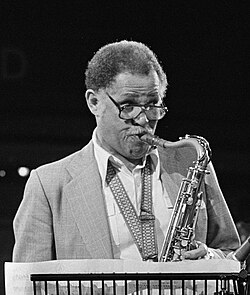
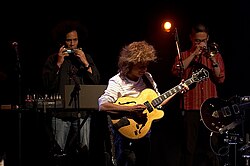
While some artists blended styles—such as guitarist Pat Metheny in Bright Size Life (1976)—the era also saw a geographical shift. Many musicians moved to Europe, particularly France and Scandinavia, as the U.S. faced political tension. This trend reversed in 1976 when bebop legend Dexter Gordon returned to New York, sparking a renewed American interest in the forms he had preserved abroad.
The 1980s: The Great Revival and Neo-Bop
The 1980s witnessed a powerful resurgence of straight-ahead jazz, driven largely by the influence of Art Blakey and his Jazz Messengers. This period saw the rise of neo-bop, a modern revival of bebop and hard bop. Trumpeter Wynton Marsalis became the face of this movement, bridging the gap between the veterans and a new generation of players.
Other significant figures of the era included Woody Shaw, who maintained high technical standards despite health challenges, and saxophonist Stan Getz, whose late-career albums received widespread acclaim. The cultural impact of the era was further cemented by the 1986 film Round Midnight, which focused on the life of Bud Powell and starred Dexter Gordon.
The Young Lions Movement
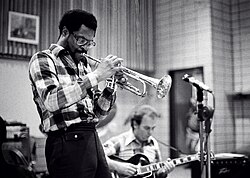
By 1980, the "Young Lions" movement had taken hold. Led by pioneers like Wynton Marsalis, these musicians sought to reclaim the acoustic heritage of jazz. Marsalis's participation in Art Blakey's 11-piece band on the album Straight Ahead (1981) served as a manifesto for this return to traditionalism.
1990s: Hard Bop and the Transition of Generations
The 1990s were characterized by a duality of loss and rebirth. The jazz world mourned the passing of icons such as Miles Davis, Dizzy Gillespie, and Sarah Vaughan, as well as the members of the Modern Jazz Quartet. Simultaneously, new voices emerged. Saxophonist Eric Alexander entered the scene in the early 1990s, studying under masters like Joe Lovano and Rufus Reid.
Veteran musicians also made notable returns. Jackie McLean returned to full-time performance in 1990 after years of teaching, while Freddie Hubbard transitioned to the flugelhorn—an instrument easier on the lip than the trumpet—following a career-threatening injury in 1992.
2000s to Present: Popularity and Digital Growth
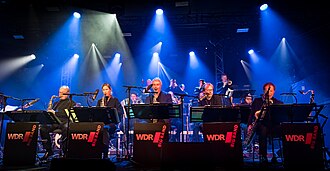
In the 2000s, straight-ahead influences reached a wider audience through vocalists like Michael Bublé, who blended jazz standards with adult contemporary pop. In the orchestral realm, the WDR Big Band achieved critical success, winning a Grammy in 2006 for Some Skunk Funk.
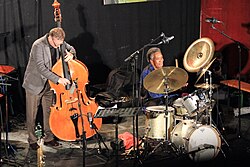
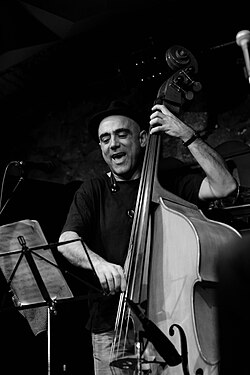
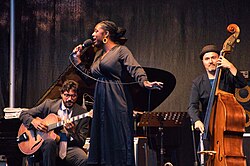
The 2010s saw the integration of online media to promote the genre. Joan Chamorro utilized YouTube to share over a thousand videos, bringing jazz to a digital audience. Meanwhile, artists like Emmet Cohen and Wynton Marsalis continued to evolve the style, with Marsalis blending straight-ahead jazz with Latin-American influences in his 2018 work Una Noche con Rubén Blades.
| Era | Primary Trend | Key Figures |
|---|---|---|
| 1970s | Resistance to Fusion | McCoy Tyner, Bill Evans, Dexter Gordon |
| 1980s | Neo-Bop Revival | Wynton Marsalis, Art Blakey, Woody Shaw |
| 1990s | Generational Shift | Eric Alexander, Jackie McLean, Freddie Hubbard |
| 2000s-Present | Pop Crossover & Digital Media | Michael Bublé, Joan Chamorro, Emmet Cohen |
Frequently Asked Questions
What is the difference between straight-ahead jazz and jazz fusion?
Straight-ahead jazz relies primarily on acoustic instruments and traditional bop structures, whereas jazz fusion incorporates electric instruments, rock rhythms, and electronic effects.
Who were the "Young Lions"?
The Young Lions were a group of musicians in the 1980s, most notably Wynton Marsalis, who advocated for a return to the acoustic traditions of bebop and hard bop.
How did Dexter Gordon influence the revival of the genre?
After spending years in Europe, Gordon's return to New York in 1976 revitalized American interest in the bebop forms that had fallen out of prominence in the U.S.
What is neo-bop?
Neo-bop is a modern revival of the bebop and hard bop styles, characterized by a return to acoustic instrumentation and traditional improvisational techniques.
How has the internet affected straight-ahead jazz in recent years?
Online platforms have allowed musicians like Joan Chamorro to reach global audiences through video sharing, diversifying the way the music is consumed and promoted.