Nazi Concentration Camps: The System of Terror (1933–1945)
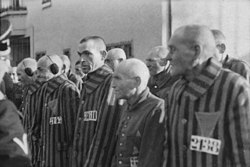
Between 1933 and 1945, Nazi Germany established a vast and brutal network of concentration camps (German: Konzentrationslager). These facilities were designed to imprison perceived enemies of the state in inhumane conditions. While distinct from extermination camps—which were built specifically for mass murder—concentration camps became sites of systemic maltreatment, forced labor, and death through disease, starvation, and execution.
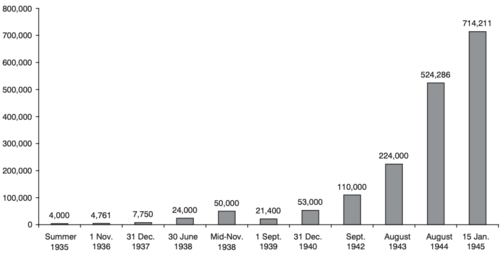
The system grew from a few makeshift detention centers into a massive infrastructure of over a thousand camps and subcamps across Germany and occupied Europe. Millions suffered under this regime, with registered prisoners numbering approximately 1.65 million, though many more were killed outside the official registration system.
Key Facts
- Timeline: Operated from March 1933 until the Allied liberations in 1944 and 1945.
- Scale: Included 27 main camps and over 1,100 satellite camps.
- Casualties: Approximately 1 million registered prisoners died; total deaths including unregistered victims are estimated between 1.8 and 2 million.
- Administration: Initially run by various agencies, later controlled exclusively by the SS (Schutzstaffel).
- Primary Victims: Initially political opponents (Communists and Social Democrats), later expanding to include Jews, "asocials," habitual criminals, and resistance fighters from occupied territories.
The Evolution of the Camp System
Early Camps (1933–1934)
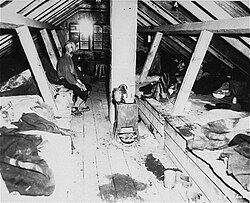
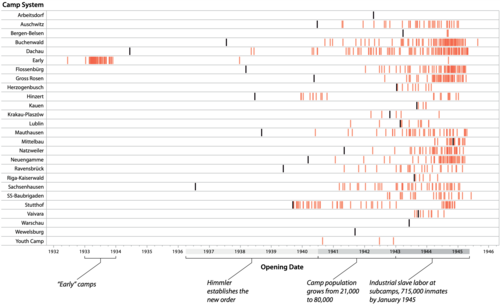
The first camps appeared in March 1933, immediately following Adolf Hitler's appointment as Chancellor. These early facilities were heterogeneous, often utilizing existing structures like vacant factories, schools, and castles. During this period, roughly 70 camps existed, operated by a mix of local police, the SA, and the SS. The majority of prisoners were political dissidents, specifically members of the Communist Party of Germany (80%) and the Social Democratic Party (10%).
Institutionalization and Expansion (1934–1939)
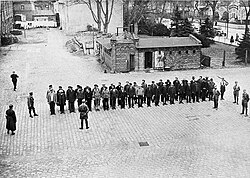
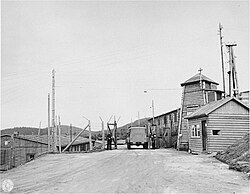
After the 1934 purge of the SA, the SS took exclusive control of the camps. By 1938, the prisoner population surged as the regime began targeting "habitual criminals" and "asocials"—a category that included the homeless, the mentally ill, and the unemployed. To accommodate this growth, purpose-built camps were established, including Flossenbürg, Mauthausen, and Ravensbrück (the first camp specifically for women).
![Fence at Flossenbürg. Expensive security measures distinguished the concentration camps from other Nazi detention facilities.[50]](/images/36/a1/36a119ac31823a6ad16be5f5ef1fefa6be9ff9359f3b847e13b9d346002bb312.jpg)
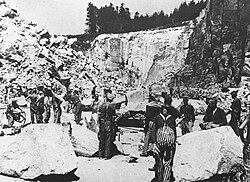
Economic exploitation became a central goal during this era. The SS company German Earth and Stone Works (DEST) exploited prisoner labor to extract building materials for Albert Speer's monumental architecture projects. Following the Kristallnacht pogrom in November 1938, 26,000 Jewish men were deported to camps, leading to a spike in fatalities due to unprecedented abuse.
Concentration Camps During World War II
The outbreak of war in 1939 transformed the camps into increasingly lethal environments. New facilities like Neuengamme, Gross-Rosen, and Natzweiler were opened, while Auschwitz initially served as a camp for Polish resistance activists. The prisoner population grew from 21,000 in 1939 to nearly 80,000 by early 1942, driven by the demand for forced labor in war production.
Systematic killing began within the concentration camp system in April 1941, when the SS ordered the murder of exhausted or ill prisoners in euthanasia centers. This was followed by the mass murder of Soviet prisoners of war starting in August 1941. At Auschwitz, the SS began using Zyklon B, a cyanide-based pesticide, in improvised gas chambers to kill these prisoners.
Organization and Administration
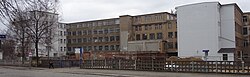
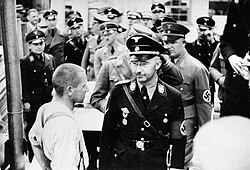
The camps followed a rigid hierarchy consisting of a commandant, a political department, a protective custody camp, and a guard command. By 1942, the system was subordinated to the SS Main Economic and Administrative Office (SS-WVHA) to better integrate prisoner labor into the Nazi war economy. The leadership typically consisted of middle-class men born around 1900 who were motivated by social bonds, ideology, and the opportunity for material gain.
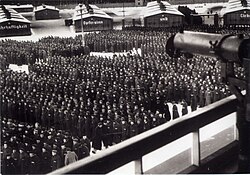
Prisoner Demographics and Conditions
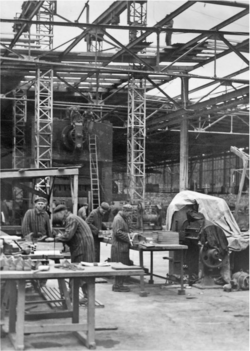
While Jews were overrepresented in the camps, especially after 1938, the majority of Jews murdered during the Holocaust were killed in dedicated extermination camps rather than the general concentration camp system. However, some facilities, such as Auschwitz and Majdanek, functioned as both concentration and extermination camps. Forced labor was ubiquitous, with prisoners working in quarries, brickworks, and aircraft factories.
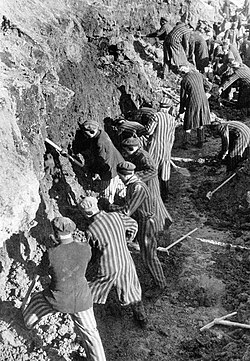
Conditions deteriorated sharply during the second half of the war. Malnutrition and disease became rampant, and the mortality rate soared. In the final months of the war, hundreds of thousands of prisoners died during death marches—forced evacuations from camps in the east to the interior of Germany to prevent them from being liberated by advancing Allied forces.
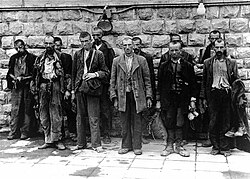
Liberation and Legacy
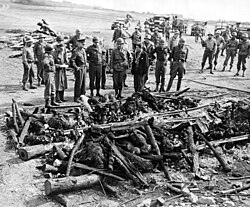
Allied forces gradually liberated the camps in 1944 and 1945, discovering scenes of unimaginable horror. General Dwight D. Eisenhower toured the Ohrdruf camp in May 1945 to document the atrocities for history.
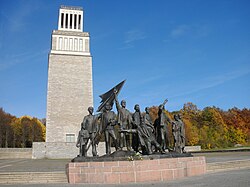
The legacy of the camps has been preserved through survivor testimonies, such as Primo Levi's If This is a Man, and extensive scholarly research. Today, many former camp sites serve as memorials to the victims of the Nazi regime.
| Category | Details |
|---|---|
| Total Main Camps | 27 |
| Total Satellite Camps | Over 1,100 (cumulative) |
| Registered Prisoners | Approx. 1.65 million |
| Estimated Deaths | 1.8 to 2+ million (including unregistered) |
| Primary Admin Body | SS (Schutzstaffel) |
| Key Causes of Death | Disease, malnutrition, forced labor, execution |
Frequently Asked Questions
What is the difference between a concentration camp and an extermination camp?
Concentration camps were used for internment, forced labor, and torture, where many died due to inhumane conditions. Extermination camps were dedicated facilities designed specifically for the systematic, industrial-scale murder of millions of people, primarily Jews.
Who were the first prisoners in the concentration camps?
The first prisoners were primarily political opponents of the Nazi regime, specifically members of the Communist Party of Germany and the Social Democratic Party of Germany.
What were "death marches"?
Death marches were the forced evacuations of prisoners from camps in eastern territories toward the German interior in 1944 and 1945. Prisoners were forced to walk long distances in winter conditions; hundreds of thousands died from exhaustion, exposure, or execution.
How did the role of forced labor change over time?
Initially, labor was used for punishment or local projects. By the late 1930s and during WWII, it became a structured economic tool. The SS established companies like DEST to exploit prisoners for building materials and later integrated them into war production, such as aircraft factories.
How many people died in the concentration camp system?
While nearly a million registered prisoners died, historians estimate the total death toll to be between 1.8 and over 2 million when including unregistered victims, such as those gassed immediately upon arrival at Auschwitz.