Gestapo: The Secret Police of Nazi Germany
The Gestapo, officially known as the Geheime Staatspolizei (Secret State Police), served as the primary instrument of terror for the Nazi regime. Established in 1933, this organization evolved from a regional Prussian agency into a national powerhouse of surveillance and persecution, operating with near-total autonomy to eliminate political opposition and enforce racial laws across Germany and occupied Europe.
Founded by Hermann Göring, the Gestapo was designed to consolidate various political police agencies into a single, efficient machine. Over the next decade, it became the enforcement arm of the Allgemeine SS and the Sicherheitspolizei (SiPo; Security Police), eventually operating under the Reich Security Main Office (RSHA).
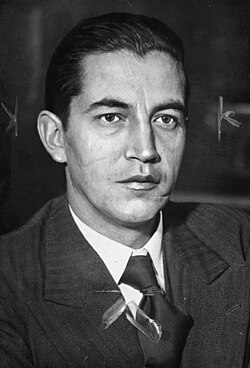
Key Facts

- Founded: April 26, 1933, by Hermann Göring.
- Dissolved: May 8, 1945.
- Personnel: Approximately 32,000 employees by 1944.
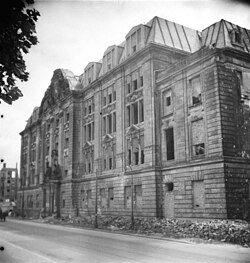
- Headquarters: Prinz-Albrecht-Straße 8, Berlin.
- Primary Method: Relied heavily on public denunciations (80% of investigations).
- Legal Power: Utilized Schutzhaft (protective custody) to imprison citizens without trial.
Evolution of Leadership and Control
The Gestapo's trajectory was marked by a shift from traditional police work to ideological warfare. The first commander, Rudolf Diels, was eventually replaced because Hermann Göring believed he lacked the ruthlessness required to suppress the Sturmabteilung (SA).
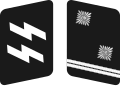
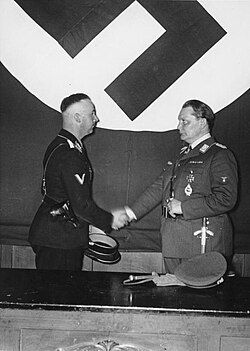
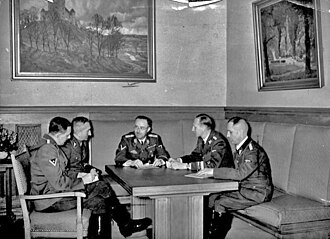
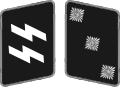
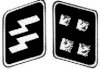
On April 20, 1934, control passed to Heinrich Himmler, the head of the Schutzstaffel (SS). Under Himmler and his appointed chief, Reinhard Heydrich, the Gestapo was infused with young, highly educated National Socialist adherents who viewed the persecution of political opponents as a professional duty.
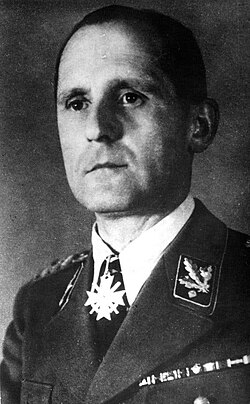
By September 27, 1939, the Gestapo was integrated into the Reich Security Main Office (RSHA) as Department IV (Amt IV). Heinrich Müller took over as Chief of the Gestapo, reporting to Heydrich. Following Heydrich's assassination in 1942, Himmler led the RSHA until Ernst Kaltenbrunner was appointed in January 1943.
The Role of Adolf Eichmann
Within the Gestapo's structure, Adolf Eichmann headed the Office of Jewish Affairs (Referat IV B4). His department was responsible for the logistical coordination of the mass deportation of European Jews to extermination camps during the Holocaust.
Operational Methods and Terror
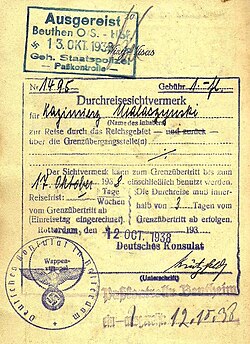
The Gestapo operated largely outside the law, utilizing a system of Schutzhaft, or "protective custody." This was a euphemism for the power to imprison individuals without any judicial proceedings. In a psychological twist, prisoners were often forced to sign their own Schutzhaftbefehl, an order claiming they had requested imprisonment for their own safety.
From 1941, the Night and Fog Decree (Nacht und Nebel) allowed the Gestapo to make political prisoners in occupied territories simply disappear. By April 30, 1944, at least 6,639 people had been arrested under this decree, though the total number of victims remains unknown.
Reliance on the Public
Despite its image of omnipotence, the Gestapo was chronically understaffed, especially after 1939 when personnel were diverted to Einsatzgruppen (mobile killing squads). To maintain control, they relied on the German population. Statistics show that 80% of Gestapo investigations were triggered by denunciations from ordinary citizens, while only 10% were initiated by other government branches and 10% by the Gestapo's own intelligence.
Organizational Structure
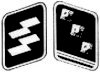
The Gestapo was divided into specialized departments to systematically target different segments of society:
- Department A: Political Opponents (Communists, liberals, and reactionaries).
- Department B: Sects and Churches (Catholicism, Protestantism, Freemasons, and Jewish affairs).
- Department C: Administration, press, and protective custody.
- Department D: Occupied territories (including the Protectorate of Bohemia and Moravia, Yugoslavia, Greece, and Western Europe).
- Department E: Security and counterintelligence.
Operations in Occupied Europe
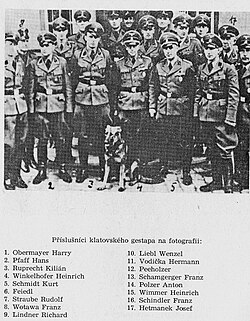
As the Third Reich expanded, the Gestapo established a presence across Europe. In Denmark, approximately 550 uniformed Danes assisted the Gestapo in terrorizing the local population. In France, the Carlingue (French Gestapo) consisted of 30,000 to 32,000 members who conducted operations nearly identical to those of their German counterparts.
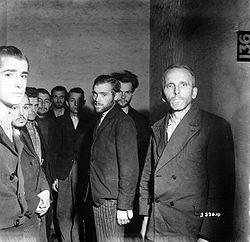
The agency's reign ended with the collapse of the Nazi regime in May 1945. Many of its officers were later tried during the Nuremberg trials for crimes against humanity.
Summary of Gestapo Leadership
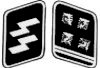
| Chief | Term | Duration | Party |
|---|---|---|---|
| Rudolf Diels | 1933–1934 | 359 days | NSDAP |
| Reinhard Heydrich | 1934–1939 | 5 years, 158 days | NSDAP |
| Heinrich Müller | 1939–1945 | 5 years, 7 months | NSDAP |
Frequently Asked Questions
What was the difference between the Gestapo and the SS?
The Gestapo was the secret state police agency, while the SS (Schutzstaffel) was a larger paramilitary organization. Over time, the Gestapo became a sub-office of the Security Police (SiPo) and was administered by the SS leadership, specifically under Heinrich Himmler.
What was "protective custody" (Schutzhaft)?
Schutzhaft was a legal loophole that allowed the Gestapo to imprison individuals indefinitely without a trial or judicial review. It was used to silence political dissidents and "protect" the state from perceived threats.
How did the Gestapo find out who to arrest?
While they had a vast network, the Gestapo relied heavily on the public. Approximately 80% of their investigations began with denunciations—tips provided by ordinary German citizens against their neighbors, colleagues, or family members.
Who was responsible for the deportation of Jews within the Gestapo?
Adolf Eichmann, who headed the Gestapo's Office of Jewish Affairs (Referat IV B4), was the primary official responsible for coordinating the mass deportation of European Jews to extermination camps.
What happened to the Gestapo after World War II?
The Gestapo was dissolved on May 8, 1945. Its leaders and agents were targeted during the Allied liberation of Europe, and many were subsequently prosecuted for war crimes during the Nuremberg trials.