Natural Resource Exploitation: Economic Growth and Environmental Costs
The exploitation of natural resources refers to the use of limited or non-renewable materials to drive economic growth and development. While these resources often provide the foundation for industrialization, their extraction frequently comes at a steep price. From the depletion of fertile soil to the displacement of indigenous communities, the pursuit of material wealth often triggers a cycle of environmental degradation and social conflict.
Historically, large-scale exploitation accelerated during the 19th century with the rise of steam power, machinery, and industrial mining. By the 20th century, global energy demands surged, leading to a heavy reliance on fossil fuels. As of 2012, approximately 78.3% of the world's energy consumption was sustained by oil, coal, and natural gas.
Key Facts
- Energy Dependence: Fossil fuels accounted for 78.3% of global energy consumption as of 2012.
- Soil Crisis: The UN Food and Agriculture Organization reports 33% of Earth's soils are moderately to highly degraded, with a projection of over 90% degradation by 2050.
- Forest Loss: Roughly 40% of the Earth's original forest cover has vanished over the last 8,000 years.
- Economic Paradox: Abundance of natural resources does not always correlate with a country's material prosperity, often leading to distributional conflicts.
The Mechanics of Resource Depletion
Resources are generally categorized by their replenishment rates. Non-renewable resources, such as subsoil minerals and precious metals, are extracted for industrial commodities but are replenished only over geological time spans. When the consumption rate exceeds the supply rate, the process becomes unsustainable.
Intensive agriculture serves as another primary driver of depletion. This mode of production often leads to the degradation of terrestrial forests and the pollution of aquatic ecosystems. As the global population rises, the unsustainable extraction of these raw materials increases the risk of climate-based displacement and scarcity-driven conflicts.
Environmental and Social Consequences
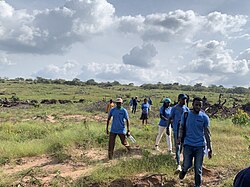
The impacts of exploitation extend far beyond the immediate extraction site. Overconsumption drives a high demand that exacerbates the following issues:
- Deforestation: The removal of trees for industry or agriculture destroys vital habitats.
- Atmospheric Damage: Increased greenhouse gases and ozone depletion.
- Geological Impact: Soil erosion and the depletion of oil reserves.
- Human Insecurity: Forced migration and the loss of traditional food and water sources for indigenous groups.
Human Rights and Labor Exploitation
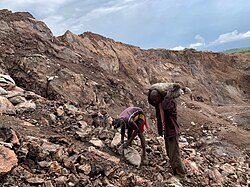
In many regions, the extraction of minerals is linked to severe human rights abuses. In the Democratic Republic of Congo, for example, cobalt mining often involves unsafe worksites, forced labor, and child labor, alongside significant environmental damage.
Economic Implications and the "Resource Curse"
While resources can fuel initial growth, they can also hinder long-term economic transformation. Many resource-rich countries in the Global South experience distributional conflicts where local bureaucracies mismanage wealth. Furthermore, foreign industries often outsource raw materials from developing nations, leaving local communities with minimal profit and increased pollution.
Cities heavily dependent on a single resource, such as coal, often struggle to attract skilled labor and technology-driven businesses due to environmental pollution. However, data from 30 coal-mining cities between 2005 and 2017 suggests that strict environmental regulations can help these regions transition toward greener, sustainable development.
| Impact Category | Primary Driver | Key Consequence |
|---|---|---|
| Environmental | Intensive Agriculture/Mining | Deforestation & Soil Degradation |
| Economic | Overconsumption | Resource Depletion & Price Hikes |
| Social | Industrial Extraction | Human Rights Abuses & Forced Migration |
| Infrastructure | Fossil Fuel Dependency | Vulnerability to Natural Disasters |
Case Studies in Exploitation
Puerto Rico and Energy Dependency
Puerto Rico's economy and community stability are heavily tied to fossil fuels, with 94% of its electricity powered by them. This overdependency was highlighted after Hurricanes Maria and Irma destroyed the energy infrastructure, resulting in an 11-month blackout. Efforts to lower costs through the privatization of the state-owned energy company, PREPA, instead led to higher prices and frequent outages.
The "White Gold Rush" in Tibet
Tibet has become a critical source of lithium and copper for China's clean energy industry, supporting manufacturers like Tesla. Large-scale operations in Nagormo, Qinghai, produce up to 60,000 tonnes of lithium annually, while the Julong and Yulong mines expand copper capacity. These high-altitude operations present significant environmental challenges.


Frequently Asked Questions
What is the difference between the consumption rate and the supply rate?
The supply rate is the speed at which a resource naturally replenishes. The consumption rate is the speed at which humans use it. For sustainability, the consumption rate must be equal to or less than the supply rate; otherwise, the resource will be depleted.
How does resource exploitation affect indigenous peoples?
Exploitation often limits the ability of indigenous groups to relate to their environment and survive on traditional food and water sources, often leading to dispossession and social inequity.
Why doesn't resource abundance always lead to prosperity?
This is often due to mismanagement by local bureaucracies, distributional conflicts, or the extraction of raw materials by foreign industries that leave little profit for the local population.
What are the projected risks for global soil health?
According to the UN Food and Agriculture Organization, while 33% of soils are currently moderately to highly degraded, this figure could rise to over 90% by 2050, potentially causing significant increases in agricultural commodity prices.