Land Development: Balancing Economic Growth and Environmental Sustainability
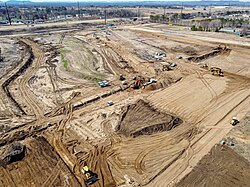
Land development is the process of altering a landscape to serve a specific human purpose. This can range from transforming natural wilderness into agricultural fields to subdividing real estate into residential lots or repurposing old industrial sites into modern condominiums. While these changes often drive economic growth, they fundamentally alter the physical and biological characteristics of the earth.
The practice of modifying land is not new; it dates back to the Neolithic era around 8,000 BC. Since the dawn of civilization, land development has evolved from simple survival-based modifications to complex projects governed by strict building codes and urban regulations.
Key Facts
- Economic Purpose: Land development aims to increase land value through improvements, often analyzed via residual valuation.
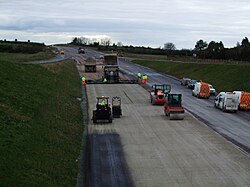
- Urban Scope: Includes the construction of roads, bridges, drainage systems, and utility connections.
- Environmental Cost: Land conversion is the primary driver of terrestrial species extinction.
- Regulatory Tools: Environmental Impact Reports (EIR) and Statements (EIS) are used to assess and mitigate ecological damage.
- Restoration: Processes like renaturation and reforestation attempt to reverse previous land conversion damage.
The Economics of Land Improvement
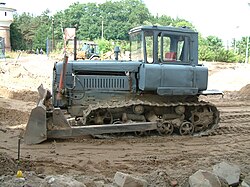
In economic terms, land development is often referred to as land improvement or land amelioration. This involves investing in a property to make it more usable, thereby increasing its market value. While many of these improvements are depreciable assets, some are not if their useful life cannot be determined.
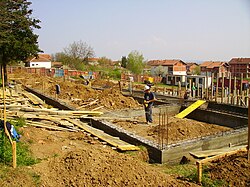
In urban environments, development encompasses a wide array of infrastructure projects, including:
- Road construction, walkways, and parking lots.
- Bridges and municipal service connections.
- Landscaping, terracing, and land leveling.
- Drainage and canal systems.
- External lighting and fencing.
Developers typically seek to maximize profits and minimize risk by identifying the best scheme for the local market. This is often achieved through development analysis, a process that aligns design with political and social requirements to increase profit margins.
Calculating Land Value
A critical tool for developers is the residual development appraisal. This method calculates the Gross Development Value (GDV)—the total sale value of the finished project—and subtracts costs such as construction, finance, and developer profit. The remaining "residue" represents the land's value. Consequently, maximizing the GDV directly enhances the value of the land itself.
Land Conversion and Its Ecological Impact
While "land development" focuses on economic gain, land conversion refers to the physical and biological changes resulting from land-use shifts. Often, economic improvement leads to ecological degradation, as the loss of flora and fauna is rarely accounted for in standard financial valuations.
Conversion to Building Land
Transforming rural land into urban areas typically involves road construction, which leads to topsoil abrasion and soil compaction. The creation of impervious surfaces (like concrete and asphalt) seals the soil from rainfall and nutrient cycles, effectively making the soil beneath buildings infertile.
Conversion to Farmland
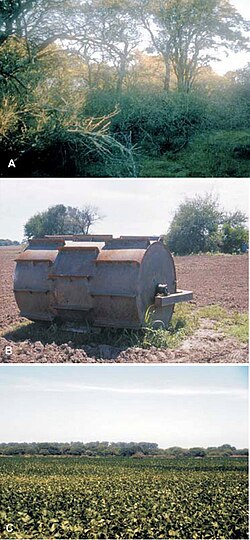
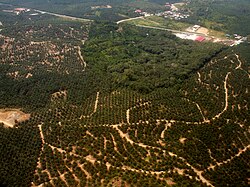
Agricultural land conversion often involves clearing forests, savannas, or grasslands through methods like assarting or slash-and-burn. To make this land productive, developers implement hydrological measures (irrigation and drainage) and soil fertilization.
However, this conversion often crosses an ecological threshold. Newly created farmland is more prone to erosion than forest land. Even when reforestation occurs, the resulting monocultures often lack the biodiversity of the original forest, failing to provide the same ecosystem services.
Environmental Consequences and Restoration
Unregulated land conversion can lead to severe geological and ecological disasters, including:
- Soil Degradation: General loss of soil quality and fertility.
- Salination: The buildup of salts in the soil, common in Central Asia due to saline groundwater irrigation.
- Desertification: The process by which fertile land becomes desert, often caused by improper drainage.
- Habitat Loss: The destruction of environments necessary for wildlife survival.
To combat these effects, land restoration (or rehabilitation) is used. This includes renaturation, reforestation, and stream restoration. While rare in a strict commercial sense, these practices are essential for improving the quality of life in densely populated regions.
Regulatory Mitigation
To manage these risks, governments often require an Environmental Impact Report (EIR) or, in the U.S., an Environmental Impact Statement (EIS) for federally funded projects. One common solution is mitigation banking, where developers must replace destroyed habitats at a rate greater than what was removed to ensure the new ecosystem can eventually reach maturity.
| Conversion Type | Primary Goal | Key Physical Changes | Major Ecological Risk |
|---|---|---|---|
| Building Land | Housing/Commercial | Impervious surfaces, soil compaction | Soil infertility, runoff pollution |
| Farmland | Agriculture | Deforestation, irrigation, fertilization | Biodiversity loss, soil erosion |
| Restoration | Environmental Health | Reforestation, renaturation | Slow recovery of biodiversity |
Frequently Asked Questions
What is the difference between land development and land conversion?
Land development focuses on the economic aspects and the increase in land value through improvements. Land conversion focuses on the physical and biological changes to the land, such as changing a forest into a farm.
How is the value of land determined in a development project?
Developers often use a residual development appraisal. They take the estimated final sale value (Gross Development Value) and subtract the costs of construction, finance, and profit; the remaining amount is the land's value.
What is mitigation banking?
Mitigation banking is a system where the environmental damage caused by a project is offset by creating or restoring a habitat elsewhere, typically at a larger scale than the area destroyed.
Why is land conversion considered a threat to biodiversity?
Land conversion is the leading cause of terrestrial species extinction because it results in habitat loss, degradation, and fragmentation, leaving wildlife without the resources needed to survive.
What are the risks of converting land to agriculture?
Agricultural conversion often involves deforestation, which removes the root systems that stabilize soil. This makes the land more susceptible to erosion and often results in a loss of biodiversity that cannot be fully recovered by planting monoculture forests.