Extinction: The Science of Species Loss and the Sixth Mass Extinction
Extinction is the permanent termination of a species, occurring at the moment the last member of that species dies. While it is a natural part of the evolutionary process, the scale and speed of species loss have become central concerns for modern science. From the towering dinosaurs of the Mesozoic to the recently vanished dodo, extinction shapes the biological landscape of Earth.
Determining the exact moment of extinction is often difficult because a species' potential range can be vast. Consequently, scientists often identify extinction retrospectively. In some cases, a species may become functionally extinct—meaning it still has living members but has lost the capacity to reproduce and recover its population—long before the final individual perishes.
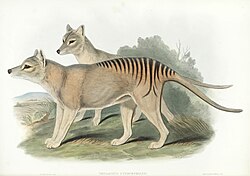
Key Facts
![External mold of the extinct Lepidodendron from the Upper Carboniferous of Ohio[25][26]](/images/90/e1/90e1738a009c9475aa9d395c1c9219a2e97fe4ecb5855c90d817588be7afd6cd.jpg)
- Estimated Loss: Over five billion species are estimated to have gone extinct throughout Earth's history.
- Average Lifespan: A typical species usually becomes extinct within 10 million years of its first appearance.
- Current Biodiversity: There are approximately 8.7 million estimated species of eukaryotes globally.
- Human Impact: Biomass of wild land mammals has declined by 85% since the emergence of humans.
- Future Risk: Some scientists estimate that up to half of all existing plant and animal species could vanish by 2100.
The Dynamics of Species Loss
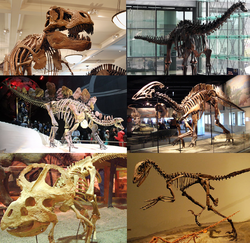
Lazarus Taxa and Living Fossils
The difficulty in tracking extinction leads to the phenomenon of Lazarus taxa, where a species presumed extinct abruptly reappears, typically in the fossil record, after a long period of absence.
Conversely, some species are referred to as living fossils. These are organisms that survive for hundreds of millions of years with little to no morphological change, although this classification remains a subject of scientific debate.
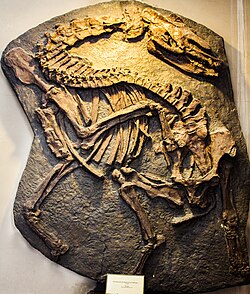
Causes of Extinction
Species typically vanish when they can no longer survive changing environmental conditions or are outcompeted by superior rivals. The primary drivers include:
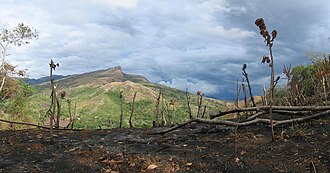
- Habitat Degradation: The destruction of natural environments, such as through slash-and-burn agriculture.
- Climate Change: Rapid shifts in temperature and weather patterns that exceed a species' ability to adapt.
- Predation and Disease: The introduction of new predators or lethal pathogens.
- Genetic Pollution: The degradation of a species' genetic integrity.
- Coextinction: When the extinction of one species leads to the loss of another that depends on it.
Mass Extinctions vs. Background Extinction
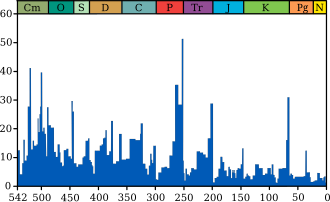
While isolated extinctions are common and natural, mass extinctions are rare, catastrophic events that wipe out a vast percentage of global biodiversity in a relatively short geological timeframe.
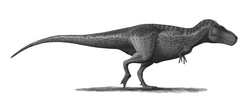
One of the most famous examples is the Cretaceous–Paleogene event, which saw the end of non-avian dinosaurs. While many dinosaur lineages vanished, some continued to flourish and evolved into modern birds.
The Sixth Mass Extinction
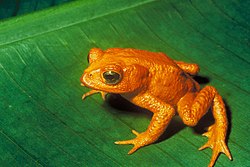
Many researchers argue that Earth is currently undergoing a sixth mass extinction event driven by human activity. Current extinction rates are estimated to be 100 to 1,000 times higher than the baseline background rate. This "biological annihilation" is characterized by overfishing, unsustainable logging, and hunting.
![A great hammerhead caught by a sport fisherman. Human exploitation now threatens the survival of this species. Overfishing is the primary driver of shark population declines, which have fallen over 71% since 1970.[102][103]](/images/7d/ee/7dee35fbf539b7012d8352baece447ddc8601925e979f73f329bea0b8a88b082.jpg)
Summary of Extinction Types and Examples
| Type | Description | Example |
|---|---|---|
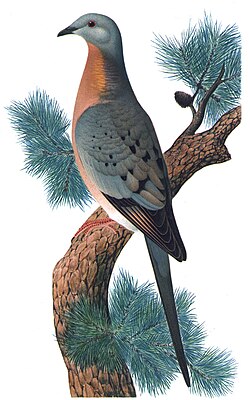
| Modern Extinction | Species lost in recent human history | Dodo, Passenger Pigeon |
| Prehistoric Extinction | Species known only from fossils | Tyrannosaurus, Mammoths |
| Functional Extinction | Unable to recover population | Species with no breeding pairs |
| Mass Extinction | Global collapse of biodiversity | Cretaceous–Paleogene event |
![The dodo of Mauritius, shown here in a 1626 illustration by Roelant Savery, is an often-cited example of modern extinction.[28]](/images/cc/6b/cc6b090b8232ef045c8b3bbf58ea7a498d2d75fbdaf74d696886f4d639f3c527.jpg)
Scientific Understanding and Recovery
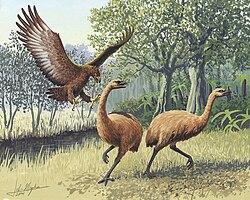
The scientific study of extinction evolved significantly through the work of figures like Georges Cuvier, who compared fossil mammoth jaws to living elephants to prove that some species no longer exist.
![Georges Cuvier compared fossil mammoth jaws to those of living elephants, concluding that they were distinct from any known living species.[89]](/images/60/36/60369cf31a8dda6530d14ab535e6c22b43c8e644fb24f22e9e0c8cd47e9bb085.jpg)
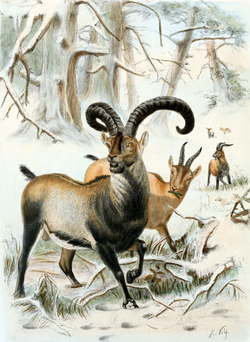
In recent years, technology has introduced the possibility of cloning to revive extinct species. While most attempts have failed, the Pyrenean ibex was briefly brought back to life, though it survived for only several minutes, making it the only animal to go extinct twice.
Frequently Asked Questions
![The changing distribution of the world's land mammals in tonnes of carbon. The biomass of wild land mammals has declined by 85% since the emergence of humans.[69]](/images/c1/27/c127a541645f45cb6b32aed29447135ee5c4b991a40d15436c3d49331240cf9d.png)
![Georges Cuvier's 1812 unpublished version of the skeletal reconstruction of Anoplotherium commune with muscles. Today, the Paleogene mammal is thought to have gone extinct from the Grande Coupure extinction event in western Europe.[88]](/images/f6/7b/f67bc4f1b4aff1289c29f5a4b1903ded0d1a8e3ca12044508462242414cada63.jpg)
What is the difference between extinction and functional extinction?
Extinction is the death of the very last member of a species. Functional extinction occurs when a species still has living members, but they are no longer capable of reproducing or fulfilling their ecological role, making the eventual total extinction inevitable.
What are Lazarus taxa?
Lazarus taxa are species that disappear from the fossil record or observed sightings for a long period, leading scientists to believe they are extinct, only to be rediscovered later.
How does human activity accelerate extinction?
Humans drive extinction through habitat destruction (such as deforestation), overexploitation (overfishing and hunting), the introduction of invasive species, and the acceleration of climate change.
Can extinct species be brought back?
While cloning technology has been attempted, success is extremely limited. The Pyrenean ibex was briefly resurrected through cloning but died within minutes. Most extinct species cannot currently be revived.
What is a living fossil?
A living fossil is a species that has remained morphologically similar—meaning its physical structure has changed very little—over millions of years of evolution.