Human Environmental Impact: The Anthropocene and Global Ecological Crisis
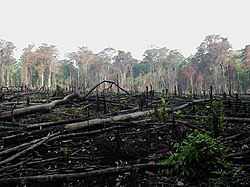
Anthropogenic environmental impact refers to the changes caused directly or indirectly by human activity to the Earth's biophysical environments, ecosystems, biodiversity, and natural resources. As society modifies the natural world to create the built environment, these alterations have triggered severe global consequences, ranging from ocean acidification to the risk of total ecological collapse.
The scale of this influence is so profound that atmospheric scientist Paul Crutzen introduced the term Anthropocene in the mid-1970s to describe a new geological epoch defined by human impact. While some effects date back to the Agricultural Revolution, the modern era of industrialization has accelerated these changes, primarily through the burning of fossil fuels for electricity, transport, and manufacturing.
![Chart published by NASA depicting CO2 levels from the past 400,000 years.[29]](/images/53/30/5330c85e2c8590f518d4dcb87aa667fa733241b36dfe7bc1a3fb88c47009508a.jpg)
Key Facts
- Biomass Shift: Wild mammals now make up only 4% of global mammal biomass, while livestock and humans constitute the remaining 96%.
- Resource Depletion: Earth's ability to regenerate consumed resources lasts only about 57% as long as it did in 1971.
- Agricultural Footprint: The animal industry provides 18% of global calories but utilizes 83% of agricultural land and generates 58% of food-related greenhouse gas emissions.
- Population Growth: The human population increased sevenfold after the eighteenth century.
- Biodiversity Risk: Human-driven habitat loss and invasive species are contributing to a sixth mass extinction event.
Human Overshoot and Overconsumption
Human overshoot occurs when the demand for ecological resources exceeds the Earth's regenerative capacity. This is driven largely by rapid population growth and neoliberal economic policies that encourage overconsumption and the overexploitation of natural assets.
![The inward spiral shows how humans have progressively used more of Earth's resources than the planet can regenerate. Earth's ability to regenerate consumed resources now lasts only about 57% as long as in 1971.[28]](/images/99/14/9914345c89beb14230c0d435b415aa86e81820b5363b59439ebc7aa4e1b7a912.webp)
The result is a systemic imbalance where the consumption of resources—from fresh water to minerals—outpaces the planet's ability to replenish them, creating a precarious foundation for future survival.
![Human population from 10000 BCE to 2000 CE, increasing sevenfold after the eighteenth century.[37][38]](/images/31/b4/31b4e26fe59b79c02119f8e5cbed3e842dbe8a5d802b08fb96980ba4aaf7af50.webp)
Agricultural and Marine Impacts
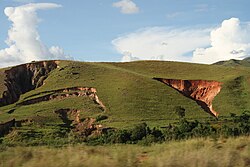
The way humans produce food has fundamentally altered the planet's surface and oceans. Irrigation, while essential for food security, often reduces downstream river discharge and alters water tables, leading to increased evaporation and soil salinity.
Industrial Farming and Meat Production
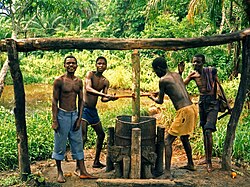
Meat production is a primary driver of environmental degradation. The expansion of livestock grazing and the cultivation of feed crops lead to massive agricultural land loss. A specific example is the production of palm oil, which often results in the deforestation of tropical rainforests, though organizations like the Roundtable on Sustainable Palm Oil (RSPO) attempt to mitigate these effects.
![Worldwide, the animal industry provides only 18% of calories, but uses 83% of agricultural land and emits 58% of food's greenhouse gas emissions.[83]](/images/8a/95/8a95367c2a727e9ed2f5c175b746459c4c61cdf53800b0052684085fad09e2ab.jpg)
Fishing and Marine Ecosystems
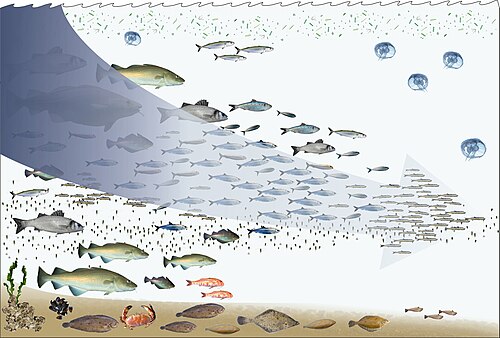
Overfishing has led to a phenomenon known as "fishing down the food web," where the depletion of top predators forces fishing efforts toward smaller, lower-trophic level species. This disrupts marine stability and contributes to the decline of coral reefs worldwide.
![Island (Falalop) with fringing reef off Yap, Micronesia. Coral reefs are dying around the world.[154]](/images/0e/a5/0ea50afd61e1e9a7a32b4642fea43c81cdecd2b57fbf18638d44401a659269aa.jpg)
Biodiversity Loss and Ecosystem Collapse
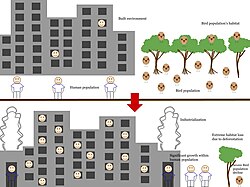
The combination of habitat loss and habitat fragmentation—the breaking of large habitats into smaller, isolated patches—has triggered a severe decline in biodiversity. This is often exacerbated by the introduction of invasive species, such as Burmese pythons, hybrid boars, and domestic cats, which prey upon and displace native wildlife.
![Wild mammals make up only four percent of global mammal biomass. Livestock domesticated by humans, as well as the biomass of humans themselves, constitute the other 96% of mammal biomass globally.[84]](/images/f2/cb/f2cbd1dae8a9d80d88bd098cb7bab67c08c96d1ad4306be3f8a4b67ab79fd6de.webp)
Climate Change and Atmospheric Alteration
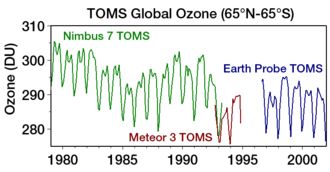
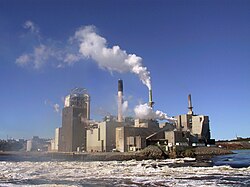
The burning of fossil fuels has increased the concentration of greenhouse gases, leading to global warming and a cascade of climatic disruptions. These include acid deposition (acid rain) and the depletion of the ozone layer, which protects Earth from harmful ultraviolet radiation.
![The primary causes[166] and the wide-ranging effects[167][168][169] of global warming and resulting climate change. Some effects constitute feedbacks that intensify climate change.[170]](/images/c0/b4/c0b4ce01dea8863c52950c48fd3d189e2f62def88f6c7bd8a3f8822d4e3df362.webp)
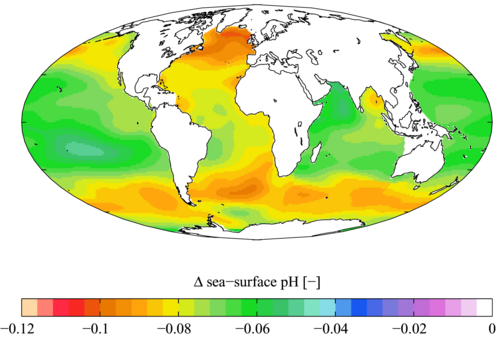
Climate change also affects the chemistry of the oceans. Increased CO2 absorption leads to ocean acidification, which lowers the pH of seawater and threatens calcifying organisms like corals and shellfish.
![Climate Central's review of climate attribution studies covered almost 750 extreme weather events and trends, of various event types.[171] The review found that climate change made almost all studied event types substantially more likely or more severe—with cold/snow/ice events being the exception.[171]](/images/70/67/7067c991eaec13a359adde804a5a398dc4079bf6750b05755fa6138b0a5842e5.webp)
Technological and Industrial Impacts
Various industries contribute uniquely to environmental degradation:
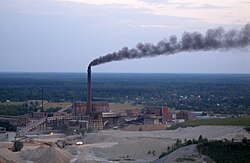
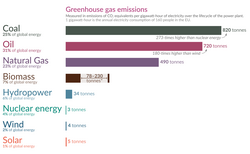
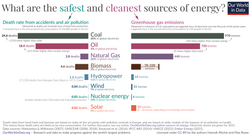
- Energy: Coal mining and petroleum extraction release significant pollutants. While nuclear and wind power have minimal greenhouse emissions per unit of energy, they present different challenges, such as nuclear waste disposal.
- Manufacturing: The production of plastics, pharmaceuticals, and paints introduces synthetic chemicals into the environment. The "fast fashion" industry is a major contributor to water pollution and waste.
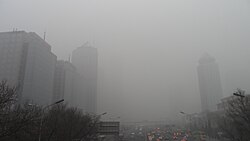
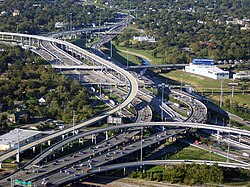
- Transport: Aviation, shipping, and road transport are primary sources of CO2 and smog.
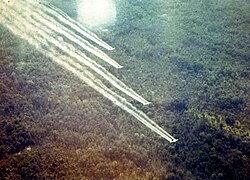
- Military: Military operations, including the use of chemical agents like Agent Orange and the maintenance of vast infrastructure, result in significant pollution.
Pollution and Waste
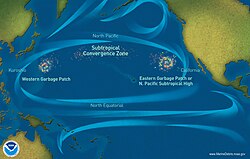
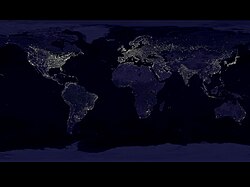
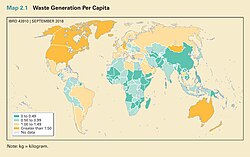
Beyond chemicals, humans produce light pollution, which disrupts nocturnal ecosystems, and massive amounts of solid waste. The Great Pacific Garbage Patch serves as a stark reminder of the persistence of plastics in the environment.
Summary of Human Impacts
| Driver | Primary Impact | Key Consequence |
|---|---|---|
| Fossil Fuel Combustion | Greenhouse Gas Emissions | Global Warming & Ocean Acidification |
| Industrial Agriculture | Deforestation & Land Use | Biodiversity Loss & Mass Extinction |
| Overfishing | Trophic Cascade | Marine Ecosystem Collapse |
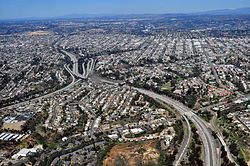
| Urbanization | Habitat Fragmentation | Wildlife Population Decline |
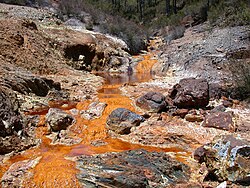
| Industrial Manufacturing | Chemical & Plastic Pollution | Toxicity & Waste Accumulation |
Frequently Asked Questions
What is the Anthropocene?
The Anthropocene is a proposed geological epoch that began when human activities started having a significant global impact on Earth's geology and ecosystems, particularly since the Industrial Revolution.
How does meat production affect the environment?
Meat production requires vast amounts of land and water. It is responsible for 83% of agricultural land use and 58% of food-related greenhouse gas emissions, while providing only 18% of global calories.
What is the difference between habitat loss and habitat fragmentation?
Habitat loss is the complete disappearance of a natural area, while habitat fragmentation is the process where large, continuous habitats are divided into smaller, isolated patches, making it harder for species to migrate and survive.
How does CO2 cause ocean acidification?
When the ocean absorbs excess carbon dioxide (CO2) from the atmosphere, it reacts with seawater to form carbonic acid, which lowers the pH of the water and makes it more acidic.
What are invasive species and why are they harmful?
Invasive species are non-native organisms introduced to a new environment by humans. They often lack natural predators in the new area, allowing them to overpopulate and outcompete or prey upon native species, leading to biodiversity loss.