Invasive Species: Ecological Impacts and Management Strategies
An invasive species is an introduced organism that causes harm to its new environment. Unlike species that simply migrate or are introduced without negative effects, invasive species adversely affect habitats and bioregions, leading to significant ecological, environmental, and economic damage. While the movement of organisms into established ecosystems is a natural phenomenon, human activity has drastically increased the rate, scale, and geographic range of these invasions.
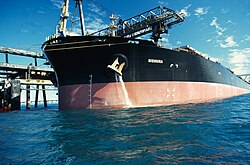
For millennia, humans have acted as dispersal agents. This process began with early human migrations, accelerated during the Age of Discovery, and has reached unprecedented levels with the expansion of modern international trade.
Key Facts
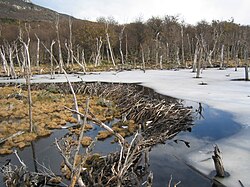
- Definition: An introduced species that causes ecological or economic harm in its new environment.
- Human Role: International trade and migration are primary drivers of species dispersal.
- Global Impact: Invasive species are considered serious social, economic, and environmental threats worldwide.
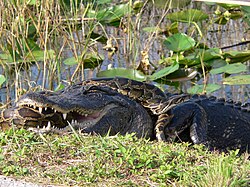
- Diverse Taxa: Invasions occur across all kingdoms, including plants (e.g., kudzu), mammals (e.g., rabbits), and crustaceans (e.g., red swamp crayfish).
The Progression of Biological Invasion
Scientists categorize the invasion process into distinct stages to better understand how a species establishes itself and eventually dominates a new region. This progression tracks the movement from the origin to widespread dominance.
| Stage | Characteristic |
|---|---|
| 0 | Propagules residing in a donor region |
| I | Traveling |
| II | Introduced |
| III | Localized and numerically rare |
| IVa | Widespread but rare |
| IVb | Localized but dominant |
| V | Widespread and dominant |
Notable Invasive Species
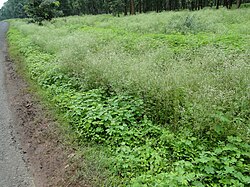
![Vinca in a garden[1]](/images/7e/07/7e079ce374a68fc337436307a647b7445d72a85e6d88d70f57299324f2d0ea83.jpg)
Invasive species vary by region and type, but some have gained global notoriety for their destructive capabilities.
Invasive Plants
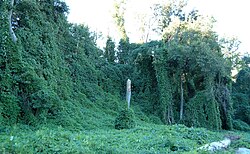
Certain plants can rapidly overtake native flora, smothering existing vegetation and altering soil chemistry. Examples include the kudzu vine (Pueraria), water hyacinth (Pontederia crassipes), common ragweed (Ambrosia artemisiifolia), and yellow starthistle (Centaurea solstitialis).
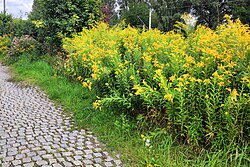
Other problematic plants include Japanese knotweed (Reynoutria japonica), which is ranked among the world's worst invasive species, and Canada goldenrod (Solidago canadensis).
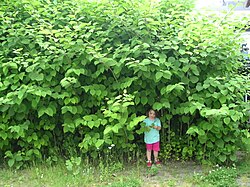
Invasive Animals
Animal invasions often lead to the collapse of native wildlife populations through predation or competition. Notable examples include European rabbits (Oryctolagus cuniculus), domestic cats (Felis catus), and the red swamp crayfish (Procambarus clarkii).
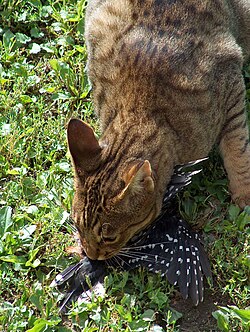
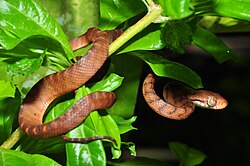
In specific island ecosystems, the impact is even more severe. The brown tree snake (Boiga irregularis) has devastated bird populations in Guam, while rats and cats have pushed the Kākāpō—a threatened species—down to approximately 240 individuals worldwide.
![The Kākāpō is a threatened species partially because of predation by invasive species (mostly rats and cats), there are only ≈240 individuals left worldwide [118]](/images/52/00/5200e7f9792182c0da991b89abcf0de559471041a0b7bb2cd7a03abf668f2094.jpg)
Impacts and Consequences
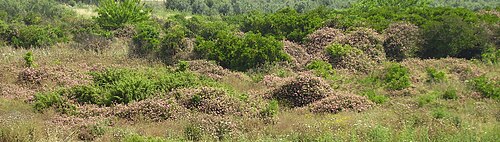
The effects of invasive species are multifaceted, touching upon nature, human health, and the global economy.
- Ecological and Environmental: Invasives can disrupt food webs, outcompete native species for resources, and alter the physical structure of habitats. For example, water hyacinths can clog entire river systems, such as the Pasig River in Manila.
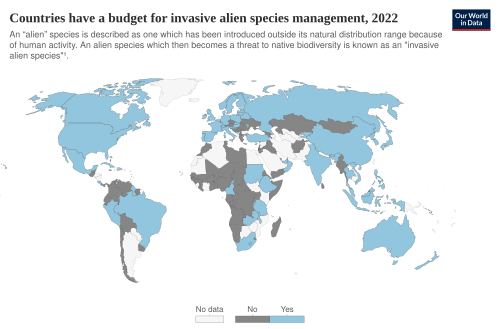
- Economic: Costs arise from the loss of agricultural productivity, damage to infrastructure, and the massive budgets required for management and eradication.
- Human Health: Some invasive plants or animals can introduce new allergens or diseases into a region.
![Invasive water hyacinths (Pontederia crassipes) clog the Pasig River in Manila, Philippines in October 2020.[131]](/images/c2/dc/c2dc89b1f12099827ecd85f044aaa1754b97e7c253c30683dc13adc348054cbb.jpg)
Control and Management Strategies
Efforts to combat invasive species range from preventative measures to active eradication and innovative biological tools.
Prevention and Containment
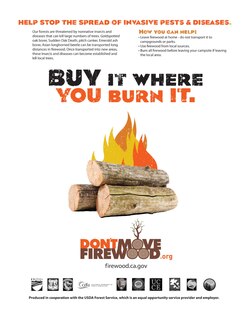
The first line of defense is preventing the introduction of new species. This includes cargo inspection, strict quarantine protocols, and public awareness campaigns—such as advising campers not to move firewood to avoid spreading pests.
Active Eradication and Restoration
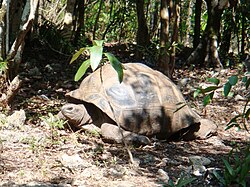
Once a species is established, managers may use pesticides, herbicides, or physical removal. In some cases, taxon substitution is used, where a non-native species is introduced to fill an ecological niche left by an extinct native species to restore equilibrium. An example is the use of the Aldabra giant tortoise to restore islets off Mauritius.
Innovative Approaches
- Gene Drive: Using genetic engineering to control or eliminate invasive populations.
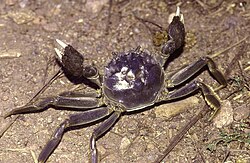
- Commercial Utilization: Encouraging the consumption of invasive species (e.g., eating invasive fish or crabs) to reduce their numbers.
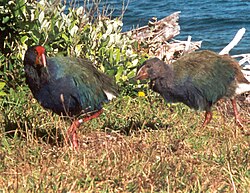
- Translocation: Moving threatened native species to restored, invasive-free islands to allow populations to recover, as seen with the Takahē in New Zealand.
Frequently Asked Questions
![Argentine ants (Linepithema humile), which form supercolonies across continents, are ranked among the world's 100 worst invasive animal species.[121]](/images/64/de/64de10834b0b36b28ccc46caddb68c0d75fb78d37a00c3eeafc3e1a67871cc7b.jpg)
What is the difference between a non-native species and an invasive species?
A non-native species is simply one that is not indigenous to a particular area. It becomes "invasive" only when it causes harm to the environment, economy, or human health in its new location.
How do invasive species usually travel to new regions?
They are often moved by humans, either accidentally (such as in ship ballast water or attached to cargo) or deliberately (for agriculture, pets, or commercial value).
Can invasive species ever be beneficial?
In some specific cases, they may fill ecological niches in degraded ecosystems or provide commercial value, though these benefits are usually outweighed by the ecological damage they cause.
What are some common ways to stop the spread of invasive species?
Effective methods include strict quarantine laws, cleaning equipment used in wild areas, avoiding the transport of firewood, and supporting government regulations on the import of foreign organisms.