NASA Langley Research Center: A Legacy of Aeronautical and Space Innovation
Located in Hampton, Virginia, near the Chesapeake Bay, the NASA Langley Research Center (LaRC) stands as the oldest of NASA's field centers. Since its inception, it has served as a cornerstone of American aerospace advancement, transitioning from the foundational aeronautical research of the early 20th century to the complex demands of modern space exploration.
Originally established in 1917 as the Langley Memorial Aeronautical Laboratory by the National Advisory Committee for Aeronautics (NACA), the center has played a pivotal role in shaping how we fly through the atmosphere and navigate the cosmos. Today, it remains a premier site for studying aircraft safety, performance, and efficiency, as well as developing the next generation of space hardware.
Key Facts
- Founded: 1917 by the National Advisory Committee for Aeronautics (NACA).
- Location: Hampton, Virginia, USA.
- Primary Focus: Two-thirds of programs are dedicated to aeronautics, with the remaining third focused on space.
- Wind Tunnel Capabilities: Researchers utilize more than 40 wind tunnels for advanced testing.
- Historic Milestone: Served as the main office of the Space Task Group during Project Mercury (1958–1963).
A Rich History of Flight and Discovery
The origins of Langley can be traced back to the geopolitical tensions of 1916. Following reports that U.S. military aviation capabilities lagged behind those in Europe, President Woodrow Wilson commissioned the creation of the nation's first aeronautics laboratory. Named after aviation pioneer Samuel Pierpont Langley, the facility began its work in 1917 with a small team of just four researchers and 11 technicians.
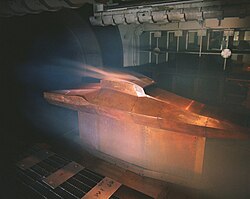
As air power became increasingly vital during World War I, the center expanded its scope. In 1934, Langley constructed the world's largest wind tunnel at the time, featuring a 30-by-60-foot test section capable of testing full-scale aircraft. This era marked the beginning of Langley's dominance in aerodynamic research, focusing on airframe and propulsion engine design.
The West Area Computers
During the mid-20th century, Langley was also the site of significant social and scientific history. From 1943 to 1958, a group of African American female mathematicians known as the West Area Computers performed essential calculations. Working in the West Area due to the era's Jim Crow laws, these women were instrumental to the center's mathematical and engineering successes.
Scientific Breakthroughs and Global Standards
Langley's contributions have led to revolutionary scientific breakthroughs that continue to impact global aviation. Some of the center's most notable achievements include:
- Development of research aircraft concepts that enabled supersonic flight.
- Creation of the world's first transonic wind tunnel.
- The development of grooved runway standards, which reduce aquaplaning and are now used internationally.
- The training of the first astronaut crews and the development of the Viking program for Mars exploration.
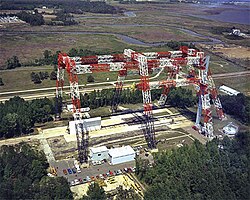
The center's expertise in simulation was also vital for lunar exploration. Through the Lunar Landing Research Facility, Langley provided simulations of lunar gravity, using a gantry to suspend mock Apollo Lunar Modules over simulated landscapes to prepare astronauts for the Moon's surface.
Core Research Directorates and Departments
The research at Langley is organized into specialized directorates designed to solve complex aerospace problems. One of the most critical is the Systems Analysis and Concepts Directorate, which assists NASA decision-makers through four distinct branches:
- Aeronautics Systems Analysis: Developing technologies to improve aeronautical study.
- Space Mission Analysis – Exploration: Focusing on complex systems for human space exploration.
- Space Mission Analysis – Science and Technology: Focusing on architecture for remote exploration.
- Vehicle Analysis: Designing revolutionary aircraft and launch vehicles.
Aeronautics and Hypersonic Flight
Langley's aeronautics research covers a wide spectrum, including wake vortex behavior, rotary-wing aircraft, and aviation safety. A major highlight of this research was the support of the hypersonic X-43, which achieved a world speed record of Mach 9.6.
Space, Mars, and Earth Science
Beyond the atmosphere, Langley is deeply involved in astronautics. The center has supported mission designs for Mars landings and continues to conduct Earth science research to support NASA's broader mission of understanding our home planet.
Summary of NASA Langley Research Center
| Category | Details |
|---|---|
| Parent Agency | NASA |
| Headquarters | Hampton, Virginia, U.S. |
| Primary Research Areas | Aeronautics, Space Exploration, Earth Science |
| Key Facilities | 40+ Wind Tunnels, Lunar Landing Research Facility |
| Notable Awards | Five Collier Trophies |
Frequently Asked Questions
What is the primary mission of NASA Langley?
NASA Langley focuses on aeronautics research (two-thirds of its programs) and space exploration (one-third of its programs), aiming to improve the safety, performance, and efficiency of aircraft and spacecraft.
How did Langley contribute to the Apollo program?
Although Houston was selected as the site for the Manned Spacecraft Center, Langley played a vital role in the Apollo Program by conducting research and providing training for astronauts, including lunar landing simulations.
What are the "West Area Computers"?
The West Area Computers were African American female mathematicians who worked at Langley from 1943 to 1958, performing critical calculations necessary for aeronautical and space research.
What is the significance of the X-43 project?
The X-43 is a hypersonic vehicle supported by Langley that achieved a world speed record of Mach 9.6, demonstrating the potential for extremely high-speed flight.
What is the purpose of grooved runways?
Developed through research at Langley, grooved runways reduce aquaplaning, allowing aircraft tires to maintain better grip during heavy rain. This design has become the international standard for runways worldwide.