Nadir of American Race Relations
The Nadir of American race relations refers to a period in United States history characterized by the lowest point of status and rights for African Americans. While historians debate the exact timeline, the era generally spans from the end of Reconstruction in 1877 into the early 20th century. This period saw the systematic dismantling of the gains made after the Civil War, replaced by state-sanctioned segregation, widespread terrorism, and the legal erasure of Black political power.
Different scholarly perspectives define the boundaries of this era. Rayford Logan identifies the Nadir between 1877 and 1901, while others, including John Hope Franklin, extend it to 1923. James W. Loewen suggests a later start around 1890—when Northern support for civil rights waned—and an end date of 1941, coinciding with the U.S. entry into World War II.
Key Facts
- Timeline: Generally from 1877 to the early 20th century (varying by historian).
- Legal Framework: The establishment of Jim Crow laws, which mandated racial segregation in public and private facilities.
- Political Suppression: Widespread disenfranchisement of Black voters through poll taxes and literacy tests.
- Violence: A peak in lynching between 1889 and 1922, with nearly 3,500 victims.
- Migration: The Great Migration saw over 1.5 million Black people move from the rural South to Northern industrial cities.
- Judicial Ruling: The 1896 Plessy v. Ferguson decision legalized "separate but equal" facilities.
The Collapse of Reconstruction
Following the Civil War, the federal government initially intervened to protect the rights of freed people. However, these efforts were limited. A critical proposal for land reform by the Freedmen's Bureau—often remembered as "forty acres and a mule"—never materialized, leaving many Black Americans without the economic means to achieve true independence.
In the South, former Confederates resisted Reconstruction through extreme violence. Between 1865 and 1867 in Hinds County, Mississippi, white Democrats murdered an average of one Black person every day. Black schools were targeted for arson, and teachers were frequently assaulted or killed. The Ku Klux Klan (KKK) emerged as a terrorist organization with significant local support, though it was temporarily suppressed by the Enforcement Acts of 1870–1871.
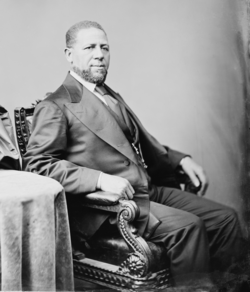
By the mid-1870s, Northern resolve faded. The financial panic of 1873 disrupted the economy, and the cost of maintaining military presence in the South became politically untenable. Paramilitary groups like the White League and Red Shirts openly intimidated Black voters and disrupted Republican organizing, effectively acting as the military arm of the Democratic Party.
The Rise of Jim Crow and Systemic Terrorism
As Northern support vanished, white Democrats regained control of Southern state governments. Between 1890 and 1908, they passed constitutional amendments to disenfranchise (strip of the right to vote) Black citizens and poor whites. Methods included poll taxes, residency requirements, and literacy tests.
This political erasure allowed for the implementation of Jim Crow legislation. This system created legal racial segregation in schools, hospitals, trains, and restaurants. Because Black citizens were barred from voting, they were also excluded from juries, leaving them with virtually no legal recourse against violence.
The result was a climate of terror. The NAACP estimates that between 1889 and 1922, nearly 3,500 people—mostly Black men—were lynched. This violence was used as a tool of social control to maintain white supremacy.
The Great Migration and Northern Hostility
To escape the terror of the South, millions of African Americans began moving North and West. This movement, known as the Great Migration, accelerated around 1915. While the North offered better employment opportunities in industrial cities and a reprieve from legal segregation, it was not free of racism.
Black migrants faced segregated housing and fierce competition for jobs. In many cities, they encountered hostility from immigrant communities, particularly Irish Americans. Furthermore, the national culture remained biased; "blackface" shows, which portrayed African Americans as ignorant clowns, remained popular across the country.
The federal government and judiciary reinforced these divisions. In 1896, the Supreme Court ruled in Plessy v. Ferguson that "separate but equal" facilities were constitutional. In reality, equal facilities were rarely provided, a precedent that stood until 1954.
National Violence and Political Betrayal
The early 20th century was marked by extreme mob violence. In 1919, a series of violent attacks in major cities led to the period being called Red Summer. The Chicago race riot of 1919 resulted in 38 deaths and over 1,000 people left homeless.
Even more devastating was the 1921 Tulsa race massacre, where white mobs destroyed the prosperous Greenwood district. Over 1,200 homes were burned, and at least 39 people were confirmed killed, though actual death tolls are believed to be much higher.
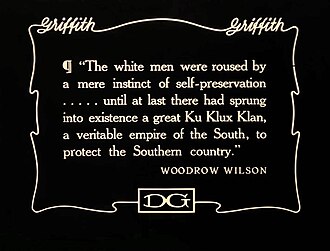
Political betrayal also occurred at the highest levels. President Woodrow Wilson, despite receiving Black votes in 1912, segregated government workplaces. He also hosted a screening of The Birth of a Nation, a film that glorified the original KKK, at the White House.
Cultural Resilience and Legacy
Despite the oppression of the Nadir, African American communities continued to build and resist. Literacy rates rose, and the NAACP was established in 1909 to fight discrimination through legal action. Intellectuals like W.E.B. Du Bois and Ida B. Wells-Barnett used journalism and organizing to challenge white supremacy.
The early 20th century also saw the Harlem Renaissance and the rise of jazz, which brought Black culture into the national spotlight and increased the visibility of Black celebrities and artists. These efforts laid the foundational tactics and intellectual groundwork for the Civil Rights Movement of the 1950s and 1960s.
| Category | Key Details |
|---|---|
| Primary Goal of Oppressors | Maintenance of white supremacy and removal of Black political power. |
| Legal Tools | Jim Crow laws, poll taxes, literacy tests, Plessy v. Ferguson. |
| Forms of Violence | Lynching, race riots (Red Summer), and massacres (Tulsa). |
| Black Response | Great Migration, NAACP formation, Harlem Renaissance, advocacy. |
| Key Figures | W.E.B. Du Bois, Ida B. Wells-Barnett, Booker T. Washington. |
Frequently Asked Questions
What exactly was the "Nadir"?
The Nadir was a period from the late 19th to early 20th century when the social, political, and legal status of African Americans in the United States reached its lowest point following the end of Reconstruction.
How did the Jim Crow laws work?
Jim Crow laws were state and local statutes that legalized racial segregation. They required separate public facilities—such as schools, restrooms, and transportation—for Black and white citizens, though the facilities for Black people were almost always inferior.
What was the significance of the Great Migration?
The Great Migration was the movement of over 1.5 million African Americans from the rural South to Northern industrial cities to escape lynching, legal segregation, and poor economic conditions.
What was the "Red Summer" of 1919?
Red Summer refers to a series of violent race riots and attacks that erupted in several major U.S. cities in 1919, including Chicago, resulting in numerous deaths and thousands of injuries.
How did the Supreme Court contribute to this era?
The Supreme Court provided legal cover for segregation through the 1896 Plessy v. Ferguson ruling, which established the "separate but equal" doctrine, effectively sanctioning racial segregation for nearly six decades.