Mycorrhizal Networks: The Hidden Communication System of Forests
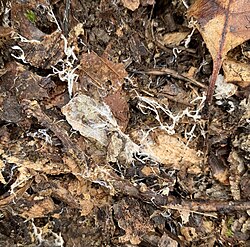
Beneath the forest floor lies a complex, invisible architecture that connects the botanical world in ways that mirror the neural networks of a human brain. This system, known as a mycorrhizal network (or common mycorrhizal network, CMN), is formed when the hyphae—tiny, thread-like filaments—of mycorrhizal fungi link with the roots of various plants. This biological bridge allows individual plants to connect, share resources, and communicate across vast distances.
These networks were first brought to scientific prominence in 1997 by Suzanne Simard, a professor of forest ecology at the University of British Columbia. Drawing on her lifelong connection to Canadian forests, Simard's research revealed that trees are not isolated competitors but are deeply interconnected through fungal intermediaries.
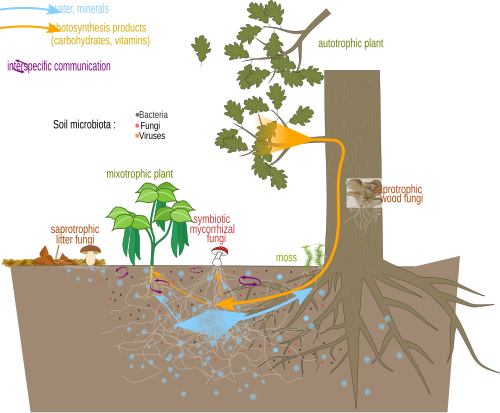
Key Facts
- Discovery: Identified in 1997 by ecologist Suzanne Simard.
- Composition: Created by fungal hyphae joining with plant roots.
- Symbiosis: Primarily mutualistic, though can be commensal or parasitic.
- Function: Facilitates the transfer of nutrients, carbon, and chemical warning signals.
- Context: Influenced by soil fertility, genotype, and seasonal variations.
The Nature of Fungal Symbiosis
The relationship between fungi and plants is a form of symbiosis—a close, long-term interaction between two different biological species. While most of these relationships are mutualistic, meaning both the plant and the fungus benefit, the dynamic is fluid. A single partnership can shift between mutualism, commensalism (where one benefits and the other is unaffected), or parasitism (where one benefits at the expense of the other) depending on environmental conditions.
For example, the buckhorn plantain, a common weed, benefits from these fungal links in nutrient-poor soil but may actually be harmed by them when soil fertility is high. This demonstrates that the network's impact is highly context-dependent, shaped by resource availability and the specific genotypes of the host and the fungus.
Communication and Resource Transfer
One of the most fascinating aspects of mycorrhizal networks is their ability to facilitate inter-plant communication. Through these fungal highways, plants can send and receive chemical signals to coordinate responses to environmental threats.
Defensive Signaling
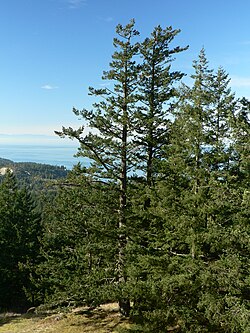
In a landmark observation, Suzanne Simard noted that a Douglas fir injured by insects appeared to transmit chemical warning signals to a nearby ponderosa pine. Upon receiving these signals via the network, the pine tree began producing defense enzymes to protect itself from the impending insect attack before it was even touched.
Nutrient and Carbon Exchange
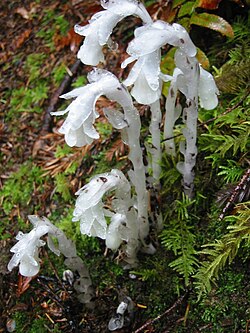
The network also serves as a conduit for the transfer of photosynthates (sugars produced by photosynthesis) and essential nutrients. Both plants and fungi can preferentially allocate these resources to specific partners. In some extreme cases, certain plants have evolved to be entirely dependent on this system. Myco-heterotrophy occurs when a plant, unable to perform photosynthesis, collects all its food from the mycorrhizal network.
Evolutionary Impact
Mycorrhizal associations have been a cornerstone of plant evolution since the first plants adapted to land. This symbiotic capability has led evolutionary biologists to question the traditional view of nature as a site of pure competition. Instead, evidence suggests that symbiosis may be one of the primary drivers of evolution, enabling seedlings to establish themselves more effectively and allowing plant communities to survive in harsh environments.
| Feature | Description | Example/Impact |
|---|---|---|
| Primary Structure | Fungal hyphae + Plant roots | Common Mycorrhizal Network (CMN) |
| Interaction Type | Mutualistic, Commensal, or Parasitic | Buckhorn plantain (fertility dependent) |
| Communication | Chemical signaling | Douglas fir warning Ponderosa pine |
| Resource Flow | Carbon and nutrient transfer | Myco-heterotrophy in non-photosynthetic plants |
Frequently Asked Questions
Who discovered mycorrhizal networks?
They were discovered in 1997 by Suzanne Simard, a professor of forest ecology at the University of British Columbia.
How do trees use these networks to communicate?
Trees send chemical signals through the fungal hyphae. For instance, an attacked tree can warn its neighbors, triggering the production of defense enzymes in nearby plants.
Is the relationship between fungi and plants always beneficial?
No. While usually mutualistic, the relationship can be commensal or parasitic, and can change based on soil fertility and other environmental factors.
What is myco-heterotrophy?
Myco-heterotrophy is a condition where a plant cannot perform photosynthesis and instead obtains all its necessary nutrients and carbon from a mycorrhizal fungus.
How does soil fertility affect these networks?
The impact varies by species; some plants benefit from the network in low-fertility soil but may be harmed by the association when soil nutrients are abundant.