The Fascinating World of Ambrosia Beetles: Nature's Tiny Farmers
Deep within the wood of dead or stressed trees, a remarkable form of agriculture is taking place. Unlike most insects that consume plant tissue directly, ambrosia beetles have mastered the art of fungus farming. These beetles, belonging to the weevil subfamilies Scolytinae and Platypodinae, live in a specialized nutritional symbiosis with ambrosia fungi. Rather than eating the wood itself, they cultivate fungal gardens that serve as their sole source of nutrition.
The process begins when a beetle lands on a suitable tree and excavates a tunnel, known as a gallery. As it digs, the beetle introduces its fungal symbiont into the tunnel. This fungus penetrates the tree's xylem—the plant's internal water-conducting tissue—to extract nutrients. The fungus then concentrates these nutrients on and near the surface of the beetle's gallery, creating a concentrated food source for the beetles and their larvae.
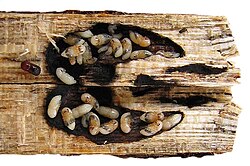
Interestingly, these fungi are typically poor wood degraders, preferring to utilize less demanding nutrients extracted from the tree. The relationship is mutually beneficial: the symbiotic fungi produce and detoxify ethanol. This ethanol acts as an attractant for the beetles and helps prevent the growth of harmful, competing pathogens. This complex interaction is a prime example of convergent evolution, where different groups of organisms independently evolve similar traits—in this case, the specialized habit of fungus farming.
Classification and Global Diversity
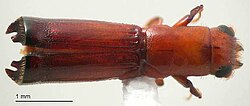
While they were once classified into separate families (Scolytidae and Platypodidae), modern science recognizes ambrosia beetles as highly derived weevils within the family Curculionidae. They are considered an ecological guild—a group of organisms that exploit the same resources—rather than a single phylogenetic clade, meaning the "ambrosia habit" has evolved multiple times across different lineages. There are approximately 3,000 known beetle species that utilize this unique strategy.
The diversity of these beetles is heavily influenced by geography. The highest concentrations are found in the tropics. In the Paleotropical regions, hundreds of species from the Xyleborini and Platypodinae groups drive the decomposition of dead wood. The Neotropics see a similar mix, joined by the Cortylini tribe. In contrast, temperate zones have much more limited diversity. The Nearctic region is dominated by a few species from the Cortylini, Xyleborini, and Xyloterini, while the Palearctic realm features Xyloterini, Xyleborini, and the Scolytoplatypodini in the Far East.
Regional Distribution of Ambrosia Beetle Groups
| Region | Dominant Beetle Groups/Tribes |
|---|---|
| Paleotropical | Xyleborini and Platypodinae |
| Neotropics | Platypodinae, Xyleborini, and Cortylini |
| Nearctic | Cortylini, Xyleborini, and Xyloterini |
| Palearctic | Xyloterini, Xyleborini, and Scolytoplatypodini |
The Life Cycle and Fungal Partners
The life cycle of the ambrosia beetle is intimately tied to its fungal crops. Both adult beetles and their larvae graze on the mycelium (the vegetative part of the fungus) exposed on the gallery walls, as well as on sporodochia, which are specialized clusters of fungal spores. Because the beetles do not ingest the wood, they simply push the resulting sawdust out of the gallery as they work.
To ensure the next generation has a food source, adult beetles collect masses of fungal spores into specialized organs called mycangia. When they leave their current tree to find a new host, they carry these spores with them to inoculate the new site. While many species are highly specialized, some beetles have even been known to "steal" fungal inoculum from the gardens of other ambrosia beetle species.
The fungi themselves are diverse, with several recognized genera including Ambrosiella, Raffaelea, Fusarium, and Geosmithia. Most of these fungi are believed to be asexual and clonal, and they appear to be entirely dependent on their beetle partners for transport and inoculation, as they are rarely found in habitats without their symbionts.
Evolutionary Origins and Forest Impact
The relationship between weevils and fungi exists on an evolutionary spectrum. At one end are certain bark beetles (phloeophages) that eat the tree's phloem (the inner bark) and may act as vectors for harmful fungi. Some of these have evolved into mycophloeophages, which use fungi as a supplemental part of their diet. At the other end of the spectrum are the ambrosia beetles, where both the insect and the fungus have become completely dependent on one another.
One remarkable outlier in this group is Austroplatypus incompertus, which exhibits eusociality. This is a complex social structure similar to that of bees or ants, making it one of the few organisms outside of Hymenoptera (ants, bees, wasps) and Isoptera (termites) to display such behavior.
While the majority of ambrosia beetles colonize dead trees and have little economic impact, some species can pose significant challenges. Species like Xylosandrus can colonize stressed living trees, and others, such as Xyleborus glabratus, can attack healthy trees and reach epidemic proportions in non-native regions. Furthermore, beetles that colonize lumber can cause economic losses through "pinhole" and "stained-wood" defects caused by their brood galleries.
Key Facts
- Symbiotic Diet: Ambrosia beetles do not eat wood; they eat the fungi they cultivate inside tree tunnels.
- Species Count: There are approximately 3,000 known species of ambrosia beetles.
- Fungal Transport: Beetles use specialized organs called mycangia to carry fungal spores to new trees.
- Evolutionary Strategy: The ambrosia habit is an example of convergent evolution.
- Economic Impact: While mostly harmless to dead wood, some species can cause significant damage to healthy trees and commercial lumber.
Frequently Asked Questions
What is the primary food source for ambrosia beetles?
Ambrosia beetles feed on the mycelium and spore clusters (sporodochia) of specific fungi that they grow within the tunnels they excavate in trees.
How do ambrosia beetles transport their fungal symbionts?
Adult beetles carry fungal spores in specialized structures on their bodies called mycangia, which they use to inoculate new trees when they move.
Are all ambrosia beetles considered pests?
No. Most species colonize dead trees and have little to no economic effect. However, certain species can attack stressed or healthy trees, potentially causing forest epidemics or damage to commercial lumber.
What is the difference between bark beetles and ambrosia beetles?
Bark beetles typically feed on the tree's phloem and may carry fungi as a supplement, whereas ambrosia beetles have a complete symbiotic dependence on fungi, which serve as their sole nutrition.
Where are ambrosia beetles most diverse?
The highest diversity of ambrosia beetles is found in tropical regions, such as the Paleotropics and Neotropics, while they are less diverse in temperate zones.