Morganatic Marriage: The History of Unequal Royal Unions
In the rigid hierarchies of historical European royalty, marriage was rarely just a matter of the heart; it was a strategic tool for diplomacy and the preservation of power. When a royal chose a partner of lower social standing, the result was often a morganatic marriage. Also known as a "left-handed marriage," this legal arrangement allowed a person of high birth to marry someone of unequal rank without compromising the purity of the dynastic line.
The primary function of a morganatic union is to ensure that the spouse and any resulting children do not inherit the principal's titles, privileges, or succession rights. While the marriage is legally valid and the children are considered legitimate, they are excluded from the royal succession and the entailed property of the higher-ranking spouse.
Key Facts
- Definition: A marriage between people of unequal social rank where the spouse and children are denied the principal's titles and succession rights.
- Prevalence: Most common in German-speaking territories and countries influenced by German customs.
- Legitimacy: Children of morganatic marriages are legitimate, but they do not possess dynastic status.
- Gender Dynamics: Typically involved a high-born man and a lower-born woman, though some countries allowed the reverse.
Morganatic Unions in German-Speaking Europe
The concept of the morganatic marriage is most deeply rooted in the customs of German-speaking realms. One of the most historically significant examples was the 1900 marriage of Archduke Franz Ferdinand, heir to the Austro-Hungarian throne, to Countess Sophie Chotek von Chotkowa. Although Emperor Franz Joseph I eventually relented to the union, it remained morganatic. Sophie was titled the Duchess of Hohenberg, and their children were excluded from the imperial succession.
The tragedy of their union culminated in 1914, when the assassination of both Franz Ferdinand and Sophie in Sarajevo triggered the start of World War I.
However, morganatic origins did not always prevent a person from eventually ruling. Margrave Leopold of Baden was born of a morganatic marriage between Grand Duke Charles Frederick and Louise Caroline Geyer von Geyersberg. Because the House of Zähringen faced extinction, a new law of succession was passed in 1817, allowing Leopold to be enfranchised and eventually ascend the throne in 1830.
The Russian Imperial Experience
The Russian Empire implemented strict house laws to control the Romanov bloodline. In 1797, Paul I established that dynasts must be born of authorized marriages. By 1820, laws stipulated that only children from marriages between equals (members of royal or sovereign families) could transmit succession rights.
Tsar Alexander III further tightened these rules in 1889, forbidding morganatic marriages entirely. This was later slightly relaxed by Nicholas II in 1911, who allowed princes and princesses of the Blood Imperial to marry non-royals provided they renounced their personal succession rights.
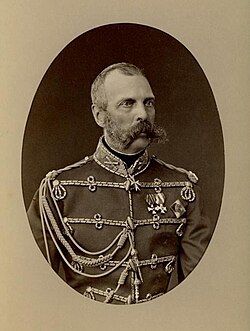
Many Romanovs struggled with these restrictions. Grand Duke Paul Aleksandrovich married commoner Olga Valerianovna Karnovich in 1902, leading to his exile in Paris. Similarly, Grand Duke Michael Alexandrovich eloped with Natalya Sergeyevna Wulfert in 1911. Their son, George Mikhailovich, was legitimized but excluded from the succession, eventually taking the surname "Brassov."
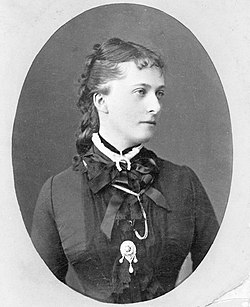
France and the "Secret Marriage"
France did not legislate morganatic marriages in the same way as Germany. Instead, the French monarchy often utilized "secret marriages" to bypass social restrictions. For instance, Louis XIV secretly wed Madame de Maintenon in 1683. This mechanism allowed the monarchy to avoid formal legal changes while still permitting unions with lower-status partners.
The British Perspective and the Abdication Crisis
In the United Kingdom, the concept of morganatic marriage is not a formal part of the law. Most modern British royal marriages are with untitled commoners, and these spouses typically share the husband's styles by custom. For example, Catherine Middleton became the Duchess of Cambridge upon her marriage to Prince William in 2011.
The most famous clash between royal duty and personal desire occurred with Edward VIII. In 1936, Edward proposed marrying the American divorcée Wallis Simpson. He suggested a morganatic arrangement that would allow him to remain King while Simpson would not become Queen. This was rejected by the British Cabinet and the Dominion governments.
Ultimately, Edward VIII abdicated the throne in 1936. When he was later created the Duke of Windsor, a decree specifically stated that his wife and descendants would not hold the title or attribute of Royal Highness.
Summary of Morganatic Marriage Characteristics
| Feature | Dynastic Marriage | Morganatic Marriage | Secret Marriage (France) |
|---|---|---|---|
| Spouse Rank | Equal (Royal/Sovereign) | Unequal (Commoner/Low Noble) | Usually Unequal |
| Spouse's Titles | Full Royal Titles | Limited or New Titles | Often Unofficial |
| Children's Succession | Eligible for Throne | Excluded from Succession | Generally Excluded |
| Legitimacy | Legitimate | Legitimate | Legitimate |
Frequently Asked Questions
What is the difference between a morganatic marriage and an invalid marriage?
A morganatic marriage is a legally valid union, but it is "unequal" in terms of social rank, meaning the spouse and children do not inherit the higher-ranking partner's titles or succession rights. An invalid marriage is one that is not legally recognized at all.
Can children of a morganatic marriage ever inherit the throne?
Generally, no. However, there are rare exceptions. For example, Margrave Leopold of Baden ascended the throne after a new law of succession was passed because all other dynastic males in his house had died out.
Why was it called a "left-handed marriage"?
The term "left-handed marriage" is a colloquialism for morganatic unions, symbolizing a marriage that is not "right" or standard according to the strict dynastic laws of the time.
Did the British monarchy ever use morganatic marriages?
The UK does not have a formal legal system for morganatic marriages. While Edward VIII proposed such an arrangement to marry Wallis Simpson, it was not accepted, leading to his abdication.
Which countries most frequently used morganatic laws?
Morganatic marriages were most prevalent in German-speaking territories and the Russian Empire, where strict house laws governed who was eligible to transmit succession rights.