Abdication: The History and Mechanics of Relinquishing the Throne
Abdication is the formal act of relinquishing monarchical authority. While the concept may seem straightforward, the act of stepping down from a throne has varied wildly across different cultures and eras. In some societies, abdication was viewed as a shocking abandonment of sacred duty; in others, it was a strategic tool used to ensure political stability and a smooth transition of power.
Historically, these transitions have occurred under two primary conditions: voluntarily or by force. Forced abdications often occur when a ruler is dethroned and compelled to step down under threat of death or severe consequences. Conversely, some rulers are deemed to have abdicated in absentia—vacating the throne physically and legally—though such judgments were often made by successors with a vested interest in the vacancy.
In the modern era, the nature of monarchy has shifted. In many constitutional monarchies, where the sovereign's role is largely ceremonial, abdication has become a practical solution for monarchs facing old age or declining health.
Key Facts
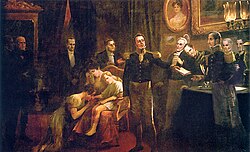
- Etymology: Derived from the Latin abdicatio, meaning to disown or renounce.
- Scope: While it can refer to resigning from any formal office, it is now almost exclusively used for monarchs.
- Papal Exception: The Pope's stepping down is specifically termed papal resignation or renunciation.
- Modern Trends: Recent abdications in Belgium, Denmark, the Netherlands, Spain, and Japan have been primarily driven by age.
- Legal Requirements: In the UK, abdication requires an act of Parliament.
Terminology and Legal Distinctions
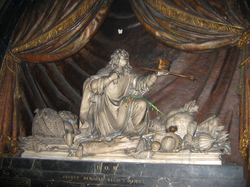
The term abdication comes from the Latin ab (away from) and dicare (to proclaim). In ancient Roman law, this term was broader, applying even to the disowning of a family member or disinheriting a son. Today, a clear distinction is made between an elected or appointed official, who resigns, and a monarch, who abdicates.
A unique case is the Bishop of Rome. Because the Pope serves as both the spiritual head of the Catholic Church and the sovereign of Vatican City, his departure involves both spiritual and secular spheres. This process is regulated by Canon 332 §2 of the 1983 Code of Canon Law.
Historical Perspectives on Royal Departure
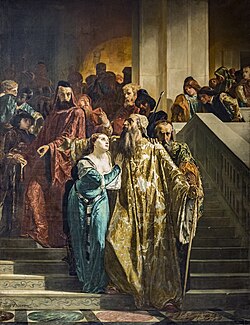
The Roman Empire and Antiquity
Some of the earliest notable abdications occurred in Rome. Dictators Lucius Quinctius Cincinnatus (in 458 and 439 BC) and Lucius Cornelius Sulla (79 BC) stepped down from power. Later, Emperor Diocletian abdicated in AD 305, and Romulus Augustulus did so in AD 476.
The Papacy
Papal resignations are rare. Before Pope Benedict XVI's resignation in 2013, the last three popes to step down were Celestine V (1294) and Gregory XII (1415). Benedict's decision was the first since the Reformation and Counter-Reformation, occurring 598 years after the previous resignation.
The British Experience
British history features several high-profile abdications. In 1399, Richard II was forced to abdicate after Henry Bolingbroke seized power. In 1567, Mary, Queen of Scots, was compelled to step down in favor of her infant son, James VI.
The Glorious Revolution of 1688 saw James II and VII flee to France. Despite his protests, Parliament resolved that he had abdicated the government by breaking the contract between the king and the people.
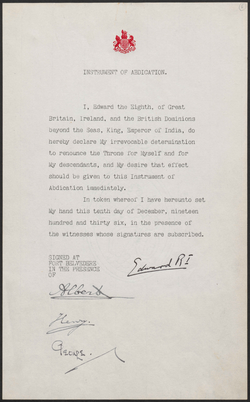
Perhaps the most famous modern instance occurred in 1936, when King Edward VIII abdicated to marry Wallis Simpson, an American divorcée. Because the British Crown depends on statute (specifically the Act of Settlement 1701), this required the passing of His Majesty's Declaration of Abdication Act 1936.
The Japanese Tradition
Unlike many Western cultures, abdication was historically routine in Japan, often occurring more frequently than death on the throne. During the Heian period, it became a tradition for emperors to retire after about ten years of service, as the repetitive priestly rituals were grueling. This led to the practice of emperors acceding to the throne as children—some as young as 6 or 8 years old.
Retired emperors often continued to wield significant influence behind the scenes, a practice known as cloistered rule. While the Meiji Constitution and the 1947 Constitution had no provisions for abdication, a special one-off bill was passed by the National Diet in 2017 to allow Emperor Akihito to abdicate in 2019 due to his advanced age.
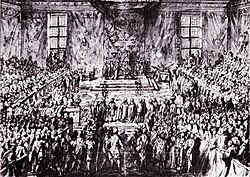
Global Examples of Forced and Voluntary Abdication
Throughout history, political turmoil has often dictated the end of a reign. In 1918, the chaos of World War I forced Kaiser Wilhelm II of Germany to abdicate. In 1940, King Leopold III of Belgium was ordered to abdicate by his government in 1951 following his surrender to German invaders during World War II.
In Egypt, the 1952 revolution led to the forced abdication of King Farouk I in favor of his infant son, Fuad II, shortly before Egypt became a republic.
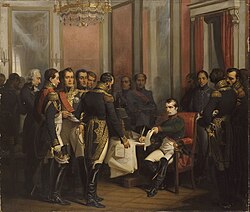
Summary of Notable Abdications
| Monarch/Leader | Country/Entity | Year | Nature of Abdication |
|---|---|---|---|
| Edward VIII | United Kingdom | 1936 | Voluntary (Marriage) |
| Akihito | Japan | 2019 | Voluntary (Age/Health) |
| Wilhelm II | Germany | 1918 | Forced (War defeat) |
| Benedict XVI | Vatican City | 2013 | Voluntary (Age/Health) |
| Margrethe II | Denmark | 2024 | Voluntary |
Frequently Asked Questions
What is the difference between resignation and abdication?
Abdication specifically refers to the act of a monarch giving up their throne. Resignation is the term used for elected or appointed officials leaving their office.
Can a monarch be forced to abdicate?
Yes. Forced abdications occur when a ruler is dethroned through political pressure, military coup, or threat of violence, as seen in the cases of King Farouk I of Egypt or Kaiser Wilhelm II of Germany.
Why was Emperor Akihito's abdication unusual in Japan?
While abdication was common in ancient Japan, it had not occurred since 1817. Furthermore, the current Japanese constitution had no provision for it, requiring a special law to be passed by the National Diet.
How does the Pope abdicate?
The Pope does not "abdicate" in the royal sense but rather performs a papal resignation or renunciation, which is the voluntary act of stepping down as the Bishop of Rome.
What happened when King Edward VIII abdicated?
Edward VIII stepped down in 1936 to marry Wallis Simpson. Because the British monarchy is governed by statute, his abdication required a formal Act of Parliament to be legally valid.