Alfonso XIII: The Life and Reign of Spain's Last Bourbon Monarch
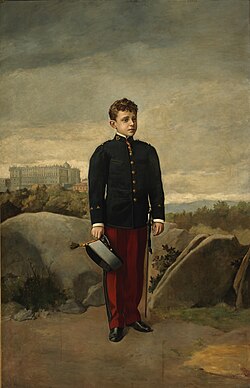
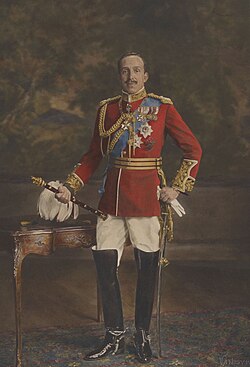
Alfonso XIII was the King of Spain from his birth in 1886 until the proclamation of the Second Spanish Republic in 1931. Born into the House of Bourbon, his life was marked by the transition from the traditional Restoration system to a period of intense political instability, military dictatorship, and eventual exile.
Known to some as El Africano (the African) due to his Africanist views, Alfonso's reign spanned nearly half a century, though he only assumed full sovereign powers on his sixteenth birthday in 1902. His tenure serves as a pivotal case study in the struggle between constitutional liberalism and authoritarianism in early 20th-century Europe.
Key Facts
- Full Name: Alfonso León Fernando María Santiago Isidro Pascual Antón de Borbón y de Habsburgo-Lorena.
- Reign: 17 May 1886 – 14 April 1931.
- House: Bourbon.
- Predecessor: His father, Alfonso XII.
- Successor: Niceto Alcalá-Zamora (President of the Second Spanish Republic).
- Spouse: Victoria Eugenie of Battenberg.
- Death: 28 February 1941 in Rome, Italy.
Early Life and Accession
Alfonso XIII was born at the Royal Palace of Madrid on 17 May 1886. He was the posthumous son of King Alfonso XII, who had died the previous year. In a symbolic gesture of his immediate accession, the infant king was carried naked on a silver tray to the prime minister, Práxedes Mateo Sagasta.
Because he was an infant, his mother, Maria Christina of Austria, served as regent from 1886 until 1902. His early childhood was not without hardship; during the 1889–1890 pandemic, he suffered a severe bout of flu that attacked his nervous system, leaving him in a state of indolence before he eventually recovered.
Marriage and Family Life
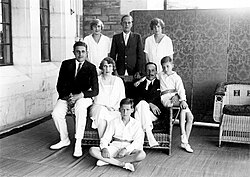
Alfonso married Princess Victoria Eugenie of Battenberg. The union produced seven children, though the family faced a significant medical tragedy: their son Gonzalo suffered from haemophilia (a genetic disorder that impairs blood clotting). This condition caused a rift between Alfonso and the Queen, as he blamed her for transmitting the condition to their sons.
Following this emotional distance, Alfonso maintained several mistresses from 1914 onward, fathering five illegitimate children in addition to one born before his marriage.
Political Turmoil and World War I
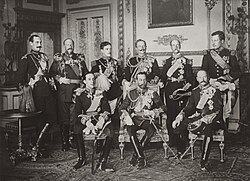
During World War I, Spain remained neutral. Alfonso XIII leveraged his extensive connections with other European royal families to maintain this stance, despite a deeply divided public split between pro-German and pro-Entente sympathizers.
However, the monarch's legitimacy began to erode due to several factors: the collapse of the turno system (the alternating power-sharing agreement between political parties), crises in 1917, and escalating violence in Morocco.
The Dictatorship of Primo de Rivera
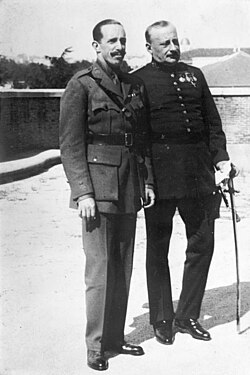
By 1923, Alfonso XIII shifted his preference from constitutional liberalism toward authoritarianism. On 13 September 1923, General Miguel Primo de Rivera staged a military coup. This move was supported by the king and a clique of "Africanist" generals who sought to protect the monarch from investigations into military failures in Morocco (specifically the disaster at Annual).
Primo de Rivera ruled as a dictator with the king's full backing until January 1930. When the dictatorship eventually failed politically, Alfonso withdrew his support, forcing Primo de Rivera to resign. However, the king had exhausted his political capital.
Dethronement and Exile
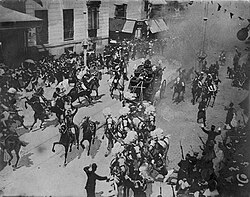
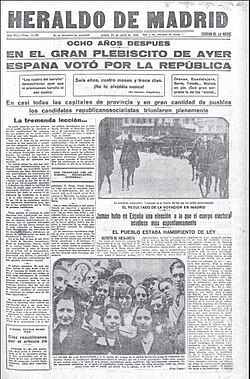
The end of the monarchy came swiftly following the municipal elections of April 1931, which functioned as a de facto plebiscite on the crown. The result led to the proclamation of the Second Spanish Republic on 14 April 1931. Alfonso XIII chose to leave Spain voluntarily.
During the Spanish Civil War (1936–1939), Alfonso supported the rebel faction against the Republican government. His son, Juan, attempted to join the rebels under the pseudonym "Juan López," but was returned by General Emilio Mola. Despite the king's preferences, General Francisco Franco declared that he would not restore Alfonso to the throne.
Summary of Reign and Legacy
| Category | Details |
|---|---|
| Full Name | Alfonso León Fernando María Santiago Isidro Pascual Antón de Borbón y de Habsburgo-Lorena |
| Reign Period | 1886 – 1931 |
| Key Political Shift | From Constitutionalism to Authoritarianism |
| Major Conflict | World War I (Neutrality) and Spanish Civil War (Exile) |
| Final Resting Place | El Escorial (since 1980) |
Frequently Asked Questions
Why was Alfonso XIII called "El Africano"?
He earned this nickname due to his strong Africanist views and his close association with the military generals involved in Spain's campaigns in North Africa.
How did Alfonso XIII come to be king at birth?
He became the monarch immediately upon birth because his father, King Alfonso XII, had died in November 1885, just months before Alfonso XIII was born.
What led to the end of his reign in 1931?
His reign ended after the municipal elections of April 1931, which were viewed as a vote on the monarchy. The results favored a republic, leading to the proclamation of the Second Spanish Republic.
Did Francisco Franco restore Alfonso XIII to the throne?
No. Although Alfonso XIII favored the rebel faction during the Spanish Civil War, General Francisco Franco explicitly declared that he would not restore the former king to the throne.
Who served as regent during Alfonso's childhood?
His mother, Maria Christina of Austria, served as regent from 1886 until Alfonso assumed full powers in 1902.